Selecting the right fluid pipe is critical for safety, efficiency, and long-term cost control in industrial and construction projects. From seamless steel tube and API 5L pipe to corrosion-resistant pipe and welded stainless tubing, each option suits different pressure, media, and environment demands. This guide explains how to evaluate fluid pipe materials, standards, and performance so buyers, engineers, and project teams can make safer, smarter decisions.
For most buyers and project teams, safe pipe selection comes down to one practical rule: match the pipe to the actual service conditions, not just the price or the familiar specification. A pipe that works well for low-pressure water transfer may fail early in corrosive service, high-temperature duty, or pressure-critical systems. The safest choice is the one that aligns with fluid type, pressure, temperature, installation environment, compliance requirements, and lifecycle cost.
What should you check first before choosing a fluid pipe?
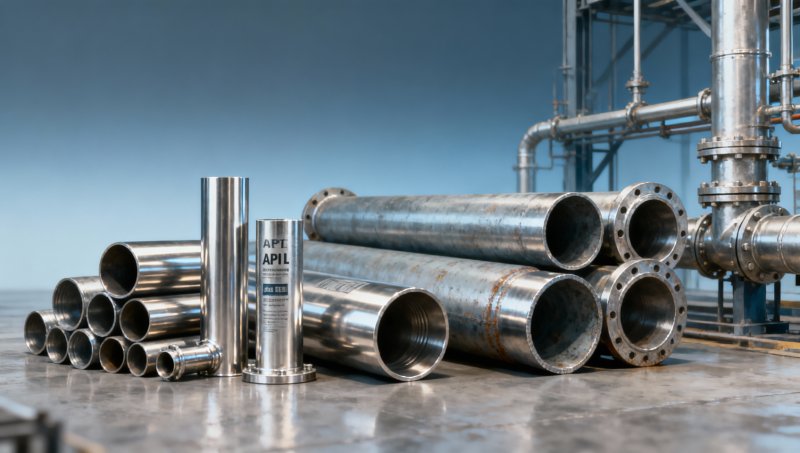
Before comparing steel pipe grades or requesting quotations, start with the operating conditions. This is the step that most directly affects safety, service life, and total project cost.
The first questions to answer are:
- What fluid will the pipe carry? Water, gas, oil, steam, chemicals, slurry, or mixed media all place different demands on the material.
- What is the working pressure? Pressure rating influences wall thickness, pipe type, joint method, and safety margin.
- What is the operating temperature? High or fluctuating temperature can reduce strength, affect corrosion behavior, and change sealing reliability.
- Is the environment corrosive? Outdoor exposure, humidity, coastal air, buried service, and chemical contact all matter.
- Is the system for critical or general service? Fire protection, oil and gas, chemical processing, and structural-industrial applications may require stricter standards and inspection.
- What standards apply? ASTM, EN, JIS, GB, and industry-specific requirements should be clarified before procurement.
If these basic conditions are unclear, even a high-quality pipe may be the wrong pipe. For engineers, purchasers, quality teams, and project managers, defining service conditions early reduces sourcing errors, change orders, and field risk.
How do different fluid pipe materials affect safety and performance?
Material selection is the core of safe fluid pipe specification. Different materials offer different combinations of strength, corrosion resistance, weldability, and cost.
Carbon steel pipe is widely used for water, gas, oil, and general industrial fluid transport. It offers good strength and cost efficiency, but corrosion protection is often necessary in wet or outdoor environments.
Galvanized steel pipe is a practical option for low-pressure fluid service where corrosion resistance is needed. The zinc coating helps protect the base steel and can extend service life in applications such as water, gas, and general outdoor piping. For some construction and industrial uses, insert-type procurement planning may include products such as Electrical Conduit Galvanized, which is produced to multiple standards including ASTM, EN, JIS, DIN, AISI, and GB, and is used in sectors ranging from construction and machinery to general low-pressure fluid pipelines. In practical terms, hot-dip galvanized pipe is often selected when buyers need a balance of corrosion resistance, broad availability, and cost control.
Stainless steel pipe is preferred where corrosion resistance is a priority, such as chemical processing, food-related systems, humid environments, or applications requiring cleaner internal surfaces. It usually costs more upfront but may lower maintenance and replacement risk.
Seamless steel tube is often chosen for higher pressure, higher temperature, or more demanding mechanical service because it has no welded seam. This can improve reliability in critical applications, depending on the specification and manufacturing quality.
Welded steel pipe can be an economical and effective solution for many general fluid transport systems, especially where pressure and service conditions are moderate. The key is ensuring that the welding quality, dimensional accuracy, coating, and inspection level meet the intended use.
API 5L pipe is commonly used in oil, gas, and energy-related transmission systems, where strength, consistency, and compliance are especially important.
In short, the “safest” material is not always the most expensive one. It is the one whose properties match the real duty conditions with sufficient margin.
Which standards and technical parameters matter most in fluid pipe selection?
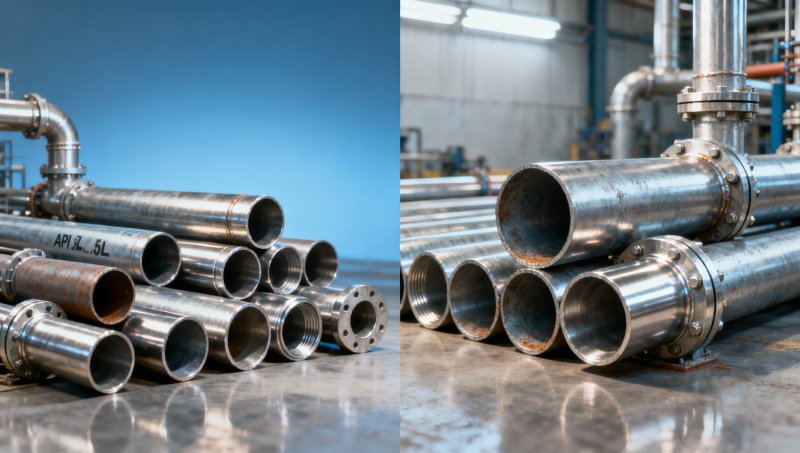
Many selection mistakes happen because buyers focus on diameter and price but overlook the technical details that determine safety.
Key parameters include:
- Pipe standard: ASTM, EN, JIS, GB, API, or project-specific standards define minimum requirements for chemistry, mechanics, testing, and tolerances.
- Pipe size: Outside diameter, nominal diameter, and wall thickness must match system design and flow requirements.
- Pressure class: The pipe must withstand normal operating pressure, pressure surges, and a suitable safety factor.
- Corrosion allowance: This is especially important for water, chemicals, buried lines, and outdoor use.
- Coating or surface treatment: Galvanizing, painting, pickling, or special anti-corrosion systems may be necessary.
- Connection method: Welding, threading, grooved ends, or flanges affect installation safety and maintenance.
- Inspection and testing: Hydrostatic testing, non-destructive testing, coating inspection, and dimensional checks improve confidence.
For technical evaluators and quality managers, standards are not paperwork only. They are a control system for risk. For procurement teams, clear technical requirements reduce supplier ambiguity and make quotations easier to compare fairly.
When evaluating a supplier, ask for mill test certificates, coating details, dimensional tolerances, production capability, and quality control records. A reliable manufacturer should be able to explain how its products comply with the requested standards and where each pipe type is best used.
How can buyers balance safety, cost, and service life?
Choosing the lowest initial price can create the highest long-term cost if the pipe corrodes early, requires repeated maintenance, or causes shutdowns. On the other hand, over-specifying pipe for a low-risk application can waste budget. Good selection balances technical fit and lifecycle value.
Use this practical approach:
- Classify the application by risk. Critical systems need stricter material and inspection requirements than general low-pressure service.
- Estimate the real exposure conditions. Indoor dry conditions differ greatly from coastal, buried, or chemical environments.
- Compare lifecycle cost, not unit price only. Include maintenance, downtime, replacement frequency, coating renewal, and installation cost.
- Check sourcing stability. Consistent lead time and repeatable quality reduce project delays and variation risk.
- Confirm customization needs early. Length, coating, surface treatment, end preparation, and packaging all affect final suitability.
For example, in general low-pressure water, gas, and oil applications, galvanized pipe may provide a practical balance of cost and corrosion resistance. In highly corrosive or hygiene-sensitive systems, stainless steel may justify the higher purchase price. In higher-pressure industrial systems, seamless steel tube or a more tightly controlled specification may be the safer path.
What common mistakes lead to unsafe pipe selection?
Many pipe failures are not caused by poor manufacturing alone. They often begin with incomplete selection logic.
- Ignoring the actual fluid characteristics: Some media are more corrosive, abrasive, or temperature-sensitive than expected.
- Using general-purpose pipe in critical service: Not every low-cost pipe is suitable for pressure-sensitive or hazardous systems.
- Overlooking environmental corrosion: Outdoor weather, moisture, salt exposure, and buried conditions can shorten service life fast.
- Focusing only on material name: “Carbon steel” or “stainless steel” alone is not enough; grade, standard, thickness, and testing also matter.
- Not verifying certification and inspection: Without proper documentation, compliance and traceability become weak points.
- Buying without supplier evaluation: Stable quality control and export experience are important, especially for international projects.
These mistakes affect not only operators and maintenance teams, but also project schedules, warranty exposure, procurement efficiency, and approval decisions from management and finance.
How to create a safer and smarter pipe selection process
A reliable fluid pipe selection process should involve engineering, procurement, quality, and project management together. When teams work from the same technical checklist, they make better decisions and avoid hidden risk.
A practical process looks like this:
- Define media, pressure, temperature, environment, and service life target.
- Select candidate pipe materials and standards based on operating conditions.
- Review corrosion protection needs, including galvanizing or other coatings.
- Confirm dimensions, tolerances, and connection method.
- Verify compliance documents, test requirements, and supplier quality systems.
- Compare quotations based on technical equivalence and lifecycle cost.
- Inspect delivered products before installation.
For international buyers, working with an experienced structural steel manufacturer and exporter can improve sourcing confidence, especially when the supplier supports multiple standards, custom processing, and stable production quality. That matters when projects need dependable lead times, compliance clarity, and lower procurement risk across different markets.
Safe fluid pipe selection is not just a technical task. It is also a commercial and operational decision that affects durability, maintenance, project timing, and overall value.
To select fluid pipe safely, start with the service conditions, then match material, standard, coating, and inspection level to the real application. Carbon steel, galvanized steel pipe, stainless tubing, seamless steel tube, and API 5L pipe each have valid use cases, but none is universally best. The right choice is the one that delivers adequate safety margin, reliable performance, and sensible lifecycle cost for your specific environment. When in doubt, prioritize verified standards, corrosion resistance, supplier quality control, and long-term performance over short-term price alone.
Please give us a message


Please enter what you want to find