How to Screen Stainless Steel Wire Suppliers for Stable Quality
Choosing the right stainless steel wire suppliers is critical for quality control and safety management teams that cannot afford inconsistent materials, compliance risks, or delivery delays.
This guide explains how to evaluate supplier qualifications, production standards, testing systems, and supply stability.
The goal is simple.
Reduce sourcing risk and secure dependable stainless steel wire for demanding industrial and construction applications.
Why Stable Quality Matters More Than the Lowest Price
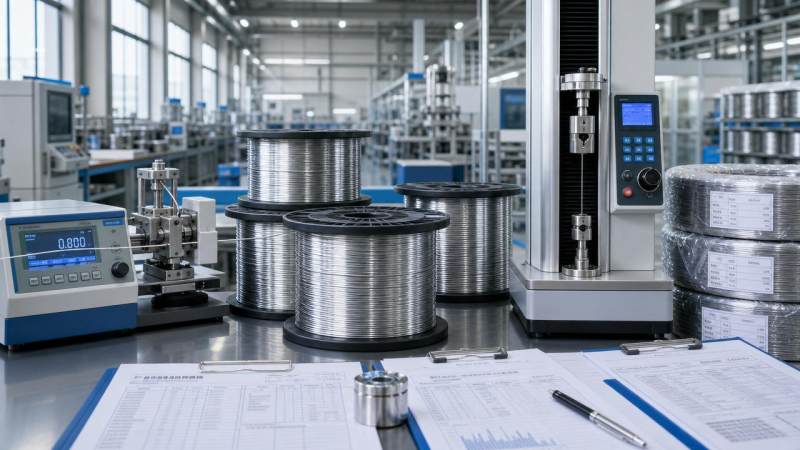
In stainless steel wire buying, cheap quotes often hide expensive problems.
A small variation in chemistry, tensile strength, or surface finish can trigger failures downstream.
That can mean rework, production stops, rejected batches, or safety incidents in service.
From a procurement perspective, stable quality protects more than unit cost.
It protects inspection efficiency, compliance records, warranty exposure, and customer trust.
This is why experienced buyers do not compare stainless steel wire suppliers by price alone.
They compare process control, traceability, response speed, and consistency between orders.
Start With Supplier Qualifications and Market Fit
The first screening step is qualification, but not in a superficial way.
Ask whether the supplier is truly set up for your application, not just capable of making wire.
A supplier serving decorative uses may struggle with strict mechanical or corrosion requirements.
A good prequalification checklist should include:
- Business license and export history
- ISO quality system certification
- Material standard coverage such as ASTM, EN, JIS, or GB
- Grade range, diameter range, and finishing capability
- Main customer industries and destination markets
- Batch traceability and complaint handling process
This early filter quickly removes weak stainless steel wire suppliers from the shortlist.
It also reveals whether the supplier understands the commercial reality of your industry.
Check Production Control, Not Just Sample Performance
A polished sample proves very little on its own.
The real question is whether the same quality can be repeated across every batch.
Reliable stainless steel wire suppliers should explain their process in a clear sequence.
That usually includes raw material sourcing, wire drawing, annealing, pickling, straightening, spooling, inspection, and packaging.
Ask focused questions during evaluation:
- Do they use stable input material from approved mills?
- How do they prevent diameter drift during long production runs?
- Are annealing temperatures recorded and reviewed?
- How is surface contamination controlled?
- What is the procedure for segregating nonconforming coils?
- How do they identify mixed grades or mislabeled packaging?
In actual sourcing, these details matter more than a sales brochure.
They show whether a supplier manages variation before defects reach your warehouse.
Verify Testing Systems and Inspection Discipline
Good stainless steel wire suppliers do not rely on final inspection alone.
They build testing into incoming material checks, in-process control, and pre-shipment release.
At minimum, review their capability for chemistry verification, tensile testing, elongation testing, diameter control, and surface examination.
For higher-risk applications, corrosion testing or additional third-party inspection may be necessary.
Ask for recent mill test certificates and compare them against actual shipment records.
Look for consistency, not isolated best-case numbers.
Red flags usually include:
- Test reports with missing heat numbers
- Results that look copied across different batches
- No calibration records for key equipment
- Vague answers about retesting failures
- Inconsistent data between certificates and labels
If a supplier cannot show disciplined testing, stable quality is mostly a claim.
Evaluate Supply Stability and Delivery Risk
Many buyers focus heavily on technical quality and overlook delivery stability.
That is risky, especially when production plans are tight.
The best stainless steel wire suppliers combine acceptable quality with predictable lead times.
To assess this, review their production capacity, inventory policy, order scheduling method, and shipment history.
Ask how they handle urgent orders, raw material shortages, and port disruptions.
More importantly, ask for evidence.
A dependable exporter should provide realistic lead times instead of optimistic promises.
This is also where broader steel supply experience can be useful.
For example, companies serving infrastructure materials often develop stronger scheduling discipline.
A supplier familiar with projects involving Rail products may already be used to strict dimensional control, certification, and on-time delivery demands.
Use a Practical Audit Framework Before Approval
A structured audit makes supplier selection less subjective.
It also helps procurement teams explain decisions internally.
A simple scoring model can work well if it is used consistently.
This kind of framework keeps discussions fact-based.
It also makes it easier to compare multiple stainless steel wire suppliers fairly.
Do a Trial Order Before Full-Scale Purchasing
Even strong audits should be followed by a trial order.
This is where paper capability meets real execution.
Keep the trial practical and measurable.
Define the grade, diameter tolerance, coil condition, packaging method, and required documents in advance.
Then evaluate the result across the full process:
- Quotation accuracy
- Technical communication clarity
- On-time production and shipment
- Incoming inspection pass rate
- Consistency with approved samples
- Speed of corrective action if issues appear
This step often separates serious stainless steel wire suppliers from aggressive traders with limited control.
Look for Long-Term Value, Not One-Off Transactions
The most effective sourcing strategy is not constant supplier switching.
It is building a stable relationship with suppliers that perform reliably over time.
That means sharing realistic forecasts, agreeing on quality benchmarks, and reviewing performance regularly.
Suppliers with broader steel manufacturing experience can add value here.
Hongteng Fengda, a structural steel manufacturer and exporter from China, supports global buyers with stable production capacity, strict quality control, and dependable lead times.
Its experience across ASTM, EN, JIS, and GB-based supply shows how disciplined systems reduce sourcing risk.
The same mindset applies whether the project involves structural sections, custom fabrication, or related products such as rail systems.
For example, products like Rail require precise tolerances, documented quality systems, and prompt delivery, which are all useful indicators when assessing broader supplier discipline.
Final Screening Checklist for Stainless Steel Wire Suppliers
Before approving any supplier, run through this short final checklist.
- Confirm certifications, standards, and export capability
- Verify process control from raw material to finished wire
- Review actual test records and traceability methods
- Assess batch consistency, not only sample quality
- Check delivery history and production scheduling discipline
- Use a trial order to validate real-world performance
- Compare total risk cost, not just purchase price
The best stainless steel wire suppliers are not always the cheapest.
They are the ones that keep quality stable, documents accurate, and deliveries dependable.
When you screen suppliers this way, procurement becomes more predictable and far less reactive.
That is usually where the real cost savings begin.
Please give us a message


Please enter what you want to find