Choosing the right steel tubing for construction affects strength, safety, cost, and project efficiency. From load requirements to corrosion resistance and code compliance, buyers must compare materials carefully. This guide explains how to evaluate steel tubing for construction while also considering related products such as structural steel beams for construction, galvanized pipe for plumbing, and stainless steel pipe specifications for different project needs.
Why steel tubing selection is changing in today’s construction market
Steel tubing for construction is no longer selected only by size and price. In the past 3 to 5 years, project teams have faced tighter delivery windows, stricter quality documentation, wider use of mixed-material systems, and more pressure to control lifecycle cost rather than only initial purchase cost. That shift affects engineers, buyers, project managers, fabricators, and distributors alike.
Another visible change is the growing demand for application-specific evaluation. A tube used in a warehouse frame, equipment support, modular building, guard system, or industrial platform may all be called steel tubing, but the real selection criteria differ. Wall thickness, section shape, weldability, coating type, tolerance control, and standard compliance now carry more decision weight than before.
For global sourcing teams, the evaluation process has also become more technical. Buyers often compare ASTM, EN, JIS, and GB references in the same sourcing cycle. That means the question is not only “what tube is cheapest,” but “which specification fits the design intent, fabrication process, corrosion environment, and delivery schedule with lower risk over 6 to 24 months of project execution.”
Main market signals behind the shift
Several signals explain why steel tubing selection is becoming more strategic. First, modular and prefabricated construction relies heavily on dimensional consistency. Second, outdoor and industrial projects increasingly require galvanized or otherwise protected surfaces. Third, procurement teams are under closer review from finance and quality departments, so traceability and inspection records matter more during approval.
A practical consequence is that construction buyers are now comparing tubing with adjacent steel solutions earlier in the design stage. In some cases, tubing competes with steel beams, channels, or cold formed sections. In other cases, tubing works together with plate, pipe, and custom brackets to create a complete support system.
The table below shows how the selection focus has shifted in many common projects.
This change matters because incorrect tubing selection can create hidden losses: rework during fabrication, coating failure in outdoor service, rejected inspections, or excess dead load. Even a 1 to 2 mm difference in wall thickness or an unsuitable finish can affect welding settings, structural behavior, and long-term maintenance planning.
The technical factors that now matter more than simple tube size
When evaluating how to pick steel tubing for construction, section shape remains important, but it should not be the first and last decision. Round, square, and rectangular tubing each behave differently under compression, bending, torsion, and connection design. For example, square and rectangular hollow sections are often preferred in frames and support structures because they simplify joining and reduce wasted space in layout.
Wall thickness is another major decision point. Thin-wall tubing may reduce material cost and handling weight, but it can create limits in load resistance, hole-making, edge deformation, or weld heat control. In many practical construction applications, the evaluation starts with section dimensions, then checks thickness ranges, then confirms the steel grade and the intended fabrication method.
Surface condition has also become more critical. Uncoated black steel may be acceptable for indoor dry environments with planned finishing after fabrication. Galvanized tubing is often preferred for outdoor structures, utility supports, fence systems, agricultural buildings, and humid service areas. Stainless steel tubing enters the picture when hygiene, chemical exposure, or stronger corrosion resistance is required, even though material cost is usually higher.
Core technical checks before buying
- Confirm the load case: static load, dynamic load, impact, or vibration can change the required section and grade.
- Check the environment: indoor, outdoor, coastal, chemical, or high-humidity conditions affect coating choice.
- Review fabrication needs: cutting, punching, bending, welding, and bolting may favor one specification over another.
- Match the standard: ASTM, EN, JIS, or GB equivalence should be examined carefully, not assumed.
- Verify tolerances: straightness, wall consistency, section squareness, and length accuracy matter in modular work.
A related trend is that more projects combine tubing with sheet and plate solutions for enclosure, bracing, and fabricated assemblies. In such cases, buyers may also evaluate coated flat steel products such as Steel Plate Galvanized for roofing, cladding, equipment covers, and secondary structural components. Typical specifications in this category include thickness from 0.12 mm to 6.00 mm, width from 600 mm to 1500 mm, and zinc layer ranges of 60 to 275 g/m² depending on the process and service condition.
The value of this broader material view is simple: construction systems rarely rely on one steel product alone. Tube selection should be coordinated with beams, channels, plate, fasteners, and finishing methods so that fabrication and site installation work together rather than create mismatch later.
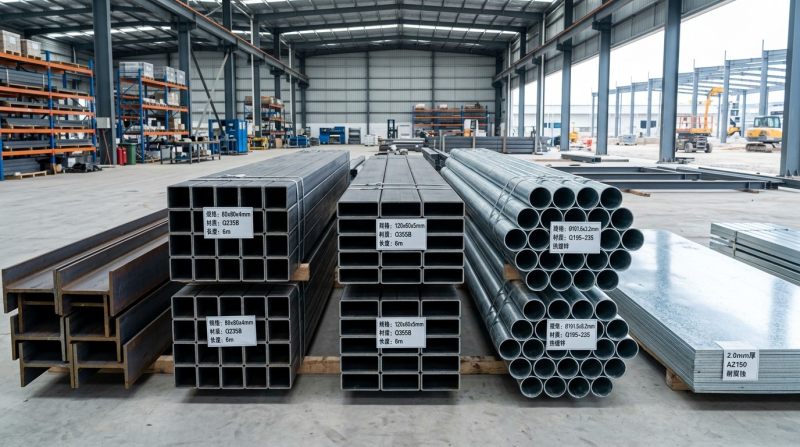
Typical tubing choices by application direction
Before making a final sourcing decision, many teams compare application conditions side by side. The next table provides a practical overview.
This comparison shows why a “one-size-fits-all” approach rarely works. A tubing choice that performs well in an indoor fabricated frame may not be efficient for marine-adjacent use or for systems that require repeated washdown, temperature variation, or visible architectural finish.
How these changes affect engineers, buyers, and project stakeholders
The move toward more deliberate steel tubing selection affects different stakeholders in different ways. Engineers are expected to align section properties with real load cases and connection details. Procurement teams must compare not only price per ton but also processing yield, coating performance, packaging, and shipping reliability. Quality and safety managers look more closely at compliance records, material identification, and consistency from batch to batch.
For project managers, tubing choice now influences schedule risk. If a specification is too narrow or hard to source globally, lead time may extend from a normal 3 to 6 weeks into a much longer procurement cycle. If material substitution is requested late, redesign and approval delays can affect fabrication slots, site sequencing, and subcontractor coordination.
Distributors and resellers also feel the impact. End users increasingly ask for complete technical clarity: grade, coating, dimensions, origin, and standard. This means stocking decisions are becoming more selective, often favoring high-turn specifications with broad use across construction, industry, transportation, and equipment support systems.
Who is affected most and what they should watch
The following table summarizes practical concerns by role.
For companies sourcing from China or other export markets, supplier communication quality becomes especially important. A capable manufacturer should be able to discuss not only dimensions and tonnage, but also standard matching, acceptable tolerances, packing details, weld condition, and practical use recommendations for construction environments.
Common decision mistakes in current projects
- Selecting by nominal size without checking actual wall thickness tolerance.
- Assuming galvanized pipe for plumbing and structural tubing are interchangeable in all cases.
- Using stainless steel pipe specifications as a cost benchmark without evaluating whether that corrosion level is truly required.
- Comparing suppliers only by ex-works price and ignoring documentation, packaging, or delivery consistency.
- Approving substitutions after detailing has started, which can trigger rework across drawings and fabrication.
These issues are not minor. In larger projects, one wrong assumption can affect hundreds of pieces, multiple workstations, or several containers of material. Good selection discipline reduces both engineering risk and purchasing friction.
What to evaluate now when picking steel tubing for construction
In the current market, the best approach is to use a staged review process. Start with engineering requirements, then move to material and finish, then confirm sourcing practicality. This sequence helps teams avoid a common mistake: choosing a tube that looks economical on paper but performs poorly during cutting, welding, coating, transport, or site installation.
A useful rule is to break the decision into five checkpoints: section design, steel grade, corrosion protection, compliance, and supply execution. If all five align, the tubing is more likely to support project success from design through delivery. If one category remains unclear, the risk should be resolved before order release.
This is also the stage where adjacent products should be reviewed. For example, structural steel beams for construction may carry the main load while tubing handles braces, railings, support frames, or equipment skids. Matching these materials by standard, finish, and fabrication sequence can reduce shop-floor delays and improve site fit-up.
A practical evaluation checklist
- Define service life expectations: short-term installation, medium-term commercial use, or 10+ year outdoor service.
- Confirm whether the tubing will be welded before or after coating and how repairs will be handled.
- Request mill test and inspection information where required by the project or local code.
- Check production and delivery timing against the construction sequence, especially if shipment must support phased installation.
- Review whether custom lengths can reduce scrap and improve material yield by 3% to 8% in repetitive fabrication.
For some construction packages, it is efficient to source related steel items together. For example, if a project needs tubing, cold formed profiles, and coated sheet for enclosure or secondary work, coordination with one capable supplier can simplify quality review and shipment planning. Products such as Steel Plate Galvanized are often considered in this context because they offer atmospheric corrosion resistance, weldability, and processing flexibility across construction and industrial applications.
The broader lesson is that material selection should reflect the full construction workflow. The best tubing choice is not only structurally acceptable, but also realistic for procurement, fabrication, inspection, transportation, and long-term use.
How to respond to the trend with better sourcing and project planning
As steel tubing selection becomes more technical and more connected to total project performance, companies should strengthen front-end review rather than wait for problems during fabrication. A 30-minute technical clarification before ordering can prevent weeks of delay later. This is especially true for export procurement, custom lengths, mixed standards, or projects that combine tubing with beams, channels, and formed steel components.
Construction buyers should also distinguish between common stock items and engineered supply items. Stock tubing may work for routine commercial projects, but specialized supports, OEM structures, or industrial frameworks often require closer control of grade, dimensions, coating, and documentation. The more demanding the project, the more important supplier responsiveness becomes.
For enterprises operating across North America, Europe, the Middle East, or Southeast Asia, the most resilient sourcing strategy is usually one that balances cost, standard familiarity, and production stability. Low price alone rarely compensates for delivery uncertainty, repeated clarification, or inconsistent quality in multi-stage projects.
Recommended next actions for buyers and project teams
- Prepare a clear material schedule listing section, thickness, grade, finish, standard, and application for each tubing type.
- Identify which items are critical-path materials and which can be sourced from stock.
- Ask suppliers to confirm production capability, customization scope, and typical lead time ranges.
- Review whether related products such as beams, channels, cold formed sections, or galvanized plate can be bundled.
- Align technical, procurement, and quality teams before final approval so that fewer assumptions remain unresolved.
The trend is clear: picking steel tubing for construction is becoming a more integrated decision. Projects now demand stronger alignment between engineering requirements, corrosion environment, standards compliance, fabrication efficiency, and procurement reliability. Teams that respond early tend to reduce sourcing risk and improve execution control.
Why choose us / Contact us
Hongteng Fengda is a structural steel manufacturer and exporter from China focused on reliable steel supply for global construction, industrial, and manufacturing projects. We provide angle steel, channel steel, steel beams, cold formed steel profiles, customized structural components, and coordinated material solutions based on project requirements and international standard expectations.
If you are assessing steel tubing for construction, we can help you review section options, material grades, coating choices, standard references, customization feasibility, and related steel products needed for the same project package. We can also discuss delivery timing, documentation needs, sample support, OEM requirements, and quotation planning based on your target market.
Contact us if you want practical support with parameter confirmation, product selection, lead time evaluation, custom fabrication ideas, certification-related questions, or a quotation for your next structural steel purchase. If your team is trying to understand how current material and sourcing trends may affect your project, we can help you compare options and move forward with greater clarity.
Please give us a message


Please enter what you want to find