Choosing high strength steel rebar is not only about strength ratings but also about project safety, cost control, and long-term performance. For buyers comparing structural steel solutions, understanding grades, standards, corrosion resistance, and supplier reliability is essential. This guide explains how to evaluate high strength steel rebar for construction and industrial applications while helping you make smarter sourcing decisions.
For contractors, engineers, purchasing teams, quality managers, and distributors, the selection process usually involves more than a single datasheet. Rebar must match load requirements, concrete design, local code compliance, and environmental exposure. In export sourcing, buyers also need to assess mill consistency, dimensional tolerance, packaging, documentation, and lead time reliability before placing large-volume orders.
In practice, a high strength steel rebar decision often affects 3 key areas at the same time: structural capacity, lifecycle maintenance, and procurement efficiency. A cheaper option with weak coating performance or unstable chemistry may create delays, inspection issues, or higher replacement costs later. That is why a structured selection method matters, especially for commercial buildings, industrial plants, bridges, foundations, and prefabricated construction projects.
Understand What High Strength Steel Rebar Really Means
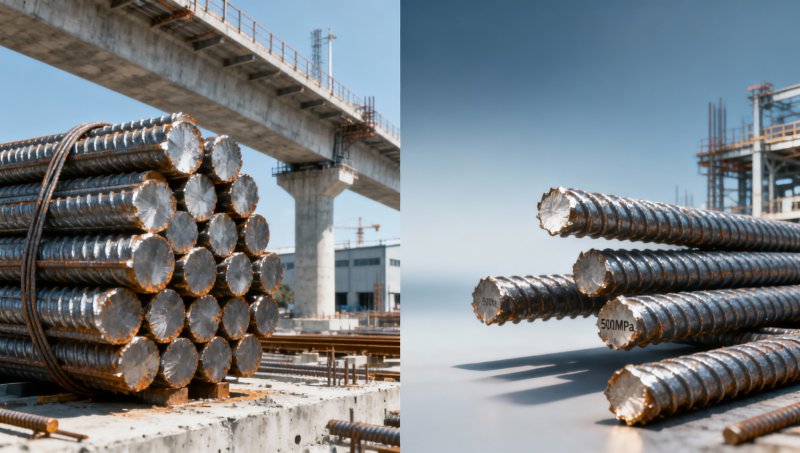
High strength steel rebar generally refers to reinforcing bars designed to deliver higher yield strength than conventional grades. In many projects, common strength classes include 400 MPa, 500 MPa, and in some specialized cases 600 MPa. The right grade depends on structural calculations, seismic design requirements, bar diameter, and the expected service environment. Higher strength does not automatically mean better for every application.
Buyers should first separate mechanical strength from overall usability. A rebar product may show high yield strength, but if weldability, ductility, or bend performance are poor, it can still create problems during fabrication and site installation. For example, in earthquake-prone zones, elongation and energy absorption are just as important as tensile capacity. This is why technical teams usually review both yield strength and ductility indicators together.
Another important point is standards alignment. Depending on the market, rebar may be supplied under ASTM, EN, JIS, or GB requirements. Even when two bars look similar, their chemical composition limits, mechanical testing methods, and marking rules can differ. A purchasing team importing for North America may focus on ASTM compliance, while buyers in Europe may require EN-compatible documentation and traceability records.
Key properties that should be checked first
- Yield strength and tensile strength, usually expressed in MPa or ksi, to confirm load-bearing suitability.
- Elongation percentage, often reviewed as a ductility indicator for bending and seismic performance.
- Surface condition, rib pattern, and dimensional consistency, which affect bonding with concrete.
- Chemical composition, especially carbon equivalent, when welding or forming is involved.
- Mill test certification, heat number traceability, and inspection records for quality approval.
The table below summarizes how common rebar evaluation factors differ in decision priority depending on project type. This helps technical and commercial teams align their review criteria before quotation comparison.
The main takeaway is that high strength steel rebar should be defined by performance in use, not by a single strength number. A balanced review of strength, ductility, tolerance, and compliance can prevent many downstream problems in fabrication, concrete pouring, and final inspection.
Match Rebar Grade and Standard to the Real Project Conditions
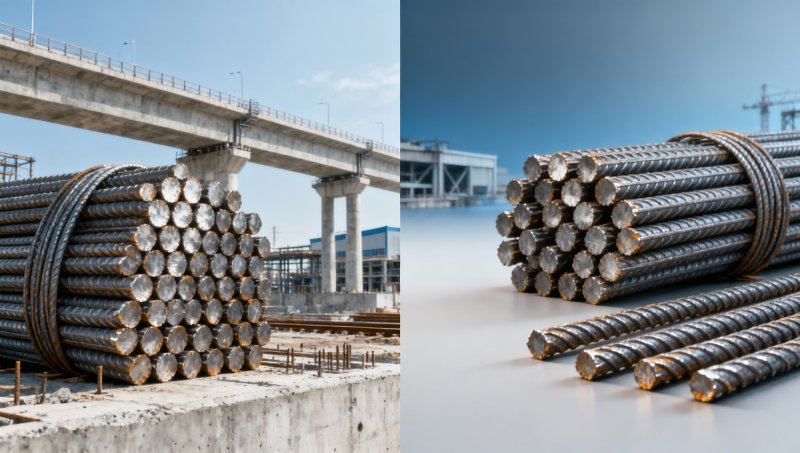
Selecting the correct rebar grade begins with the project environment and design demand. A warehouse slab, a bridge pier, and a coastal retaining wall do not require the same reinforcement strategy. For most buyers, the first 4 screening questions are simple: What load will the structure carry, which code applies, what corrosion risk exists, and will the bars be bent or welded during processing?
In medium-rise commercial buildings, Grade 400 or Grade 500 rebar may already meet structural needs if the bar diameter and detailing are properly specified. In heavy industrial foundations or transport infrastructure, the buyer may need higher-strength material with tighter testing requirements. If concrete cover is limited or chloride exposure is high, corrosion-resistant options become more valuable even if initial material cost rises by 8% to 20%.
It is also useful to think beyond rebar alone. Many projects combine reinforcing steel with other structural members such as channels, beams, angles, and cold-formed sections. For secondary framing, roof support, or wall beam applications, buyers often evaluate related steel products in the same sourcing cycle. For example, C Sections Steel can be used in purlins, wall beams, lightweight roof trusses, brackets, and mechanical light industry structures, making it relevant when a project includes both reinforced concrete and steel framing components.
When reviewing related structural steel products, procurement teams should compare standard coverage, surface treatment, and fabrication capability. In many export projects, galvanized C-shaped sections with thickness from 1 mm to 12 mm and standard lengths of 6 m, 9 m, or 12 m are selected for faster installation and lower maintenance. This type of coordinated sourcing can reduce supplier fragmentation and simplify delivery planning.
How to align grade selection with application
- Review structural drawings and determine whether the design is governed by load, ductility, or durability.
- Confirm the applicable standard such as ASTM, EN, JIS, or GB before asking for quotations.
- Check whether welding, bending radius, or prefabrication requires limits on carbon equivalent.
- Evaluate site exposure, including salt, humidity, buried contact, or industrial chemicals over a 10- to 30-year service period.
- Compare total installed cost, not only ex-works price, because processing losses and coating life matter.
The following comparison table shows how buyers can connect common project conditions with a suitable rebar purchasing focus. It is not a substitute for engineering design, but it helps commercial and technical teams frame supplier discussions more effectively.
This comparison makes one thing clear: the correct high strength steel rebar choice is always context-based. Buyers that link grade, environment, and fabrication method early can avoid costly redesign, site rejection, or emergency resupply later.
Check Quality Control, Testing, and Supplier Consistency
Even a well-selected grade can fail procurement expectations if supplier quality control is unstable. For high strength steel rebar, consistency between batches matters almost as much as nominal performance. Large projects often receive multiple heats or several shipments over 2 to 8 weeks. If chemistry, rib geometry, or straightness changes from one lot to another, fabrication and inspection efficiency can drop quickly.
A reliable supplier should provide clear documentation including mill test certificates, chemical composition reports, tensile and bend test data, and packing identification. For export orders, bundle marking, heat number traceability, and country-specific documentation may also be required. Quality teams should verify whether tolerance claims, for example ±1% on certain processed steel products, are supported by inspection routines rather than marketing language.
Manufacturing capability is another practical factor. Suppliers with modern production lines, defined inspection procedures, and experience with ASTM, EN, JIS, and GB requirements are typically better prepared for international orders. This becomes especially important when the order includes cut lengths, bending, punching, welding, or mixed structural steel packages in one shipment. Production stability helps control both scrap rate and schedule risk.
Supplier checks that should not be skipped
Technical review
- Confirm which standard the mill follows and whether test methods match the destination market.
- Ask for recent sample certificates covering yield, tensile, elongation, and bend performance.
- Check available diameters, length options, and whether custom processing can be controlled accurately.
Commercial review
- Clarify MOQ, shipment terms, and normal production lead time, which may range from 15 to 35 days depending on order complexity.
- Confirm packaging method for container or break-bulk transport to reduce rust and handling damage.
- Review communication speed, drawing confirmation process, and after-sales response window.
A good supplier review process usually combines 5 elements: standard compliance, process capability, documentation quality, delivery reliability, and communication discipline. For B2B buyers, this approach gives a more accurate picture than comparing unit price alone. It also supports smoother approval by engineering, purchasing, finance, and site management teams at the same time.
Balance Strength, Corrosion Resistance, and Total Cost
One of the most common sourcing mistakes is treating high strength steel rebar as a simple commodity. In reality, total project cost depends on at least 4 connected variables: material grade, processing efficiency, durability, and installation waste. A lower-priced rebar that requires more maintenance, extra handling, or earlier replacement can cost more over a 15- to 25-year service period.
Corrosion exposure is especially important for foundations, tunnels, water-related structures, coastal plants, and chemical facilities. In these cases, buyers should evaluate whether standard carbon steel rebar is sufficient or whether coated, galvanized, epoxy-treated, or other corrosion-mitigation solutions are more suitable. The cost difference at purchase stage may appear noticeable, but long-term repair work can be far more expensive than initial prevention.
Strength optimization can also reduce steel consumption in some designs, but only when verified by the engineer of record. For example, upgrading from a lower class to a higher class bar may reduce quantity in certain sections, yet that benefit can be offset if bending complexity increases or supply availability becomes limited. Procurement decisions should therefore combine engineering review with fabrication practicality and local installation capability.
Typical cost-control thinking for buyers
A practical buyer does not ask only, “What is the ton price?” A better question is, “What is the installed and maintained cost over the project lifecycle?” The table below helps compare those perspectives in a more operational way.
The key conclusion is that total cost should be measured across procurement, fabrication, installation, and service life. This method is particularly useful for finance approvers and project managers who must justify not just purchase price, but also risk-adjusted value.
Build a Practical Procurement and Inspection Checklist
Once grade and supplier options are narrowed down, buyers should use a practical checklist before issuing a purchase order. This is where many cross-functional problems can be prevented. A complete review usually covers 6 areas: specification, tests, dimensions, packaging, logistics, and claim handling. Missing even one of these can lead to avoidable delays during customs clearance, receiving inspection, or site installation.
For example, if the order requires fixed lengths, bar marks, or batch separation, those details should be written clearly into the purchase contract. If the project uses a mixed package of reinforcing steel and structural sections, the buyer should also confirm how the supplier manages loading sequence and label visibility. This is particularly important when delivery is planned in phases over 2 or 3 construction milestones.
Inspection planning should also happen before shipment, not after arrival. Many professional buyers ask for pre-shipment photos, bundle lists, and certificate copies 3 to 5 days before dispatch. This gives the technical or QA team time to verify documentation and avoid release delays. Where third-party inspection is needed, it should be scheduled early enough to avoid interference with vessel booking.
Recommended purchase checklist
- Define rebar standard, grade, diameter range, bar length, and quantity in metric tons or pieces.
- Request mill test certificates and confirm required tests such as tensile, yield, bend, and chemical analysis.
- Specify tolerance expectations, identification marks, bundling rules, and anti-rust packing needs.
- Confirm delivery term, production cycle, shipping method, and expected document issue time.
- Set claim terms for non-conformance, including replacement, credit, or re-inspection procedure.
Common mistakes to avoid
- Selecting only by price per ton without checking standard compatibility.
- Assuming all 500 MPa bars have the same ductility and bending performance.
- Ignoring corrosion exposure in coastal or underground conditions.
- Failing to verify lead time against actual site schedule and installation sequence.
- Accepting incomplete paperwork that slows customs, approval, or final payment.
For international buyers looking for broader structural steel support, manufacturers with experience in angle steel, channel steel, steel beams, cold formed profiles, and OEM processing can provide better coordination across product categories. This helps reduce sourcing risk when a project requires more than one steel solution and demands consistent quality, standards compliance, and dependable lead times.
Choosing high strength steel rebar successfully means combining engineering logic with disciplined sourcing. The best result usually comes from matching the correct grade to the application, verifying standards and ductility, checking corrosion strategy, and selecting a supplier with stable production and documentation control. If you are evaluating rebar together with structural sections for construction or industrial use, Hongteng Fengda can support your team with reliable steel products, customized processing, and export-oriented service. Contact us today to discuss specifications, request product details, or get a tailored sourcing solution for your project.
Please give us a message


Please enter what you want to find