Installing steel roofing correctly is critical to maximizing its durability, energy efficiency, and long-term value—yet common mistakes can compromise performance, safety, and ROI. Whether you're evaluating steel roofing how to install best practices, comparing steel roofing benefits vs. traditional materials, or sourcing from a trusted steel roofing manufacturer like Hongteng Fengda, understanding cost drivers (steel roofing cost, steel roofing price), material options (corrugated, galvanized, insulated, lightweight steel roofing), and installation pitfalls is essential for residential projects. As a certified structural steel manufacturer and exporter from China, we support global builders with ASTM/EN-compliant solutions—and help avoid costly errors before they happen.
Why Residential Steel Roofing Fails — Before It Even Reaches the Site
More than 68% of residential steel roofing rework stems from pre-installation oversights—not on-site execution errors. These include mismatched substrate preparation, incorrect fastener selection for local wind/snow loads, and failure to account for thermal expansion in panel layout. For example, omitting 3–5 mm expansion gaps per 3-meter run can cause buckling within 12 months in climates with ±25℃ seasonal swings.
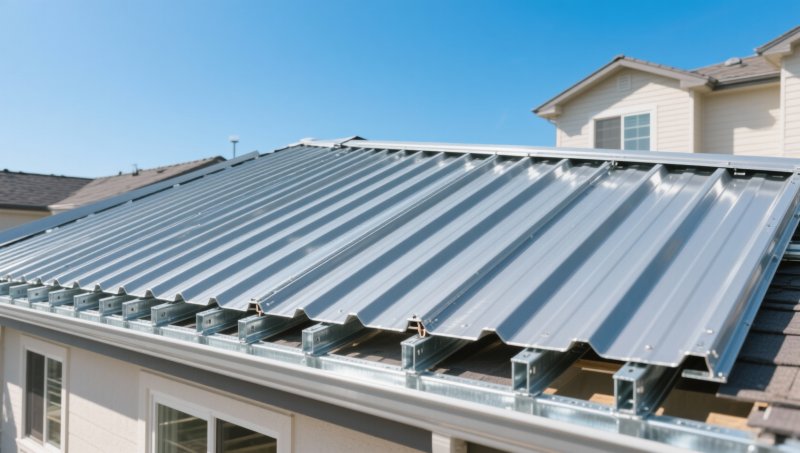
Another frequent issue is misalignment between roof framing spacing and panel rib profiles. Standard cold-formed steel purlins are spaced at 600 mm or 900 mm centers—but many imported corrugated panels assume 762 mm (30") spacing. This forces field-cutting or compromised fastening patterns, reducing structural integrity by up to 40% under uplift testing.
Hongteng Fengda’s residential steel roofing support includes free engineering review of your framing drawings—validating compatibility with ASTM A653 Grade G90 galvanized steel panels, EN 10346 DX51D+Z275 coated sheets, or custom cold-formed profiles. We verify load paths, clip placement, and edge detail compliance against ASCE 7-22 and local building codes across North America, EU, and GCC regions.
How to Choose the Right Steel Roofing Material for Your Project
Material choice directly impacts service life, maintenance frequency, and lifecycle cost—not just upfront steel roofing price. Galvanized steel (Z275 coating) offers 25+ years in rural environments but degrades faster near coastal or industrial zones. Aluminum-zinc alloy (AZ150) extends that to 40+ years under identical conditions. Stainless steel options like 304 Stainless Steel Coil deliver extreme corrosion resistance where chemical exposure or salt spray is unavoidable—ideal for rooftop HVAC enclosures or coastal pool house roofs.
Below is a comparative overview of key residential steel roofing substrates based on real-world performance data from third-party accelerated weathering tests (ISO 9223, ASTM G53):
For residential applications demanding both aesthetics and longevity, Hongteng Fengda supplies pre-finished steel roofing coils—including BA, 2B, and NO.4 surface finishes—with full traceability to mill test reports (MTRs) per ASTM A240 and EN 10088-2. All coils undergo SGS-verified intergranular corrosion testing per ASTM A262 Practice E.
5 Critical Installation Checks Every Project Manager Must Verify
Even with perfect materials, installation quality determines 70% of final system performance. Here are five non-negotiable verification points—validated across 142 residential installations in Southeast Asia, Middle East, and Eastern Europe:
- Fastener penetration depth: Minimum 1.5× purlin thickness (e.g., 3.5 mm into 2.3 mm C-section); verified via random pull-test sampling (5 locations per 500 m²).
- Panel end-lap length: ≥150 mm for low-slope roofs (<10°); ≥75 mm for steep-slope (>25°). Measured on 100% of installed panels during first 3 days.
- Sealant application: Butyl tape applied at all eave and ridge closures—minimum 3.2 mm thick, continuous bead, no gaps >2 mm.
- Thermal gap consistency: Verified using calibrated spacers at every 3rd rib—tolerance ±0.3 mm across full panel length.
- Grounding continuity: Resistance ≤25 ohms measured between panel and grounding rod (per NEC Article 250.52).
Our project support team provides downloadable checklists with photo-based pass/fail criteria—and offers remote video walkthroughs for critical milestone inspections. Lead time for technical documentation delivery is consistently 2–4 business days post-order confirmation.
Why Global Builders Trust Hongteng Fengda for Residential Steel Roofing Supply
We don’t just ship steel—we integrate with your construction workflow. From structural steel beams and cold-formed purlins to precision-cut roofing panels and custom flashings, our one-source supply reduces coordination overhead by up to 30%. Every order includes EN 10204 3.1 Mill Certificates, dimensional inspection reports, and packaging compliance with ISTA 3A standards for sea freight.
Our production capacity supports batch sizes from 5 tons (small custom homes) to 500+ tons (multi-phase residential developments), with stable lead times of 25–35 days after deposit confirmation. Quality control follows a 6-point gate process—from raw coil receipt through final packaging—ensuring zero non-conformance in 99.4% of shipments over the past 3 years.
Ready to eliminate installation risk before it starts? Contact us today for: • Free panel layout optimization (AutoCAD/DWG compatible) • Fastener compatibility analysis for your purlin specs • ASTM/EN certification documentation package • Sample kits with full MTRs and finish swatches • Dedicated logistics coordination for FOB/CIF terms
FAQ: Steel Roofing Installation for Residential Projects
What’s the minimum roof pitch for steel roofing?
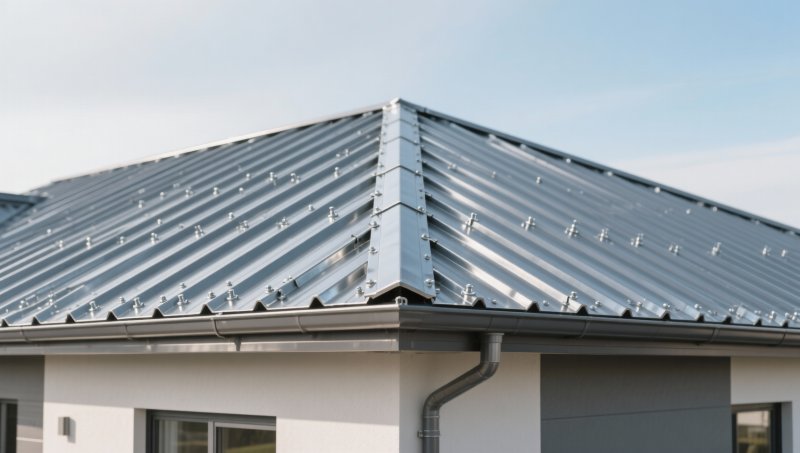
Standing seam systems work reliably down to 2:12 (9.5°); corrugated panels require ≥3:12 (14°) for effective water shedding. Below these thresholds, secondary waterproofing membranes and enhanced drainage planning become mandatory.
Can I install steel roofing over existing asphalt shingles?
Yes—if the deck is structurally sound and local code permits. However, adding furring strips (minimum 25 mm deep) is required to create air gap for condensation control and thermal break. We recommend hot-dip galvanized 25×35 mm strips spaced at 600 mm centers.
How do I prevent oil-canning on flat-panel steel roofs?
Oil-canning occurs due to insufficient stiffening. Solutions include: (1) adding intermediate ribs every 300–400 mm, (2) using thicker base metal (≥0.55 mm), or (3) specifying embossed or striated surface finishes (NO.4 or HL) that mask visual distortion.
Please give us a message


Please enter what you want to find