Choosing the right angle steel supplier is a critical step for any sourcing or project evaluation team. Before placing an order, buyers need to assess product quality, manufacturing standards, delivery reliability, export experience, and service responsiveness. This guide explains the key factors that help business evaluators reduce procurement risks, compare suppliers more effectively, and secure dependable structural steel supply for long-term project success.
What Business Evaluators Should Confirm First
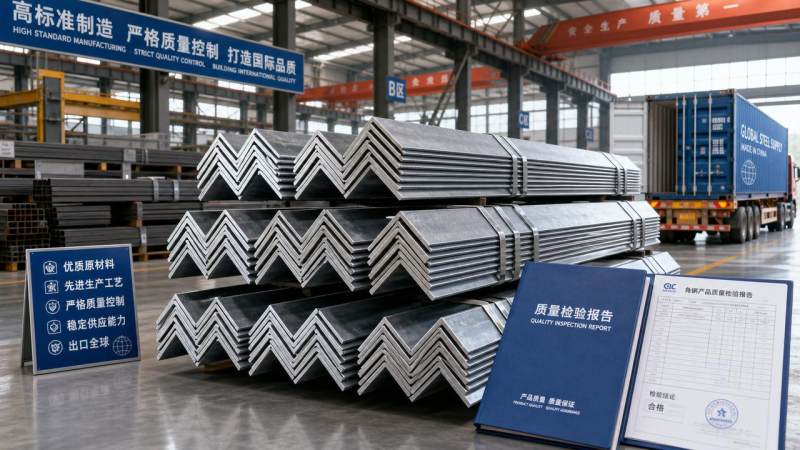
When searching for an angle steel supplier, most evaluators are not simply comparing prices. They are trying to confirm whether a supplier can deliver consistent quality, support project schedules, and reduce procurement risk.
That means the first assessment should focus on capability, not quotation alone. A low price becomes expensive when material quality varies, documents are incomplete, or delivery delays affect fabrication and construction timelines.
In practical terms, a reliable supplier should be able to prove stable production, recognized standards compliance, export readiness, and responsive communication. These points matter more than marketing claims or broad product catalogs.
For business evaluation teams, the best supplier is usually the one that performs predictably across the entire order cycle, from technical confirmation and production to shipment, documentation, and after-sales follow-up.
Can the Supplier Consistently Meet Quality Requirements?
Quality is the first decision filter because angle steel often supports structural loads, fabrication accuracy, and long-term project safety. Buyers should verify whether the supplier follows clear material control and inspection procedures.
Start by checking which standards the factory can produce against. For global projects, compliance with ASTM, EN, JIS, or GB standards is important because it affects design compatibility, inspection acceptance, and downstream fabrication.
Ask for mill test certificates, raw material traceability records, dimensional inspection reports, and mechanical property data. A capable angle steel supplier should provide these documents without hesitation and explain their testing process clearly.
It is also useful to confirm tolerance control, straightness, surface condition, and consistency between batches. Even if a sample looks acceptable, unstable batch performance can create serious issues in larger project procurement.
If possible, request recent production examples similar to your order. Evaluators gain more confidence when a supplier can show actual quality records for comparable sizes, grades, coatings, or project applications.
Does the Manufacturer Have Real Production Strength?
Many suppliers present themselves as manufacturers, but business evaluators should verify whether they truly control production or mainly act as traders. This distinction affects quality consistency, lead time control, and technical responsiveness.
A true manufacturer should be able to explain equipment capacity, production lines, monthly output, forming methods, cutting services, and quality checkpoints. These details reveal whether the factory can support both standard and customized orders.
Production strength also matters when project demand changes. If a buyer needs repeated shipments, mixed specifications, or urgent replenishment, a supplier with stable capacity is more likely to respond without major delays.
For structural steel procurement, it is helpful when the supplier offers a wider range of related products. For example, buyers managing industrial systems may also source pipes, beams, or channels in the same purchasing cycle.
In such cases, a supplier familiar with multiple steel categories can simplify coordination. Some buyers even compare complementary items like A36 Steel Pipe for heat transfer or industrial equipment projects while evaluating structural sourcing partners.
How Important Are Standards, Certifications, and Documentation?
For procurement evaluation, documentation is not a formality. It is a practical indicator of whether the supplier understands international business requirements and can support customs clearance, inspection, and project approval.
At minimum, buyers should confirm the availability of mill test certificates, packing lists, commercial invoices, certificates of origin, and any required third-party inspection reports. Missing or inconsistent paperwork can delay delivery even when the goods are ready.
Certification capability is also important. A supplier serving export markets should understand how different regions treat material declarations, test methods, and compliance requirements. This reduces administrative friction after purchase orders are issued.
Documentation quality often reflects management quality. Suppliers that prepare clear, accurate, and timely files are usually easier to work with during contract review, shipment scheduling, and quality dispute resolution.
Can the Supplier Deliver Reliably and On Time?
For many buyers, delivery reliability is just as important as product quality. A qualified angle steel supplier should not only promise lead times but also explain how those timelines are planned and controlled.
Ask how production slots are scheduled, how raw materials are reserved, and how shipment dates are managed during busy periods. Suppliers with strong internal planning tend to give more realistic delivery commitments.
Export buyers should also evaluate logistics coordination. This includes packaging methods, container loading experience, port access, and familiarity with destination market shipping requirements. Good production means little if shipment execution is weak.
It is wise to ask for examples of past export regions, especially if your business serves North America, Europe, the Middle East, or Southeast Asia. Market familiarity can reduce errors in documents, timing, and communication.
When comparing suppliers, do not ask only for standard lead time. Ask what happens when schedules change, specifications are revised, or partial shipments are needed. The answer often reveals the supplier’s real reliability level.
How Should Buyers Evaluate Export Experience and Communication?
Export experience matters because international steel procurement involves more than manufacturing. It requires coordinated communication across technical review, payment terms, packing, inspection, booking, and after-sales support.
A supplier with strong export experience should respond clearly to specification questions, quotation revisions, and documentation requests. Delayed or vague replies during the inquiry stage usually indicate future coordination problems.
Business evaluators should pay attention to whether the supplier understands commercial terms such as FOB, CFR, or CIF, and whether they can explain packing details, loading plans, and expected transit risks professionally.
Communication quality also affects internal decision-making. Evaluation teams need suppliers that provide organized quotations, clear technical comparisons, and realistic answers instead of generic sales language.
One useful test is to ask several specific questions in one email: standards, tolerances, production time, inspection options, and export destinations. The structure and completeness of the reply can be very revealing.
What Pricing Signals Should Be Taken Seriously?
Price matters, but the lowest quotation should never be accepted without analysis. A very low offer may reflect thinner actual tolerances, downgraded raw materials, incomplete testing, weak packaging, or unrealistic delivery assumptions.
To compare quotations properly, evaluators should normalize the scope. Check whether prices include the same grade, dimensions, tolerance range, surface treatment, testing, packing, and delivery terms. Many quotations appear cheaper only because the scope is reduced.
It is also worth reviewing how transparent the supplier is about cost drivers. A credible supplier can usually explain how quantity, size range, steel grade, finishing, and delivery destination affect the final price.
Look beyond unit price and consider total procurement cost. Delays, rework, claim handling, and replacement shipments can quickly erase any savings from choosing an unreliable source.
How to Reduce Risk Before Placing the First Order
Even after a positive evaluation, buyers should still reduce first-order risk through a structured process. Start with a clear technical specification sheet and confirm all material, dimension, tolerance, and testing details in writing.
Request a pre-production confirmation if the order includes customized processing, special packing, or non-standard lengths. Written confirmation helps prevent misunderstandings before raw materials are committed.
For new suppliers, many evaluation teams begin with a trial order or limited-volume purchase. This allows the buyer to assess product consistency, communication speed, and document accuracy under real transaction conditions.
Third-party inspection can also be valuable for larger or higher-risk orders. It provides an independent check before shipment and can reduce the likelihood of disputes after goods arrive at destination.
Finally, review payment terms carefully. A balanced structure should protect both parties while matching the order size, relationship stage, and project urgency. Good suppliers are usually open to practical, risk-aware arrangements.
Why Long-Term Supply Stability Often Matters More Than a Single Order
For construction, industrial, and manufacturing buyers, procurement performance should be evaluated over multiple orders, not just one transaction. Stable supply relationships often create more value than short-term price wins.
A dependable partner helps standardize quality expectations, shorten approval cycles, and improve planning accuracy. Over time, this reduces sourcing workload and lowers the hidden cost of repeated supplier switching.
Suppliers with broad structural steel experience can also support changing project needs more effectively. If future orders expand from angle steel into channels, beams, or custom profiles, continuity becomes a practical advantage.
In industrial procurement environments, buyers may even review supporting product categories such as seamless tubes for heat exchangers or condensers. In those cases, related sourcing knowledge around items like A36-grade pipe can improve supplier fit assessment.
The most valuable supplier is not simply the one that can ship one order quickly. It is the one that can support evolving technical, logistical, and commercial requirements with consistent professionalism.
Final Checklist for Choosing an Angle Steel Supplier
Before issuing a purchase order, business evaluators should confirm six essentials: product quality control, standards compliance, manufacturing capability, delivery reliability, export experience, and responsive communication.
If a supplier performs well in all six areas, the sourcing risk becomes much lower. If one or more areas remain unclear, buyers should request evidence before moving forward rather than relying on assumptions.
In the steel industry, successful procurement decisions usually come from disciplined evaluation, not fast quotation comparison. The right angle steel supplier supports both immediate order success and long-term project stability.
For teams responsible for supplier approval, the goal is simple: choose a partner that can deliver quality, consistency, and accountability under real business conditions. That is the standard worth using before any order is placed.
Please give us a message


Please enter what you want to find