Choosing a steel beams supplier before bidding is no longer a simple price exercise. Volatile freight, tighter quality expectations, and compressed schedules have raised sourcing risks across steel projects.
A qualified steel beams supplier can improve bid accuracy, protect delivery promises, and reduce technical surprises after contract award. Early evaluation now matters as much as the quotation itself.
This guide explains how current market changes affect supplier assessment, what signals deserve attention, and how to build a stronger pre-bid review process for structural steel sourcing.
Why steel beams supplier evaluation has become more critical
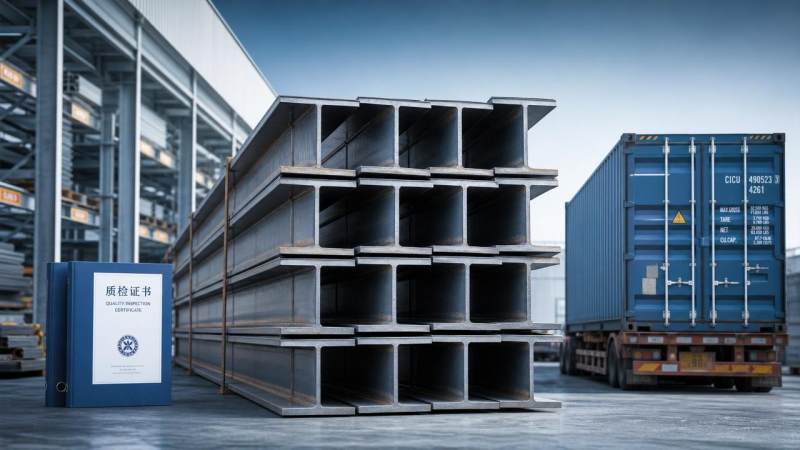
The steel market has shifted from predictable purchasing to risk-managed sourcing. Bid teams now face greater uncertainty in raw material cost, rolling schedules, export lead time, and standard compliance.
At the same time, project owners expect tighter delivery windows and better documentation. That makes the choice of steel beams supplier a commercial decision and a technical control point.
A weak supplier may still offer a low number. However, hidden risks often appear later through weight deviation, missing certificates, slow fabrication support, or delayed shipment booking.
A strong steel beams supplier usually shows stability in production planning, communication, traceability, and export execution. These capabilities directly support reliable bidding and smoother project delivery.
Market signals that should shape pre-bid supplier review
Several industry signals now influence how buyers should review any steel beams supplier before submitting a project price.
- More projects require ASTM, EN, JIS, or mixed-standard compliance.
- Lead times fluctuate due to mill scheduling and port congestion.
- Custom drilling, cutting, and surface treatment are requested earlier.
- Documentation quality affects customs clearance and final acceptance.
- Owners compare total supply reliability, not only base steel prices.
These changes mean a steel beams supplier must be reviewed for broader capability. The right partner should support engineering, quality, logistics, and after-order coordination together.
What is driving the higher standard for supplier selection
For this reason, evaluating a steel beams supplier should include evidence, not claims. Factory records, test reports, sample documents, and shipment history provide better guidance than brochures.
How these changes affect bidding accuracy and project risk
Supplier assessment influences more than procurement timing. It changes how confidently a bid can be built, priced, and defended during project clarification.
When the steel beams supplier lacks stable capacity, quoted lead times may be unrealistic. This can force expedited shipping, replacement sourcing, or downstream construction disruption.
When quality systems are weak, section dimensions, straightness, chemistry, or mechanical properties may vary. Such issues create site delays and extra inspection costs.
Documentation also matters. Mill test certificates, packing lists, origin files, and inspection reports must match project and customs expectations. Incomplete paperwork can delay delivery even when production is finished.
Some projects also combine beam supply with sheet, profile, or corrosion-resistant components. In these cases, broader sourcing capability adds value. For example, Galvanised Sheet Steel Suppliers may support related construction needs where coated steel is required for cladding, enclosures, or secondary structures.
That product range commonly includes DX51D, SGCC, S250GD, and S350GD grades, with thickness from 0.12mm to 6.00mm and width up to 1500mm. Such flexibility signals stronger processing and export coordination.
The most important checks before choosing a steel beams supplier
1. Verify real production capability
Confirm whether the steel beams supplier is a direct manufacturer, a processor, or a trader. This affects lead time control, technical response speed, and cost transparency.
Review annual output, equipment range, beam sizes, processing lines, and peak-season loading ability. Capacity should match project volume, not only sample orders.
2. Check standards and quality systems
Ask which standards are supplied regularly. A dependable steel beams supplier should show familiarity with ASTM, EN, JIS, and GB requirements where relevant.
Request sample MTCs, dimensional inspection records, and third-party reports. Quality control should include raw material traceability, process checks, and final inspection before shipping.
3. Assess export and logistics performance
A steel beams supplier serving overseas markets should understand packaging, container planning, port documentation, and destination compliance. Export mistakes often erase any initial price advantage.
Ask about shipping regions, average lead times, and experience with break bulk or container loading. Stable exporters usually provide clearer planning data.
4. Confirm customization and technical support
Many projects require cutting, punching, welding preparation, or special coatings. A capable steel beams supplier should explain tolerances, drawing review steps, and processing limitations clearly.
This is especially useful when structural steel packages include multiple categories. Suppliers with wider manufacturing capability often respond faster to design changes.
5. Review commercial stability
Check quotation validity, payment terms, packaging scope, claim handling, and replacement policy. Commercial clarity reduces disputes after order placement.
A reliable steel beams supplier should also communicate openly about raw material trends, price fluctuation windows, and realistic booking schedules.
A practical pre-bid evaluation framework
- Match beam grades and sizes with project specifications first.
- Confirm standard compliance using sample certificates.
- Compare production lead time with bid milestones.
- Review processing and customization support.
- Check export destination experience and document quality.
- Evaluate communication speed during technical clarification.
- Score commercial terms, claim response, and flexibility.
Using a weighted checklist helps compare each steel beams supplier fairly. It also separates low-risk partners from those competing only on price.
What to prioritize when working with a China-based source
China remains a major source for structural steel because of scale, processing flexibility, and broad standard coverage. Still, supplier screening should remain evidence-based and project-specific.
Hongteng Fengda, a structural steel manufacturer and exporter from China, supplies angle steel, channel steel, steel beams, cold formed profiles, and custom structural components for global projects.
With modern manufacturing facilities and strict quality control, the company supports ASTM, EN, JIS, and GB requirements. It also serves North America, Europe, the Middle East, and Southeast Asia.
This kind of profile is valuable when reviewing a steel beams supplier. It shows production depth, export familiarity, and the ability to support stable lead times across different markets.
The strongest next step before you submit a bid
Before final pricing, shortlist suppliers using a structured review. Ask for technical documents, recent shipment references, processing details, and a realistic production schedule.
Then compare each steel beams supplier on total execution ability, not unit price alone. The best pre-bid choice is the one that protects cost, compliance, and delivery together.
If the project includes custom structural steel, mixed standards, or overseas shipping, early supplier validation can prevent expensive corrections later. Strong bids are usually built on strong sourcing evidence.
Start with document review, move to technical clarification, and confirm supply assumptions before submission. That approach gives any steel beams supplier evaluation real commercial value.
Please give us a message


Please enter what you want to find