Choosing an ss coil manufacturer should never come down to price alone. For buyers comparing stainless steel pipe specifications, steel sheet for construction, or even sourcing from a carbon steel manufacturer, real value lies in quality consistency, standards compliance, production capacity, and delivery reliability. This guide explains how to evaluate suppliers more strategically and reduce long-term sourcing risk.
What should you compare first when reviewing an SS coil manufacturer?
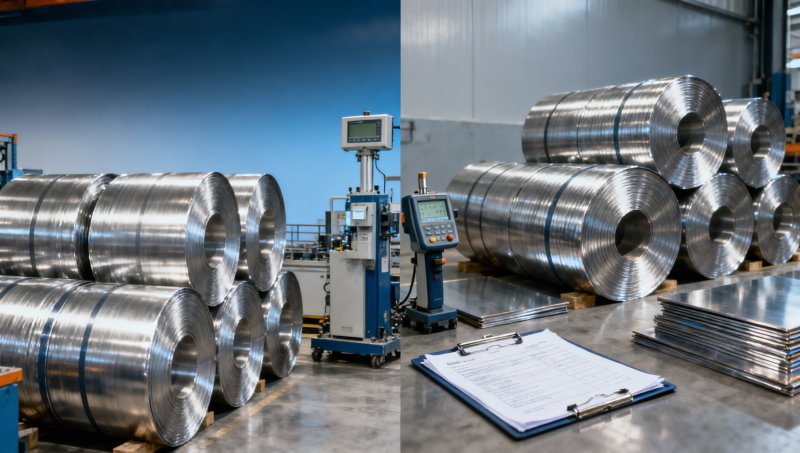
In steel procurement, price is only one of at least 5 core decision factors: material consistency, dimensional tolerance, standards compliance, production stability, and shipment reliability. A lower initial quotation can quickly become a higher total sourcing cost if the supplier cannot maintain stable thickness, flatness, surface quality, or packaging integrity across multiple batches.
This is especially important for information researchers, technical evaluators, procurement teams, and project managers who must compare not just one sample, but the supplier’s repeatability over 3 to 12 months. For distributors and industrial users, the risk is not only defective material. It also includes delayed fabrication schedules, secondary processing losses, compliance disputes, and replacement freight.
A reliable Chinese steel partner should demonstrate more than catalog breadth. Hongteng Fengda, as a structural steel manufacturer and exporter from China, supports global projects with standard steel sections, customized structural components, and production aligned with ASTM, EN, JIS, and GB requirements. That combination matters when buyers need both product availability and engineering-oriented communication.
When comparing suppliers, start by asking a simple question: can this manufacturer deliver the same acceptable quality in batch 1, batch 5, and batch 20? If the answer is unclear, then the price advantage is often misleading. In many steel sourcing decisions, one rejected shipment can erase the savings from 6 to 12 lower-priced orders.
The 5 practical screening dimensions
- Material traceability: Confirm whether heat numbers, mill test certificates, and grade records can be linked to each batch.
- Dimensional control: Check how the manufacturer controls thickness range, width tolerance, edge condition, and coil weight variation.
- Processing capability: Review whether slitting, cut-to-length, surface finish, punching, or OEM fabrication can be handled in-house or through controlled workflows.
- Delivery planning: Ask for typical lead time ranges such as 2–4 weeks for standard items and longer cycles for custom production.
- After-sales response: Understand how claims, replacement discussions, and inspection disputes are managed within practical working timelines.
Before you compare quotations line by line, it helps to compare suppliers using one evaluation sheet. The table below gives a practical framework for technical teams, procurement officers, and business approvers who need a balanced decision rather than a price-only decision.
This comparison method is useful not only for SS coil procurement but also when evaluating suppliers of structural steel, steel beams, channels, cold formed profiles, and customized fabricated components. The more project-critical the steel is, the less safe it is to judge by unit price alone.
Why do quality consistency and standards matter more than a low quotation?
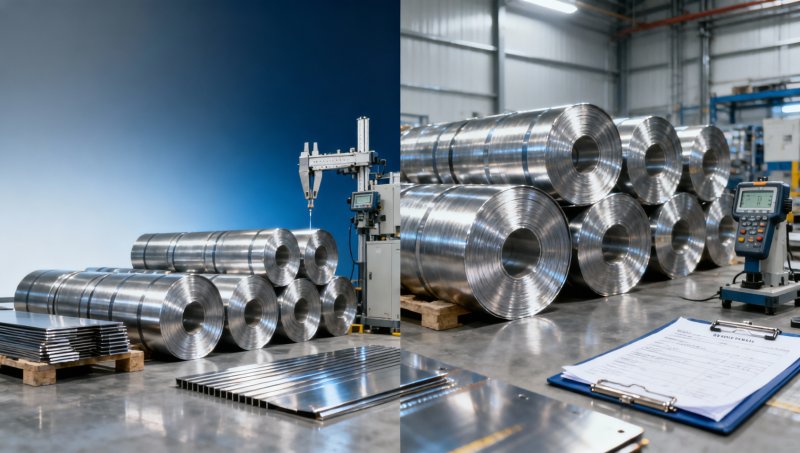
A competitive quote may look attractive in the first round, but steel buyers often discover the real cost later: off-grade material, unstable surface finish, poor straightness, wrong packaging, or incomplete documents. In international trade, even one mismatch between purchase order, mill certificate, and actual shipment can delay customs clearance or site acceptance by several days or even weeks.
For quality control personnel and safety managers, consistency is not a soft issue. It directly affects welding, cutting, forming, coating adhesion, structural performance, and inspection outcomes. If one batch processes well but the next one behaves differently, operators lose time in adjustment and scrap rates rise. That is why serious buyers review batch-to-batch control, not just a single sample result.
Manufacturers serving international markets should be able to work under common standards such as ASTM, EN, JIS, and GB. This does not mean every order must use the same standard. It means the supplier understands how project specifications differ by region and application. For importers across North America, Europe, the Middle East, and Southeast Asia, that flexibility reduces approval friction during technical review.
Hongteng Fengda supports this type of sourcing environment through modern manufacturing facilities, strict quality control, and customized solutions for construction, industrial, and manufacturing projects. That matters for buyers who need more than commodity trading. They need a supplier that can communicate around specification details, lead times, and processing requirements in a practical way.
Common hidden costs behind “cheap” steel supply
Technical losses
When thickness tolerance is unstable or edges are poorly controlled, downstream slitting, forming, or welding can require repeated machine adjustment. In a fabrication line, even a small deviation repeated across 20 to 50 coils may turn into measurable labor loss and rejected output.
Commercial losses
If packing is weak or documents are incomplete, the material may arrive with corrosion exposure, denting, or customs issues. Freight, storage, and replacement discussions can easily outweigh a minor unit-price saving, particularly in overseas shipments with long transit cycles.
Project losses
For project owners and engineering managers, the largest risk is schedule damage. A delay of 7–15 days in steel arrival can affect fabrication, erection, civil coordination, and subcontractor planning. In large projects, timing reliability often has greater financial value than the lowest initial offer.
If your sourcing includes marine, infrastructure, retaining, or deep foundation applications, product suitability becomes even more important. For example, Steel Sheet Piles are commonly selected for cofferdams and construction in deep water, where grade selection, interlock type, and dimensional suitability are more critical than headline price.
Typical options in this category include grades such as S275, S355, S390, S430, SY295, SY390, and ASTM A690, with production standards including EN10248, EN10249, JIS5528, JIS5523, and ASTM. Buyers may also need to confirm whether Larssen locks, cold rolled interlock, or hot rolled interlock are required, and whether single lengths over 80 m are relevant for the project method.
From a procurement standpoint, that example shows a broader rule: the right steel supplier should be able to match application conditions with grade, standard, and fabrication details. It is rarely enough to compare ton price without checking whether the product will perform in hard soil layers, deep water, or reusable temporary works.
How can procurement teams compare suppliers in a more structured way?
A structured comparison process helps align technical staff, procurement managers, financial approvers, and business decision-makers. In practice, most successful steel sourcing reviews follow 4 stages: specification confirmation, supplier qualification, sample or document verification, and commercial negotiation. Skipping any stage increases the chance of choosing a supplier that looks competitive on paper but creates downstream problems.
For users and operators, the first concern is whether the steel will run smoothly in cutting, welding, rolling, or installation. For technical evaluators, the concern is standards, grade suitability, and tolerance control. For finance teams, the concern is total cost predictability over one order cycle and over repeat orders. A strong manufacturer should support all 3 viewpoints with evidence, not only sales claims.
One practical method is to score suppliers across 6 items using a weighted review. For example, quality consistency, certification support, production capacity, lead time stability, communication efficiency, and quotation transparency can each receive a defined score. That makes internal approval easier when 2 or 3 suppliers offer similar prices but different execution strength.
The table below can be adapted for SS coil sourcing, structural sections, steel beams, channels, and OEM steel components. It is especially useful when a project requires repeat shipments over 2–6 months rather than a one-time trial order.
This type of matrix helps teams move from subjective judgments to documented decisions. It also reduces internal disagreement between departments because technical risk, schedule risk, and budget risk are reviewed in one place rather than separately.
A 4-step supplier comparison workflow
- Define the order clearly: confirm grade, standard, dimensions, processing needs, quantity range, and shipment destination.
- Shortlist 2–4 suppliers: compare technical response quality, not only the fastest quotation.
- Verify evidence: request certificates, sample photos, tolerance records, packaging details, and previous export experience with similar specifications.
- Negotiate on total value: discuss lead time, inspection point, packing method, claim process, and repeat-order support before confirming price.
For distributors and agents, this workflow also helps identify whether a manufacturer can support long-term channel business. Stable supply, mixed product capability, and faster quotation alignment are often more valuable than a one-time low offer that cannot be repeated consistently.
Which certifications, capacity signals, and service details should not be ignored?
Certification and compliance are not simply paperwork for tenders. They indicate whether a steel supplier can operate within disciplined manufacturing and documentation systems. In steel trade, buyers often review 3 layers of assurance: product standard compliance, factory quality system control, and shipment-level traceability. A supplier that cannot explain these layers clearly may struggle in international project execution.
For some products, buyers may also require system or product-related certifications such as ISO9001, ISO14001, ISO18001, or CE FPC where applicable to the supplied item and market. These do not replace technical review, but they support supplier qualification. The key point is relevance: certifications should match the product type, project region, and customer acceptance requirements.
Capacity signals are equally important. Ask whether the manufacturer can handle standard specifications and OEM solutions in the same planning system. A supplier that only performs well on standard catalog items may not be the right choice for mixed orders, custom lengths, or project-based fabrication. For many overseas buyers, dependable lead times are as important as steel chemistry.
Hongteng Fengda serves construction, industrial, and manufacturing customers in multiple regions and supports angle steel, channel steel, steel beams, cold formed steel profiles, and customized structural steel components. That combination helps buyers consolidate sourcing, especially when a project needs several steel categories under coordinated delivery planning.
6 details that often separate a reliable manufacturer from a trading-only option
- Technical response speed: Can the team clarify grade and standard questions within 1–3 working days?
- Production visibility: Can they explain routing, scheduling, and realistic lead time instead of giving generic promises?
- Inspection clarity: Are inspection items such as dimensions, appearance, quantity, and marking defined before shipment?
- Packaging discipline: Is export packing suitable for sea transport, storage duration, and unloading conditions?
- Customization capability: Can drawings, mixed specifications, and project requirements be discussed accurately?
- Problem-handling process: Is there a documented path for claims, feedback, and corrective action after delivery?
These points matter because most steel sourcing problems do not begin at the pricing stage. They begin where requirements are vague, review is incomplete, or the supplier lacks execution discipline. Buyers who check these details early usually make faster and safer final decisions.
FAQ: what do buyers and project teams ask most often?
Search intent around ss coil manufacturer comparison is usually practical. Buyers want to know what to verify, how long orders may take, and where supplier risk usually appears. The questions below reflect common concerns from procurement teams, engineers, distributors, and end users in the steel industry.
How many suppliers should I compare before making a decision?
In most B2B steel purchases, comparing 2–4 qualified suppliers is enough. Fewer than 2 gives little benchmark value, while too many can slow decision-making without improving quality. The key is to compare qualified options using the same specification sheet, not to collect as many low quotations as possible.
What is a reasonable lead time for steel orders?
It depends on product type, quantity, processing complexity, and shipping route. Standard steel items may follow a typical production window of 2–4 weeks, while custom fabrication or mixed-dimension orders may require a longer schedule. Always separate production time from shipping time when comparing suppliers.
Is certification enough to prove a supplier is reliable?
No. Certification helps, but it should be reviewed together with technical communication quality, product traceability, batch consistency, packaging standards, and export execution ability. A supplier may hold relevant certifications yet still perform poorly in lead time control or order coordination if internal processes are weak.
What should procurement teams ask besides price?
Ask about standards, grade confirmation, dimensional tolerances, processing scope, inspection points, packaging method, normal lead time, documentation package, and claim response procedure. These 8 areas usually reveal more about long-term supplier quality than a simple price list.
When is a lower price still acceptable?
A lower price can be a valid advantage when the supplier can still prove specification compliance, repeatable quality, stable delivery, and clear service terms. In other words, low price is beneficial only when it does not transfer hidden risk back to the buyer.
Why choose a steel partner that supports both standard supply and customized solutions?
Many buyers begin with one product inquiry but later need a broader sourcing package. A project may start with SS coil comparison, then extend to steel beams, channels, angle steel, cold formed profiles, or custom structural components. Working with a supplier that understands both standard specifications and OEM requirements helps reduce coordination time and procurement fragmentation.
Hongteng Fengda focuses on structural steel manufacturing and export from China, serving global construction, industrial, and manufacturing projects with stable production capacity, strict quality control, and dependable delivery planning. For buyers balancing technical requirements, budget control, and project timing, that support can reduce sourcing risk across the full order cycle.
If you are comparing an ss coil manufacturer beyond price, it is worth discussing your actual order conditions in detail. That includes grade and standard confirmation, dimensional requirements, application environment, delivery schedule, documentation expectations, and whether custom processing is needed. Clear technical alignment before quotation usually leads to better pricing accuracy and fewer execution problems.
You can contact us for specific support on parameter confirmation, product selection, project-based steel solutions, certification matching, sample arrangements, lead time planning, and quotation communication. Whether you are sourcing structural steel sections, fabricated components, or application-specific products for infrastructure and construction, a well-qualified manufacturing partner will help you make a safer and more cost-effective decision.
Please give us a message


Please enter what you want to find