Choosing an h beam manufacturer based only on unit price can lead to hidden risks in quality, delivery, and long-term project cost. For buyers comparing carbon steel price, steel plate for construction, or even steel rebar supplier options, a smarter evaluation looks at standards compliance, production capacity, customization, and export reliability. This guide explains how to assess real value beyond the quote.
Why unit price alone is a weak basis for comparing an H beam manufacturer
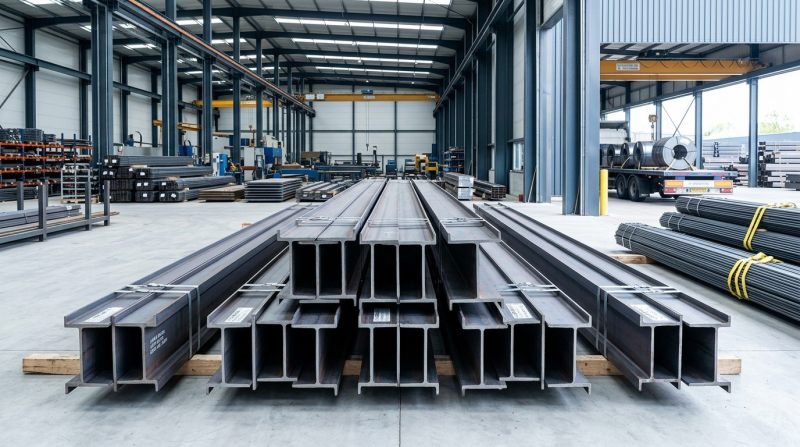
In structural steel sourcing, the quoted price per ton is only one part of the commercial picture. An H beam manufacturer may offer a lower number at the start, yet the total project cost can rise later through dimensional deviation, coating inconsistency, delayed shipment, or documentation gaps. For procurement teams, project managers, and technical reviewers, the key question is not only “What is the price?” but also “What risk is included in that price?”
This is especially important in projects that run on fixed milestones such as 2–4 week fabrication windows, phased site delivery, or monthly installation schedules. If steel beams arrive late, or if rework is required because sections do not match drawings, the impact often exceeds the original savings. A small price gap at purchase stage can become a much larger cost during welding, erection, inspection, and project coordination.
A reliable comparison should therefore include at least 5 core dimensions: standards compliance, manufacturing capability, consistency of supply, export execution, and service responsiveness. This approach helps information researchers understand the market, helps engineers verify technical suitability, and helps business decision-makers compare long-term value rather than only initial expenditure.
For global buyers, another practical factor is whether the supplier can support ASTM, EN, JIS, or GB requirements without confusion. In cross-border steel purchasing, errors often happen not because the material is completely unusable, but because the supplied grade, tolerance, marking, or test paperwork does not match the project requirement closely enough.
What hidden costs usually sit behind a low quote?
The most common hidden costs appear in 4 areas: quality variation, scrap or rework, logistics disruption, and communication inefficiency. A beam that is technically acceptable on paper but inconsistent in flange thickness, web straightness, or length tolerance can slow down fabrication lines and increase fit-up time. That extra labor cost is rarely visible in the original quotation sheet.
- Quality risk: batch-to-batch variation may increase inspection frequency and hold project progress.
- Delivery risk: missed vessel cutoff or incomplete packing lists can shift a job by 7–15 days.
- Compliance risk: missing MTCs, unclear heat numbers, or non-matching standards can delay approval.
- Commercial risk: unclear claims handling can make replacement time and cost difficult to control.
That is why experienced buyers compare manufacturers using a total-cost mindset. In steel procurement, the better supplier is often the one who reduces uncertainty across the full process, from quotation and production to inspection, packing, shipment, and after-sales support.
Which evaluation criteria matter most for procurement and technical teams?
When comparing H beam manufacturers, buyers should use a structured scorecard instead of informal impressions. This is useful for distributors, EPC teams, plant operators, and enterprise decision-makers who need a clear basis for supplier approval. The goal is to separate attractive pricing from dependable manufacturing performance.
The table below summarizes 6 practical evaluation factors used in steel sourcing. These factors are relevant whether the project involves standard steel beams, cold formed profiles, angle steel, channels, or other structural steel components for export markets.
A scorecard like this helps different departments align. Procurement can focus on landed cost, quality teams can focus on documentation and inspection control, and engineering teams can focus on dimensional and standards fit. This reduces internal disagreement and shortens the approval cycle from initial RFQ to purchase order.
How to check manufacturing strength without visiting the plant immediately
Not every buyer can conduct an on-site audit in the early stage, so remote verification becomes important. Ask for sample mill test certificates, product photos by batch, packing examples, standard range, and a clear list of equipment or process capability. A serious manufacturer should be able to explain its material flow, inspection checkpoints, and normal lead time range in a straightforward way.
A practical 4-step remote review process
- Confirm standards, steel grade, section size, and quantity range in the RFQ.
- Review technical documents such as tolerance control, inspection records, and MTC examples.
- Check production and delivery logic, including normal lead time such as 15–30 days for standard items or longer for custom fabrication.
- Evaluate communication speed, revision handling, and export documentation readiness.
This review method is especially useful when comparing several Chinese structural steel suppliers. Hongteng Fengda, for example, supports global buyers with structural steel products, customized solutions, modern manufacturing facilities, and quality control aligned with major international standards. For buyers balancing cost and reliability, this combination is often more valuable than an isolated low unit price.
How standards, documentation, and process control influence project risk
In steel procurement, compliance is not a formality. It affects whether the material can enter fabrication, pass third-party review, and move into installation on time. A manufacturer should be able to supply material in line with specified standards such as ASTM, EN, JIS, or GB, while also matching order-specific requirements on dimensions, marking, and traceability.
A common mistake is to compare quotations without checking the exact technical basis. One supplier may quote for a comparable-looking section but with a different steel grade or tolerance standard. Another may exclude testing, galvanizing, special length cutting, or export packing. These differences can distort the price comparison and lead to disputes after order placement.
Mid-project buyers often need more than beams alone. For lifting, marine, mining, utility, or site support systems, related steel products may also matter. In such cases, a supplier portfolio with broader industrial understanding can simplify sourcing. For example, Galvanized Steel Wire Rope is commonly used in mining, loading, marine industries, elevators, cranes, drilling, railways, photovoltaic, and cableway applications, with tensile strength ranging from 1470Mpa to 1960Mpa and diameters from 1.0mm to 22mm. This type of product requires the same disciplined approach to standards, coating choice, and application fit that buyers should apply when evaluating H beam suppliers.
For corrosion exposure, coating selection also changes lifecycle value. In wire rope applications, electro galvanized and hot dipped galvanized options are chosen according to mild, medium, or severe corrosion conditions, with zinc coating ranges such as 15–135 g/m2, 60–200 g/m2, and 75–260 g/m2. The lesson for structural steel buyers is clear: a technically matched solution often outperforms a cheaper but less suitable option over the service life.
Key compliance checks before placing the order
Before confirming a purchase order, buyers should verify at least 6 items: standard designation, steel grade, section tolerance, chemical and mechanical property documents, surface condition, and shipping marks. If the order includes custom fabrication, also confirm drawing revision number, hole position tolerance, cut length tolerance, and required coating or painting sequence.
The table below can be used as a pre-order checklist during technical and commercial review. It is especially useful when procurement, QA, and engineering teams need to sign off together.
This checklist protects both sides. It reduces ambiguity for the manufacturer and gives the buyer a clearer basis for inspection, acceptance, and any later claim discussion. In many steel projects, document clarity is one of the fastest ways to lower procurement risk.
How to compare lead time, customization, and export reliability
For many buyers, especially distributors and project contractors, delivery reliability matters as much as material cost. Structural steel orders often involve multiple items, such as H beams, channel steel, angle steel, and fabricated components. A supplier with stable production planning can help consolidate these needs and reduce fragmented sourcing.
Lead time should be discussed in layers, not as one simple number. Ask for 3 separate time points: document confirmation time, production time, and loading or dispatch time. For standard items, the manufacturing cycle may be shorter than for custom sections or OEM parts. For fabricated components, drawing clarification and inspection arrangement can add extra days before shipment.
Export reliability also depends on packaging discipline. Long structural sections require proper bundling, marking, and loading planning. If products are poorly packed, receiving teams may face sorting delays or damage claims. This is particularly important for projects in North America, Europe, the Middle East, and Southeast Asia, where inland transport and site handling conditions can differ significantly.
Hongteng Fengda positions its value around stable production capacity, consistent quality, and dependable lead times for global buyers. In practice, that means supporting not only standard structural steel supply, but also customized solutions that help reduce sourcing risk and improve project execution efficiency.
Questions buyers should ask before approving a supplier
- What is the normal lead time range for standard H beams versus custom structural steel components?
- Can the manufacturer support mixed orders with beams, channels, angles, and cold formed profiles in one shipment plan?
- How are drawing revisions, packing marks, and batch traceability managed before loading?
- What export documents are prepared as standard, and how quickly can revisions be issued if required?
- How is non-conformance handled if an inspection issue appears before shipment or at receiving stage?
These questions reveal whether a manufacturer is ready for real project execution, not just quotation activity. Buyers who ask them early often avoid delays, claims, and preventable cost escalation later.
FAQ: what buyers often ask when comparing H beam manufacturers
This section addresses common questions from procurement teams, engineering evaluators, quality personnel, and distributors. The answers focus on practical judgment rather than generic sales language.
How many suppliers should I compare before making a decision?
For most B2B structural steel purchases, comparing 3 suppliers is a workable range. Fewer than 2 can make benchmarking weak, while too many can slow decision-making without improving clarity. Use the same RFQ package, standards basis, quantity, and delivery conditions for all suppliers so that the comparison stays meaningful.
What matters more: price, quality documents, or lead time?
The answer depends on the project stage, but in most cases these 3 items must be balanced together. If installation is fixed, lead time risk can be critical. If the project is highly regulated, documents and standards alignment may come first. If the application is repetitive distribution stock, stable quality and replenishment predictability may matter more than chasing the lowest single order price.
How can I reduce sourcing risk when buying from overseas?
Start with a clear technical specification, a defined inspection checklist, and a written delivery scope. Confirm material standard, size, quantity, packing, documents, and shipment terms before production. For new suppliers, many buyers first place a smaller trial order or request representative documents and production evidence to validate consistency before moving to larger volumes.
Is customization always more expensive?
Not always. Custom lengths, prepared fabrication details, or combined sourcing can sometimes reduce downstream cutting, welding, sorting, and handling cost. The better question is whether customization lowers the total process cost. In some projects, paying slightly more at supply stage saves significant labor hours at workshop or site stage.
Why choose a structural steel partner with export and customization capability
A dependable H beam manufacturer should help you do more than buy steel at a quoted price. The right partner should help you confirm parameters, align standards, control lead time, and reduce execution risk. That is especially important for buyers serving construction, industrial, manufacturing, or distribution markets where delivery reliability and compliance affect the full project chain.
Hongteng Fengda focuses on structural steel manufacturing and export from China, supplying angle steel, channel steel, steel beams, cold formed steel profiles, and customized structural steel components. With modern manufacturing facilities and strict quality control, the company supports international requirements including ASTM, EN, JIS, and GB, helping global customers source with more confidence.
If you are comparing H beam manufacturers, the most useful next step is to review the full requirement set, not only the unit price. You can consult on section specifications, standard matching, custom fabrication feasibility, normal delivery cycle, export packing details, sample or document support, and quotation structure for standard or OEM orders.
Contact us to discuss your drawings, quantity range, technical standards, coating or finish requirements, target delivery window, and destination market. A clear early review can help you shorten supplier selection time, improve cost visibility, and build a more reliable steel procurement plan.
Please give us a message


Please enter what you want to find