When comparing an h beam manufacturer, price alone is never enough. Buyers evaluating steel plate for construction, steel rebar for construction, or even I beam vs H beam strength need to look at quality standards, production capacity, export experience, and delivery reliability. This guide explains how to assess suppliers more strategically, helping procurement teams and project stakeholders reduce risk and secure long-term value.
For procurement managers, engineers, distributors, and project owners, the real cost of a steel sourcing decision often appears after the order is placed. Delayed shipments, inconsistent section dimensions, failed mechanical tests, and incomplete export documents can create schedule losses far greater than a 2% to 5% price difference.
A capable Chinese structural steel supplier should be evaluated on manufacturing consistency, compliance with ASTM, EN, JIS, or GB standards, communication efficiency, and the ability to support both standard and customized structural steel components. This is especially important for projects with strict installation tolerances, phased delivery plans, or multi-country sourcing requirements.
For global buyers working in construction, industrial fabrication, machinery, and infrastructure, the right supplier is not simply the cheapest offer. It is the manufacturer that helps control risk across quality, documentation, logistics, and long-term project execution.
Why Price Is Only One Part of H Beam Supplier Evaluation
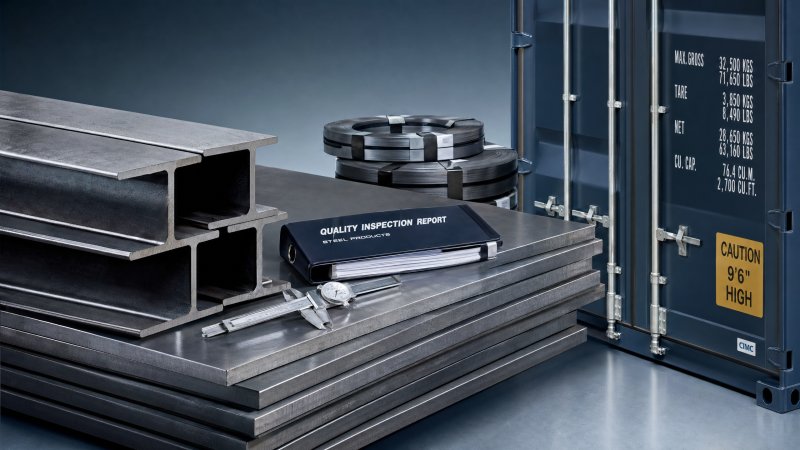
An h beam manufacturer may quote a lower unit price per ton, yet the final landed cost can rise quickly if there are dimension deviations, coating issues, packaging failures, or shipment delays. In steel procurement, a difference of 7 to 15 days in lead time can affect crane booking, site labor scheduling, and downstream fabrication.
Buyers should separate visible cost from hidden cost. Visible cost includes base steel price, tooling, packaging, and freight. Hidden cost includes rework, inspection failure, claim handling, customs delays, and emergency replacement purchases. A low quote can become the most expensive option if the supplier lacks production discipline or export coordination.
For technical evaluators, section accuracy matters as much as mechanical performance. H beams used in warehouses, workshops, bridges, and high-load frames must meet agreed tolerances for flange width, web thickness, straightness, and length. Even a small deviation may slow fit-up during welding, bolting, or assembly on site.
This is why experienced exporters such as Hongteng Fengda focus on more than volume shipment. Stable production capacity, multi-standard compliance, and reliable delivery planning are central to reducing sourcing risk for buyers across North America, Europe, the Middle East, and Southeast Asia.
The Four Cost Layers Buyers Should Review
- Base material and processing cost, including size range, grade, and any cut-to-length or drilling requirements.
- Quality cost, including third-party inspection, mill test certificate review, and rejection risk if standards are not met.
- Logistics cost, including container loading efficiency, inland transport, export packaging, and delivery timing.
- Project risk cost, including site delay penalties, fabrication interruption, and procurement team time spent on corrective actions.
The table below shows how price compares with other decision factors when evaluating an h beam manufacturer for project purchasing.
The key takeaway is simple: price is a screening metric, not a final decision metric. For medium to large steel orders, supplier stability usually has a stronger effect on total project cost than the lowest opening quotation.
How to Verify Quality Standards, Tolerances, and Manufacturing Control
A strong h beam manufacturer should be able to explain its quality control process in concrete terms. Buyers should ask how raw materials are verified, how dimensional checks are recorded, and whether each batch is linked to traceable production records. In many projects, compliance with ASTM, EN, JIS, or GB is not optional; it is a contract requirement.
Mechanical properties are essential, but they are only one part of the picture. Structural steel users should also review surface condition, camber, twist, straightness, end-cut quality, and marking accuracy. For fabricated or customized sections, hole positioning tolerance and weld preparation quality may also need to be checked before shipment.
In many sourcing programs, the most practical method is to create a 3-step approval process: sample or drawing confirmation, in-process inspection, and pre-shipment verification. This reduces surprises and gives both the manufacturer and the buyer a shared quality reference before the full order moves to export packing.
Hongteng Fengda supports structural steel buyers with standardized production and strict quality control across angle steel, channel steel, steel beams, cold formed steel profiles, and custom components. For buyers managing multiple SKUs or mixed structural packages, that consistency can simplify inspection and reduce procurement complexity.
Key Quality Questions to Ask a Supplier
- Which standards can the supplier produce to, such as ASTM, EN, JIS, or GB?
- What dimensional tolerance range is normally controlled for web thickness, flange thickness, and cut length?
- Can the supplier provide mill test certificates, inspection photos, and batch traceability records?
- What is the process for non-conforming material and claim response within 24 to 72 hours?
- Is third-party inspection accepted before loading or before final packing?
The following table helps technical teams compare quality control maturity between suppliers.
For steel procurement teams, a supplier with stronger process control usually delivers more predictable quality than one offering only a cheaper tonnage rate. Predictability is especially valuable when the order includes 20, 50, or even 100 tons across multiple sizes.
Production Capacity, Customization Ability, and Product Range Matter
A manufacturer may perform well on a small trial order but struggle when a project requires phased shipments, mixed beam sizes, or customized sections. That is why buyers should assess monthly production capacity, equipment suitability, and whether the supplier regularly handles OEM or non-standard requirements.
For many construction and industrial projects, beam sourcing does not happen in isolation. Buyers often need angle steel, channel steel, cold formed profiles, and secondary components in the same procurement cycle. Working with a structural steel manufacturer that can support several categories can reduce vendor coordination time by 20% to 30% in practical purchasing workflows.
This is also the point where related metal products may enter the conversation. For example, some buyers combine structural steel purchasing with stainless steel items for manufacturing or finishing applications. In such cases, a product like 306 Stainless Square steel rod can be relevant for kitchenware manufacturing, outdoor decoration engineering, medical instruments, automotive parts, shipbuilding, and construction-related fabrication support.
Based on the available product data, this stainless square rod is offered in 201 stainless steel and square bar sizes from 18 mm to 47 mm, with common lengths of 1 to 6 meters. Its tensile strength is at least 520 MPa, yield strength at least 275 MPa, elongation around 55% to 60%, and hardness up to 183 HB or 100 HRB. These figures indicate a balance of formability and practical strength for selected manufacturing uses.
What Capacity Questions Should Buyers Ask?
- What is the normal lead time for standard h beam sizes: 2 to 4 weeks, or longer during peak demand?
- Can the supplier support mixed orders including beams, channels, angles, and fabricated items in one shipment?
- What is the minimum order quantity for customized sections, hole processing, cutting, or OEM marking?
- How many production stages are used for custom orders: drawing review, sample approval, and mass production?
Why Product Breadth Helps Large Projects
If a supplier can provide only one beam type, the buyer may still need 2 or 3 additional vendors for channels, connection materials, or custom profiles. That increases commercial negotiation time, quality coordination effort, and shipping complexity. A broader structural steel portfolio supports more efficient sourcing and clearer accountability.
For distributors and project contractors, this matters even more when replenishment orders are required. A manufacturer with reliable capacity and multiple steel product lines is generally better prepared to support repeat orders, urgent replacement pieces, or regional stock planning.
Export Experience, Packaging, and Delivery Reliability
A technically capable h beam manufacturer can still become a weak supplier if export execution is poor. International steel orders depend on correct packing lists, markings, bundle security, moisture protection where required, and accurate shipping documents. A paperwork error can delay customs clearance by several days or even longer.
Delivery reliability should be reviewed through actual process questions. Buyers should ask how the supplier schedules rolling, cutting, inspection, packing, and container loading. They should also confirm whether the supplier can support partial shipment plans, urgent items, or coordinated dispatch for multiple destinations.
For heavy steel products, packaging is not cosmetic. It protects traceability, loading safety, and unloading efficiency. Poor bundling or unclear marks can create warehouse confusion, installation mistakes, and claim disputes. Reliable exporters generally provide clear piece identification, bundle counts, and shipment photos before departure.
Hongteng Fengda serves buyers across diverse overseas markets and emphasizes dependable lead times and stable export support. For project managers and commercial teams, this helps reduce the risk of delayed site progress and improves planning confidence from purchase order to final receipt.
Typical Delivery Checkpoints
The table below outlines practical checkpoints buyers can use to evaluate delivery discipline before awarding a steel contract.
Suppliers that manage these checkpoints consistently are easier to work with over the long term. In international steel trade, dependable process execution often matters more than persuasive sales language.
A Practical Supplier Comparison Framework for Procurement Teams
To compare an h beam manufacturer beyond price, procurement teams should use a weighted evaluation model. This works particularly well when several departments are involved, such as engineering, quality control, finance, and project management. Instead of debating only the cheapest quote, the team compares suppliers across shared decision criteria.
A common approach is to score each supplier on 5 core dimensions: quality capability, production capacity, delivery reliability, export support, and commercial competitiveness. Each dimension can be weighted from 10% to 30% depending on project complexity. For example, a time-sensitive infrastructure project may assign 25% to delivery reliability, while a high-spec fabrication program may assign 30% to quality control.
This framework is useful for both first-time sourcing and annual supplier review. It also helps financial approvers understand why a slightly higher quote may still create better total value over 6 to 12 months of purchasing activity. The goal is not to eliminate price sensitivity, but to place price inside a broader risk-adjusted decision model.
For buyers looking for a long-term structural steel partner from China, the most efficient choice is often a manufacturer that combines standard compliance, stable output, customizable solutions, and responsive communication. That combination supports smoother execution from inquiry to delivery.
Suggested Supplier Scoring Matrix
- Quality system and compliance: 25 points
- Production capacity and customization support: 20 points
- Delivery performance and lead time stability: 20 points
- Export documentation and packaging readiness: 15 points
- Price, payment terms, and commercial flexibility: 20 points
Common Buying Mistakes to Avoid
One common mistake is comparing only the first quotation sheet without aligning the specification details. Another is approving a supplier without checking production communication speed. If a supplier takes 4 to 5 days to answer technical questions before the order, response speed may be worse once production begins.
A second mistake is not defining inspection scope clearly. Buyers should specify whether they need mechanical test reports, dimension inspection records, surface review, or third-party witness checks. Clear expectations reduce disputes and create a more professional purchasing process.
FAQ: Questions Buyers Often Ask
How many suppliers should be compared for a serious steel project?
For most B2B steel purchases, comparing 3 to 5 qualified suppliers is usually enough. Fewer than 3 may limit benchmarking, while more than 5 can slow the decision without adding much value unless the project is unusually large or highly specialized.
What lead time is common for standard structural steel orders?
For common sizes, many orders fall within a 2 to 4 week production window, excluding ocean transit. Customized processing, mixed specifications, or peak season demand can extend that cycle, so buyers should confirm both production and shipment timelines separately.
Should buyers request third-party inspection?
If the order value is high, the project is schedule-critical, or the specification is strict, third-party inspection is often a good risk-control step. It is especially useful for first orders, customized steel beams, and export programs where replacement would take several weeks.
Comparing an h beam manufacturer beyond price means looking at the full sourcing outcome: compliant steel products, consistent dimensions, dependable lead times, export-ready execution, and practical service during the order cycle. That is what protects project schedules, purchasing efficiency, and long-term commercial value.
Hongteng Fengda supports global buyers with structural steel manufacturing, export experience, customized solutions, and quality-focused production across beams, angles, channels, cold formed profiles, and related components. If you are evaluating suppliers for construction, industrial, or manufacturing projects, now is the right time to compare capability as carefully as price.
Contact us today to discuss your specifications, request a tailored quotation, or explore a more reliable structural steel sourcing plan for your next project.
Please give us a message


Please enter what you want to find