Choosing the right angle stainless steel supplier is not just about finding the lowest quote. A fair comparison should focus on product quality, standards compliance, manufacturing capability, delivery reliability, communication, and total sourcing risk. For buyers of steel angle for construction, angle iron for trailer fabrication, or related structural products, the best supplier is the one that can deliver consistent quality, clear documentation, and dependable support at a competitive long-term cost—not simply the cheapest unit price.
What buyers are really trying to compare
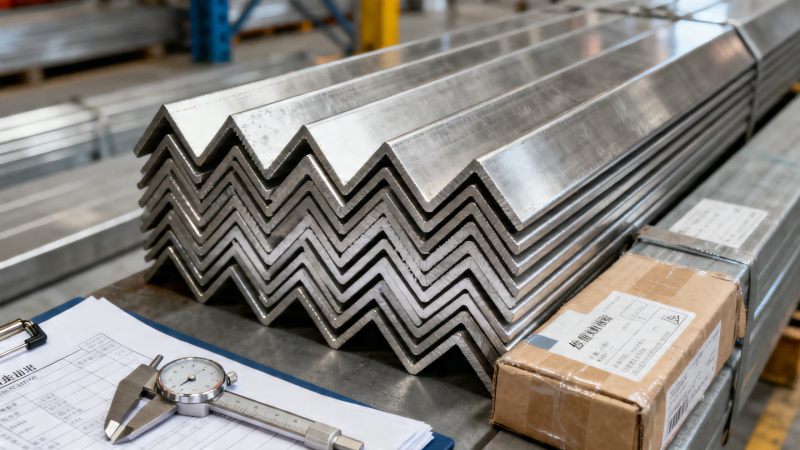
When people search for how to compare an angle stainless steel supplier fairly, they usually want a practical evaluation method. They are not only asking, “Who is cheaper?” They are asking:
- Which supplier can meet the required grade, size, tolerance, and finish?
- Which company is reliable enough for repeat orders and project schedules?
- How can I avoid quality disputes, delays, or hidden costs?
- What proof should I request before making a purchase decision?
That means a fair supplier comparison should be based on objective criteria. If one supplier offers lower pricing but weak inspection records, unstable lead times, or poor communication, that lower price may create higher total cost later through rework, scrap, claims, or project delay.
Start with technical compliance, not price
The first filter should always be whether the supplier can meet your technical requirements. This is especially important for technical evaluators, quality managers, project teams, and purchasing staff working across international markets.
Check the following points first:
- Material grade: Can the supplier provide the exact stainless steel or structural steel grade required by your specification?
- Dimensions and tolerance: Are size accuracy, straightness, thickness, and length controlled consistently?
- Applicable standards: Do the products comply with ASTM, EN, JIS, GB, or other required standards?
- Surface condition: Is the finish suitable for visible, industrial, corrosive, or fabrication applications?
- Testing and traceability: Can the supplier provide MTC, inspection reports, and batch traceability?
If a supplier cannot clearly answer these questions, comparing freight, payment terms, or discount levels is premature. A supplier must first be technically qualified before it is commercially attractive.
Compare manufacturing capability and consistency
Many sourcing problems come from choosing a trader or factory that cannot consistently produce what was promised. A fair review should go beyond a product catalog and examine actual manufacturing strength.
Useful comparison factors include:
- Production equipment: Is the facility equipped for cutting, forming, punching, galvanizing, or custom fabrication if needed?
- Capacity: Can the supplier handle both trial orders and larger repeat volumes?
- Customization ability: Can they produce non-standard sizes, hole patterns, or OEM structural components?
- Quality control process: Are there incoming material checks, in-process inspections, and final inspections?
- Export experience: Do they understand packaging, labeling, loading, and document requirements for your market?
For example, buyers working on lightweight structural framing or purlin systems may also compare related profiles during sourcing. In some projects, a supplier with broad structural capability can simplify procurement by supplying angle steel together with compatible sections such as Z-beam products for wall beams, roof systems, brackets, and light steel structure applications. If those products are available with grades such as Q235B, Q345B, S275, S355, A36, or A572, and with controlled thickness from 6-25mm, that may improve procurement efficiency across one project package.
Evaluate delivery reliability and supply chain risk
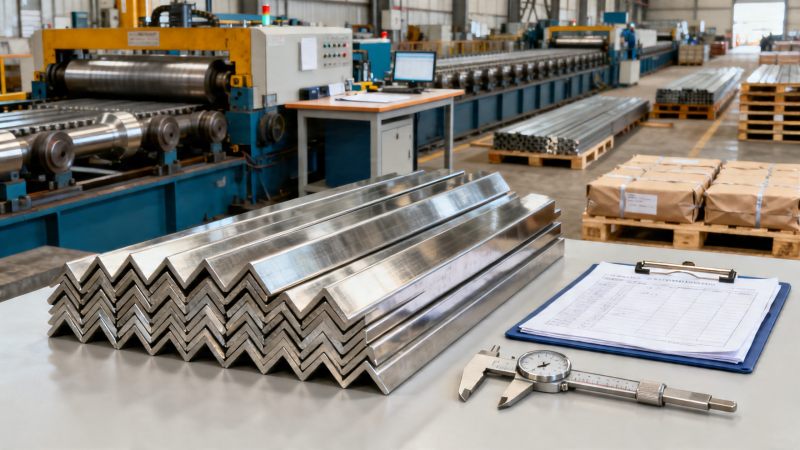
For project managers, contractors, distributors, and financial approvers, on-time delivery often matters as much as product quality. A fair supplier comparison should include delivery performance, not just promised lead time on paper.
Ask these questions:
- What is the normal production lead time for standard and custom orders?
- Can the supplier support urgent orders without harming quality?
- Do they have stable raw material sourcing?
- How do they manage peak-season demand?
- What is their record on shipment schedule accuracy?
A supplier with dependable production planning can reduce inventory pressure, site delays, and emergency procurement. This is especially valuable for buyers importing from overseas, where a missed shipment window can affect installation schedules, labor planning, and customer commitments.
Check documents, certifications, and proof of quality
A trustworthy supplier should be able to provide evidence, not just promises. This is one of the most effective ways to compare suppliers fairly.
Documents worth requesting include:
- Mill Test Certificates
- Third-party inspection reports
- ISO or relevant quality system certificates
- Product compliance records for target markets
- Previous export references or shipment cases
For some structural steel products, certifications such as CE, SGS, BV, or ISO can support confidence in production management and export readiness. However, documents should be reviewed together with actual product samples, tolerance checks, and communication quality. A certificate alone does not guarantee a smooth transaction.
Measure service quality and communication speed
Many buyers underestimate service performance until a problem occurs. But responsive communication is a major part of supplier reliability, especially when dealing with custom structural steel or mixed orders.
Compare suppliers on:
- Quotation clarity: Is the offer detailed, transparent, and easy to review?
- Technical support: Can they understand drawings and recommend suitable specifications?
- Problem-solving: How do they handle complaints, shortages, or quality issues?
- Response time: Do they answer quickly and professionally?
- Commercial flexibility: Can they support practical terms for packaging, labeling, and shipment combinations?
Strong communication reduces misunderstandings, speeds up internal approval, and helps buyers avoid ordering mistakes. For international sourcing, this can be just as important as the product itself.
Use total cost, not unit price, as the comparison basis
Procurement teams and business decision-makers should compare total cost of ownership rather than only ex-works or FOB price. A lower quote may become expensive when hidden risks are added.
Include these cost factors in your evaluation:
- Material quality consistency
- Yield loss from poor tolerance
- Rework and fabrication inefficiency
- Inspection and claim handling cost
- Packaging quality and transport damage risk
- Late delivery impact on project schedule
- Administrative cost caused by weak documentation
This is where experienced manufacturers often create better long-term value. A stable supplier may not always be the absolute lowest bidder, but they can reduce uncertainty and protect margins over repeated orders.
A practical checklist for fair supplier comparison
To make the evaluation process more objective, build a simple scoring sheet. You can score each supplier from 1 to 5 in the following categories:
- Technical compliance
- Product quality and tolerance control
- Certifications and documentation
- Manufacturing capacity
- Customization capability
- Lead time reliability
- Export packaging and shipping support
- Communication efficiency
- After-sales service
- Total cost competitiveness
Weight the scores according to your project priorities. For example, a distributor may prioritize consistency and delivery, while an engineering contractor may prioritize standards compliance and fabrication accuracy. A buyer sourcing structural systems may also benefit from suppliers that can support complementary profiles, including perforated or non-perforated options, galvanized finishes, and custom lengths up to 12m for related sections.
What a strong supplier relationship should look like
The best supplier is not simply a one-time vendor. For long-term buyers, distributors, and industrial users, a good supplier becomes a practical sourcing partner. That means they can:
- Maintain consistent quality across batches
- Support multiple standards for different markets
- Offer realistic lead times
- Provide clear quality records
- Handle custom requirements professionally
- Help reduce sourcing risk over time
For global buyers of structural steel, working with a manufacturer and exporter that understands international standards, production control, and project delivery can create measurable value beyond the initial order.
In summary, the fairest way to compare an angle stainless steel supplier is to assess technical fit, manufacturing capability, quality assurance, delivery reliability, service responsiveness, and total cost together. Price matters, but it should never be the only benchmark. Buyers who compare suppliers objectively are more likely to avoid sourcing problems, improve project outcomes, and build a stable long-term supply chain.
Please give us a message


Please enter what you want to find