Choosing the right stainless steel square bar supplier can directly affect product quality, delivery reliability, and total procurement cost.
For construction, fabrication, and industrial use, price alone is never enough.
A smart comparison should cover standards, production strength, export capability, customization, inspection, and service response.
This article explains how to compare a stainless steel square bar supplier with practical checkpoints that support better steel sourcing decisions.
Why a structured comparison matters
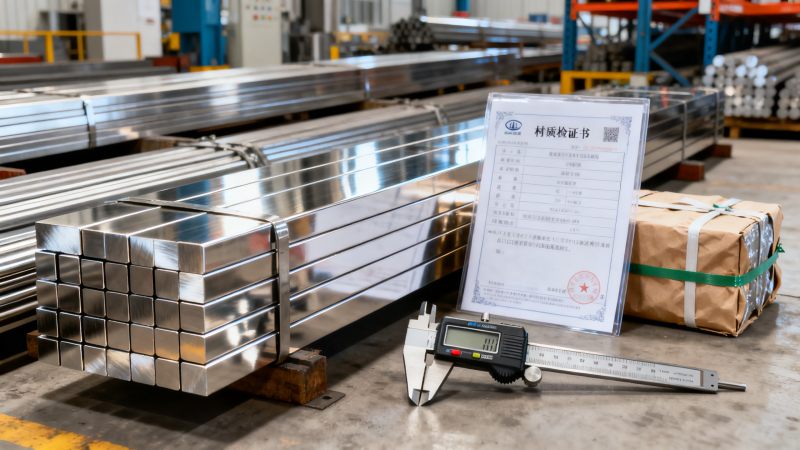
A stainless steel square bar supplier may look competitive on quotation sheets, but hidden differences often appear after ordering.
These differences include material inconsistency, slow lead times, weak packaging, unclear certificates, and poor communication during export.
Using a clear comparison method reduces sourcing risk and improves long-term value.
It also helps separate trading claims from real manufacturing capability in the structural steel market.
Core points to compare in a stainless steel square bar supplier
Use the following points when reviewing quotations, factory profiles, and sample documents from each stainless steel square bar supplier.
- Confirm supported grades, such as 201, 304, 316, or duplex options, and match them with corrosion resistance, strength, and project environment requirements.
- Check dimensional range, straightness tolerance, edge condition, and surface finish to ensure the bar meets fabrication, machining, or architectural standards.
- Review compliance with ASTM, EN, JIS, or GB standards, and verify whether mill test certificates are available for every production batch.
- Evaluate actual production capacity, not just annual numbers, by asking monthly output, lead time stability, and peak season scheduling capability.
- Ask about customization support for cut length, special packing, secondary processing, and OEM marking if the project requires non-standard supply.
- Compare inspection procedures, including chemical composition checks, mechanical testing, size measurement, and final appearance examination before shipment.
- Assess export experience by reviewing destination markets, shipping terms, container loading methods, and document accuracy for customs clearance.
- Study packaging details carefully because moisture protection, bundling, labeling, and pallet strength directly affect delivered product condition.
- Look at response speed and technical support quality, especially when discussing substitute grades, urgent orders, or quality issue resolution.
- Compare total landed cost instead of unit price only, including waste rate, rework risk, freight efficiency, and payment terms.
Material standards should come first
The first step when comparing a stainless steel square bar supplier is checking grade accuracy and standard compliance.
A lower price loses value if the chemical composition does not match the specified grade.
Ask for MTCs, heat numbers, and standard references.
Reliable suppliers should explain whether bars are produced to ASTM, EN, JIS, or equivalent specifications.
Manufacturing capability affects consistency
Consistent quality depends on process control, equipment condition, and internal inspection routines.
A strong steel producer can usually provide stable dimensions, cleaner surfaces, and dependable delivery windows.
In broader steel sourcing, some buyers also need related products for protection or platform applications.
For example, Galvanized Expanded Metal Sheet may be sourced together for construction, industry, transportation, or energy projects.
This product supports grades like DX51D+Z and S350GD+Z, thickness from 0.12mm to 6.00mm, and zinc coating from 60g/m² to 275g/m².
A supplier with multi-product steel experience often handles standards, customization, and export documents more professionally.
How to compare suppliers in different application scenarios
Construction and structural use
For structural or architectural projects, appearance and tolerance control are both important.
Check straightness, corner definition, weldability, and finish consistency across batches.
The stainless steel square bar supplier should also support stable lengths and project-based packing labels.
Machining and manufacturing use
Machining applications need reliable hardness, dimensional accuracy, and low defect rates.
Request sample bars when possible and compare cutting behavior, surface flaws, and material consistency.
A dependable stainless steel square bar supplier should discuss processing suitability, not only pricing.
Marine, chemical, or humid environments
In corrosive environments, grade selection becomes a major decision point.
Compare whether the supplier recommends 304, 316, or higher-performance alternatives based on chloride exposure and service conditions.
A qualified stainless steel square bar supplier should explain corrosion performance with technical clarity.
OEM and custom fabrication projects
Custom projects often require special lengths, precise tolerances, or mixed packaging.
Ask whether the supplier supports customized cutting, marking, bundled documentation, and repeat order traceability.
This is where an experienced stainless steel square bar supplier can create real procurement efficiency.
Common issues buyers often overlook
Several important details are often missed during early supplier comparison.
Unclear origin of raw material
If billet or coil sourcing is unstable, final bar performance may also vary.
Ask whether raw materials come from fixed steel mills or changing market sources.
Certificates without matching batch control
A certificate alone does not guarantee traceability.
Check whether heat number labels, production records, and shipping marks align with the delivered goods.
Lead time promises without production evidence
Some lead times are sales estimates rather than factory-backed schedules.
Request a realistic production and shipment timeline, especially for large or repeated orders.
Low prices caused by missing services
A cheaper offer may exclude testing, export packaging, or document support.
This can increase hidden costs later and weaken project scheduling control.
Practical steps before placing an order
- Prepare a comparison sheet covering grade, size, tolerance, finish, standards, quantity, packing, and delivery terms.
- Request technical documents, sample photos, and recent inspection records from each stainless steel square bar supplier.
- Compare response quality, not just speed, by checking whether answers are specific, technical, and consistent.
- Test one trial order first when possible to verify material consistency, packing quality, and actual shipping performance.
- Review after-sales handling terms for quality claims, shortages, or replacement procedures before confirming repeat business.
FAQ about choosing a stainless steel square bar supplier
Is the cheapest stainless steel square bar supplier the best choice?
Not usually.
The best option balances compliant material, stable delivery, low defect risk, and clear service support.
What documents should be requested?
Request MTCs, packing lists, invoices, standard references, inspection reports, and origin-related export documents when required.
How can you check if a supplier has real export experience?
Ask about destination markets, shipping terms, loading photos, packaging methods, and document preparation for customs compliance.
Final decision guidance
To compare a stainless steel square bar supplier effectively, focus on technical fit, consistency, and supply reliability first.
Then compare service responsiveness, export capability, and total procurement cost.
A qualified steel partner should provide stable standards, dependable lead times, professional communication, and flexible support for project needs.
Use a documented supplier checklist, verify evidence carefully, and start with a controlled order if needed.
That approach makes choosing a stainless steel square bar supplier more accurate, lower risk, and more valuable over time.
Please give us a message


Please enter what you want to find