When evaluating a channel steel supplier, unit price is only one part of the equation. Buyers comparing steel rebar price per ton, hot dip galvanized steel price, or steel bar cost also need to assess quality consistency, standards compliance, delivery reliability, and service support. This guide explains how to compare suppliers more strategically to reduce sourcing risk and improve long-term project value.
For procurement teams, engineers, distributors, project managers, and financial approvers, the real question is not only “Who offers the lowest quote?” but “Which supplier can support the project with consistent steel quality, predictable lead times, and lower total risk over 6–18 months?” In channel steel purchasing, a cheaper tonnage price can quickly become expensive if dimensional tolerances drift, coating quality is unstable, or deliveries miss site schedules.
A practical supplier comparison should include technical capability, standards compliance, inspection methods, production stability, export experience, communication efficiency, and after-sales support. For global buyers sourcing from China, these factors often matter more than a 2%–5% difference in unit price because project delays, rework, and claims can multiply hidden costs far beyond the original quotation.
Look Beyond the Quoted Ton Price
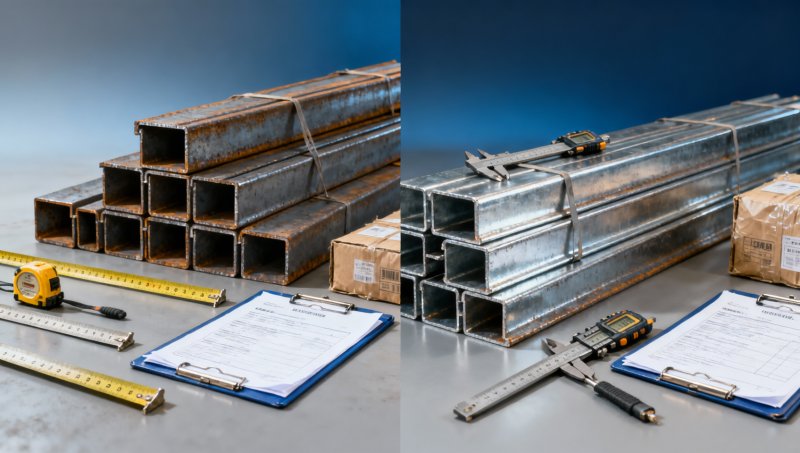
The first comparison point is to separate nominal price from total procurement cost. A quote for channel steel should be reviewed together with steel grade, section tolerance, length tolerance, surface condition, coating requirements, packaging method, inspection scope, and shipping terms. Two suppliers may both quote per metric ton, yet one includes mill test documents, tighter dimensional control, and export-grade packing while the other does not.
In structural applications, even small deviations can create major downstream costs. If web thickness or flange dimensions vary outside acceptable limits, installers may face fit-up problems, extra welding, or on-site modifications. A price advantage of USD 20–40 per ton can disappear quickly if a project loses 3–7 days to correction work or replacement orders.
Buyers should also consider commercial terms. A lower unit price paired with a 50% advance payment, loose delivery commitment, or unclear claim handling may be less attractive than a slightly higher quote with documented inspection, milestone updates, and defined replacement support. The comparison should be made at the level of delivered project value, not simply base material cost.
For B2B steel sourcing, a good supplier should help reduce risk in at least 4 areas: technical mismatch, delivery disruption, quality inconsistency, and communication delay. These are the cost drivers that procurement teams often discover only after the purchase order has been placed.
What should be included in a supplier cost comparison
Before comparing quotations, create a checklist that standardizes what each supplier must confirm. This prevents an “apple-to-orange” comparison and makes internal approval easier for technical and finance teams.
- Steel grade and applicable standard, such as ASTM, EN, JIS, or GB
- Section size range, thickness tolerance, straightness, and length accuracy
- Surface treatment details, including bare, primed, or hot dip galvanized finish
- Inspection documentation, including chemical composition and mechanical properties
- Packing, marking, loading method, and Incoterms such as FOB, CFR, or CIF
- Lead time, production slot confirmation, and response time for claims
The table below shows why a low offer can be misleading when technical and service variables are not aligned.
The key takeaway is that the best supplier comparison combines price, specification completeness, and execution reliability. This approach gives decision-makers a more accurate basis for supplier approval and protects project margins over the full purchase cycle.
Verify Manufacturing Capability and Quality Control
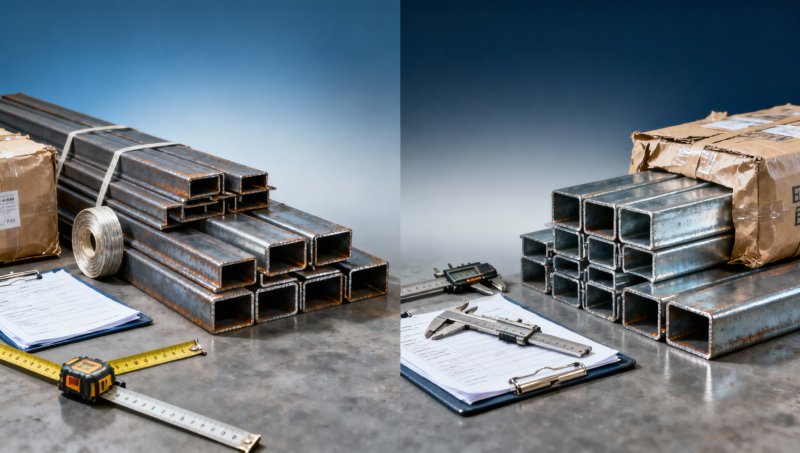
A reliable channel steel supplier should be able to explain how products are made, inspected, and controlled from raw material intake to final shipment. Buyers should ask about production equipment, forming methods, cutting accuracy, galvanizing arrangements if applicable, and batch traceability. A supplier with stable process control is generally more valuable than one that simply trades material from changing sources.
Quality consistency matters especially for repeat orders and project-based supply. If a project requires 200 tons this month and 300 tons next month, section dimensions, strength performance, and coating quality should remain stable from batch to batch. Without this consistency, fabricators and site teams may face welding variation, alignment issues, or unacceptable visual differences in installed steel members.
The most practical verification method is to review standards alignment and inspection practice. For structural steel exports, common expectations include compliance with ASTM, EN, JIS, or GB requirements, plus routine checks on dimensions, length, weight, surface finish, and where required, coating thickness. Many buyers also expect heat number traceability and mill test certificates for each shipment lot.
A supplier serving international markets should also understand packaging and documentation requirements. Export readiness is not only about making steel; it includes correct bundle marking, loading stability, moisture protection where needed, and document accuracy for customs and downstream acceptance.
Questions technical evaluators should ask
- Can the supplier provide routine dimensional inspection records for each batch?
- What is the normal tolerance control for length, straightness, and section dimensions?
- Are chemical composition and mechanical properties verified by heat or by shipment lot?
- If galvanized channel steel is required, how is coating thickness checked and reported?
- Can the supplier support custom punching, cutting, or OEM fabrication in addition to standard sizes?
A useful mid-project benchmark
Even when sourcing structural steel, many buyers also procure related industrial materials for filtration, screening, or plant support applications. In such mixed procurement environments, evaluating process capability across product types can reveal whether a supplier understands precision and material control. For example, 306 Stainless Steel Welded Mesh is commonly used in filters, sieves, chemical plants, mining operations, architecture, and residences, with stainless steel wire grades such as SS 201, 304, 304L, 316, 316L, and 430.
Its typical specification range includes wire diameter from 0.0008″ to 0.12″, mesh counts from 2 to 635 mesh, open area from 25 to 84.6, roll width up to 240″, and roll length up to 2000′. Products in this category are selected for resistance to rust, corrosion, acid, alkali, heat, and chemicals, as well as high strength and durability. A supplier able to manage both structural steel and tightly specified stainless products often demonstrates broader manufacturing discipline and stronger quality routines.
The table below highlights the most useful quality control checkpoints when comparing channel steel suppliers.
Strong manufacturing control is one of the clearest signs of a dependable long-term supplier. For project buyers, it reduces the probability of nonconformance, site delay, and difficult internal claim discussions after goods arrive.
Assess Delivery Reliability, Communication, and Export Support
In international steel procurement, on-time delivery can be as important as product quality. Channel steel often feeds fabrication schedules, civil installation sequences, warehouse stock planning, or distributor replenishment cycles. A supplier that misses committed dates by 1–2 weeks may trigger crane rescheduling, idle labor, or customer penalties further down the chain.
Delivery evaluation should therefore focus on actual production planning, not just promised lead time. Buyers should ask whether the supplier has stable monthly capacity, whether standard sizes and raw materials are regularly available, and how production is sequenced for mixed orders. For many export projects, a realistic production and shipment window may be 3–6 weeks depending on quantity, processing, and destination.
Communication is another major differentiator. Procurement teams need prompt answers during quotation, drawing review, production, inspection, booking, and post-delivery follow-up. Delays of 48–72 hours in technical clarification can hold up internal approvals or vessel booking. A good supplier communicates in a structured way, confirms changes in writing, and provides milestone updates before buyers need to chase them.
Export support also deserves close attention. For overseas projects, buyers benefit from suppliers that understand packing lists, invoices, material certificates, marking requirements, and loading plans. Errors in these areas may not show up in the unit price, but they can create expensive delays at port, customs, or site receiving.
Signs of a delivery-capable supplier
- Quotation response within 24–48 hours for standard inquiries
- Clear production lead time rather than vague “as soon as possible” wording
- Batch-based shipment planning for orders above 100–300 tons
- Document checklist shared before shipment
- Named contact for technical, commercial, and logistics coordination
The next table can be used by buyers to compare delivery reliability and service responsiveness across multiple channel steel suppliers.
The conclusion is simple: supplier reliability should be measured by process visibility and execution discipline. For global channel steel sourcing, fast and accurate coordination often saves more money than the lowest headline quote.
Build a Practical Supplier Scorecard for Procurement Decisions
A structured supplier scorecard helps different stakeholders evaluate channel steel suppliers using the same criteria. This is especially useful when technical teams focus on standards, procurement focuses on price and lead time, finance reviews payment exposure, and project managers prioritize schedule certainty. Without a scorecard, decisions can become subjective and overly influenced by the cheapest initial number.
An effective model usually includes 5 core dimensions: technical compliance, quality assurance, price competitiveness, delivery reliability, and commercial service. Each dimension can be weighted according to project needs. For example, an urgent industrial installation may assign 30% to delivery and 25% to quality, while a long-term distributor program may emphasize price stability and repeat consistency over 12 months.
This method also supports internal approvals. When a supplier with a slightly higher quote receives a stronger overall score because of better inspection, shorter lead time, and clearer documentation, procurement can justify the recommendation with a transparent decision record. That reduces friction between commercial and technical teams.
For buyers working with structural steel manufacturers and exporters from China, the scorecard should also consider export experience and ability to handle custom fabrication or OEM requirements. Suppliers with stable production capacity and familiarity with ASTM, EN, JIS, and GB specifications are often better positioned to support multi-region orders.
Sample 100-point scorecard
The table below provides a practical model that can be adapted to project, distributor, or stock procurement scenarios.
A scorecard like this turns supplier selection into a repeatable process rather than a one-time negotiation exercise. It also helps identify whether a supplier is suitable for one urgent order, long-term framework purchasing, or distributor cooperation across multiple regions.
Common mistakes when comparing channel steel suppliers
- Comparing FOB and CIF prices without adjusting for freight and handling scope
- Assuming all channel steel with the same nominal size meets the same tolerance and standard
- Ignoring packaging, marking, and document quality until shipment stage
- Choosing a supplier based on one low quote without checking repeat-order consistency
- Failing to involve QC, engineering, and project teams in early evaluation
Frequently asked questions from buyers
How many suppliers should be compared before placing a channel steel order?
For standard procurement, comparing 3 suppliers is usually enough to establish a credible price and capability benchmark. For high-volume or project-critical orders above 100 tons, many buyers review 3–5 suppliers to better compare quality systems, lead times, and commercial terms.
What lead time is realistic for exported channel steel?
A common planning range is 3–6 weeks for production plus shipping time based on destination and booking conditions. Customized processing, galvanizing, or mixed-size orders may extend the schedule, so buyers should request a staged timeline rather than a single estimated date.
Which documents should buyers request before shipment?
Typical documents include commercial invoice, packing list, mill test certificate, inspection records where agreed, and shipping documents based on the trade term. For projects with strict traceability, bundle marking details and heat-related records may also be useful.
Is the cheapest supplier ever the right choice?
Sometimes yes, but only when specifications, tolerances, inspection scope, delivery commitment, and commercial terms are fully aligned. If those items are not comparable, the lowest price may simply reflect lower service scope or higher execution risk.
Comparing a channel steel supplier beyond unit price leads to better procurement outcomes, fewer quality disputes, and more predictable project performance. The strongest suppliers combine competitive pricing with clear standards compliance, stable manufacturing, dependable lead times, and practical export support. For buyers seeking structural steel from China, this balanced approach is the most effective way to control sourcing risk and protect long-term value.
Hongteng Fengda supports global construction, industrial, and manufacturing projects with angle steel, channel steel, steel beams, cold formed steel profiles, and customized structural steel components. If you need a more accurate supplier comparison, a tailored quotation, or support on standards, OEM processing, and delivery planning, contact us today to discuss your project and get a customized solution.
Please give us a message


Please enter what you want to find