How to Compare Steel Suppliers on Quality and Lead Time
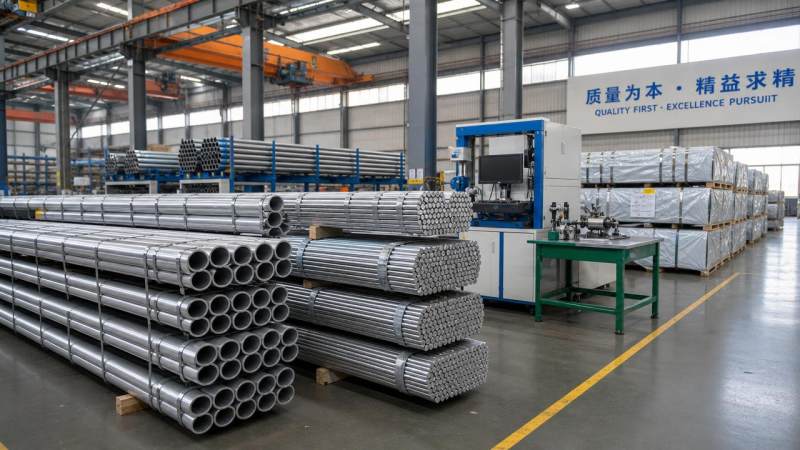
Choosing among steel suppliers is never only about unit price.
It shapes product reliability, project timing, and total sourcing risk.
A cheaper offer can become expensive when quality drifts or shipments slip.
That is why experienced buyers compare steel suppliers using measurable standards.
The smartest review looks at quality systems and lead time performance together.
If one side is weak, supply stability usually suffers sooner or later.
For construction and industrial orders, this balance matters even more.
Start with quality systems, not sales promises
Many steel suppliers sound similar in quotations and brochures.
The real difference appears in how they control production every day.
Start by checking whether the supplier works under recognized standards.
For structural steel, common references include ASTM, EN, JIS, and GB.
A qualified exporter should explain which standard fits your project requirement.
More importantly, ask for mill test certificates from recent shipments.
These documents show whether quality is repeatable, not just claimed once.
- Check chemical composition consistency across different batches.
- Review tensile strength, yield strength, and dimensional tolerances.
- Confirm coating or surface treatment records when corrosion matters.
- Ask how nonconforming materials are isolated and corrected.
This step quickly separates disciplined steel suppliers from trading-only intermediaries.
Compare production consistency, not only sample quality
One approved sample does not guarantee future batches will match.
In actual purchasing, batch stability is what protects schedules and costs.
Ask steel suppliers about their monthly capacity and equipment layout.
A stable producer should describe cutting, forming, galvanizing, inspection, and packing clearly.
It also helps to ask what part of the process is outsourced.
Outsourcing is not always a problem, but hidden outsourcing often is.
When process control is fragmented, lead time usually becomes less predictable.
That same risk can also affect finish quality and dimensional accuracy.
Useful questions during supplier evaluation
- How many similar export orders were completed in the last year?
- What is the average rejection rate by product type?
- How often are inspection tools calibrated?
- What is the usual production queue for repeat orders?
- Which process creates the biggest delay risk?
These questions reveal whether steel suppliers understand operational reality.
Review inspection standards before discussing delivery dates
Lead time promises mean little if inspection happens late or inconsistently.
A reliable supplier should define incoming, in-process, and final inspection points.
This is especially important for structural sections and custom fabricated parts.
If galvanizing is required, coating thickness and surface condition should be documented.
For example, Galvanized Round Steel is often chosen for outdoor or corrosive environments.
In those cases, anti-corrosion performance matters as much as dimensional control.
If the product uses DC01 material and tensile strength of 570-820 MPa, verify records carefully.
For diameters from 16-250 mm, tolerance handling should also be confirmed early.
- Ask whether ultrasonic or surface control devices are available.
- Confirm traceability from raw material to packed shipment.
- Request photos or reports from the latest inspected order.
- Clarify whether third-party inspection is accepted before loading.
When steel suppliers welcome inspection transparency, risk usually becomes easier to manage.
Measure lead time using process checkpoints
Many buyers compare lead time as one number only.
That approach misses where delays usually start.
A better method is to break lead time into checkpoints.
This makes comparisons between steel suppliers much more objective.
With this view, quoted lead time becomes easier to test and compare.
It also helps identify which steel suppliers can support urgent repeat orders.
Look at total procurement cost, not only offer price
Low prices can hide expensive downstream problems.
Rework, claims, delays, and emergency replacement all raise actual cost.
This is why strong steel suppliers often create better value, not just higher quotes.
Compare suppliers using a simple weighted scorecard.
- Price competitiveness and payment terms.
- Certification coverage and quality history.
- Lead time stability across recent orders.
- Communication speed during technical clarification.
- Flexibility for custom sizes, OEM work, or mixed loads.
From recent market shifts, dependable execution has become a stronger buying signal.
This is even clearer when project penalties are tied to delivery delays.
Check export experience and communication discipline
Quality and lead time are affected by communication more than many expect.
Capable steel suppliers answer technical questions with specifics, not general assurances.
They confirm standards, tolerances, packing details, and shipment terms early.
That reduces confusion before production starts.
A manufacturer with export experience usually manages documents more smoothly.
This includes inspection records, packing lists, certificates, and shipment coordination.
For global projects, that discipline saves time at both ends of the supply chain.
Suppliers like Hongteng Fengda focus on structural steel manufacturing and export support.
Their value comes from stable capacity, international standard compliance, and dependable scheduling.
Use a practical comparison method before placing an order
If several steel suppliers seem qualified, narrow the decision with a simple process.
- Shortlist suppliers by standards, capability, and export track record.
- Request recent test certificates and inspection examples.
- Compare lead time by production stage, not by one final number.
- Evaluate response quality during technical discussions.
- Place a trial order or one controlled batch first.
- Review actual performance before expanding volume.
This process keeps decisions practical and reduces avoidable sourcing surprises.
For corrosion-sensitive applications, products such as Galvanized Round Steel should be reviewed for coating process, tolerances, and inspection depth.
That is particularly relevant in power towers, highways, marine parts, and structural components.
Final takeaway
The best steel suppliers are rarely defined by price alone.
They prove quality through systems, records, and repeatable performance.
They prove lead time through capacity control, inspection discipline, and clear communication.
When these factors are compared together, sourcing decisions become far more reliable.
Before the next order, build a scorecard, verify documents, and test actual execution.
That approach helps control cost, reduce risk, and support smoother project delivery.
Please give us a message


Please enter what you want to find