Choosing among stainless steel coil suppliers is not just about price—it directly affects product safety, consistency, and project risk. For quality control and safety managers, comparing suppliers requires a close look at material standards, testing procedures, production stability, and traceability. This guide explains how to evaluate suppliers systematically to reduce sourcing uncertainty and ensure dependable coil quality.
What Quality and Safety Managers Really Need to Compare First
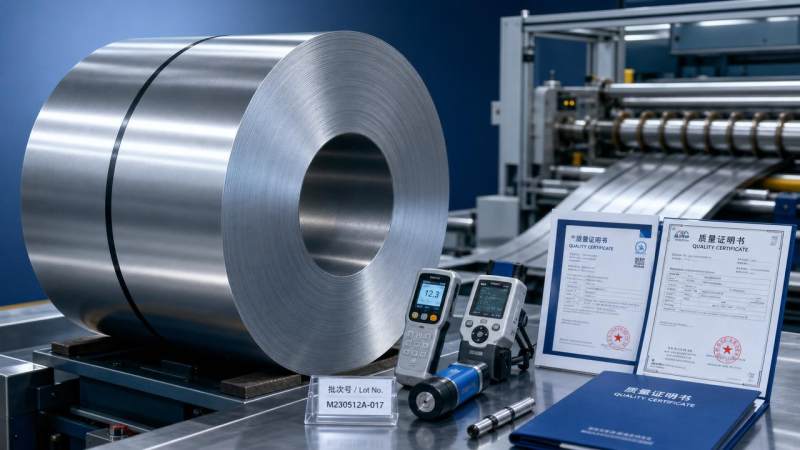
The core search intent behind comparing stainless steel coil suppliers is practical, not theoretical. Buyers want a reliable way to separate low-risk suppliers from those that may create quality failures, safety incidents, or costly downstream claims.
For quality control and safety professionals, the biggest concern is consistency. A supplier may offer an attractive quote, but if coil chemistry, surface condition, thickness tolerance, or mechanical properties vary, production stability suffers immediately.
The right comparison method starts with one principle: judge suppliers by their ability to deliver conforming material repeatedly, not just by their ability to pass one sample inspection or send polished certificates.
Start with Standards Compliance, Not Marketing Claims
Many stainless steel coil suppliers claim high quality, but quality managers need evidence tied to recognized standards. The first screening step is confirming exactly which standards the supplier can produce against and verify.
Ask whether the material is supplied according to ASTM, EN, JIS, or GB requirements, and whether the grade designation on certificates matches your drawing, end-use environment, and fabrication process without substitution risk.
This matters because two coils described loosely as “304 stainless” may still differ in tolerance control, surface finish, hardness range, edge condition, and inspection scope. Those differences can affect forming, welding, corrosion resistance, and final safety performance.
A qualified supplier should clearly explain grade equivalency limits, not simply say that one standard is “similar” to another. For safety-sensitive use, “similar” is not enough unless the technical gap is formally reviewed.
Check Whether Material Traceability Is Complete and Usable
Traceability is one of the strongest indicators of supplier maturity. If a coil problem appears during slitting, stamping, fabrication, or installation, your team must identify the affected heat, batch, production date, and test record quickly.
Ask stainless steel coil suppliers how they mark coils, store production data, and connect each shipment to heat numbers, inspection reports, and packing records. Good traceability reduces containment time and prevents broad, expensive product quarantines.
Traceability should also remain usable after processing. If the coil will be cut into sheets or strips, confirm whether identification can be transferred through labels, tags, ink marking, or digital batch records.
Suppliers with weak traceability may still offer acceptable-looking material, but when a claim occurs, the lack of data turns a manageable quality issue into a major operational and safety risk.
Review Test Capability, Not Just the Test Report
Mill test certificates are important, but they should never be the only comparison point. A better question is whether the supplier has stable, repeatable testing capability and a quality system that prevents nonconforming material from being released.
Ask what is tested routinely: chemical composition, tensile properties, yield strength, elongation, hardness, thickness, width, flatness, surface quality, and corrosion-related characteristics where relevant to the application.
Also ask whether testing is done in-house, by third-party laboratories, or both. In-house testing supports speed and process control, while third-party verification can strengthen confidence for critical projects and regulated sectors.
Quality managers should request sample reports from multiple production lots, not one idealized document. Comparing several records helps reveal whether the supplier consistently operates close to specification centerlines or drifts toward acceptance limits.
Evaluate Process Stability and Production Discipline
Supplier quality is not only the result of final inspection. It depends heavily on process stability across melting, hot rolling, cold rolling, annealing, pickling, slitting, and packaging. A stable process usually produces more predictable coil performance.
Ask stainless steel coil suppliers how they control thickness tolerance, surface defects, edge quality, and coil tension. If they cannot describe process checkpoints clearly, their quality consistency may rely too much on end-of-line sorting.
Production discipline also includes change control. When tooling, raw material source, or processing parameters change, there should be a documented review process. Uncontrolled changes often create sudden variation that reaches the customer unnoticed.
For companies sourcing multiple steel products, this discipline often reflects broader manufacturing reliability. For example, firms serving structural and coated steel markets may apply similar control logic across product lines, including Color Coated Galvanized Steel Sheet PPGI for construction and industrial projects.
Inspect Surface Quality Based on End-Use Risk
Not every surface imperfection has the same significance. Quality personnel should define which defects are cosmetic, which affect processing, and which may create corrosion, fatigue, hygiene, or safety issues in actual service.
When comparing suppliers, ask for a visual acceptance standard covering scratches, roll marks, stains, pitting, waviness, oil residue, and edge burrs. Suppliers should be able to align surface criteria with your intended use.
This is especially important if the coil will be exposed, formed into visible parts, used in food-related environments, or processed by laser cutting and automated fabrication. Minor supplier assumptions can become major customer complaints later.
Request representative photos or approval samples under defined lighting and inspection distance. Surface discussions become much more effective when both sides use the same reference method instead of subjective wording like “good finish.”
Compare Packaging and Logistics as Part of Quality Assurance
Even high-quality stainless steel coil can arrive damaged if packaging and shipment control are weak. Moisture exposure, improper blocking, poor edge protection, and rough handling may create claims that appear to be manufacturing defects.
Ask suppliers how they package coils for sea freight, inland trucking, and long storage periods. Quality-minded exporters should explain waterproof protection, anti-rust measures where needed, edge guards, pallet or skid design, and container loading methods.
Lead time reliability also matters. When a supplier frequently ships late or partially, buyers may be forced to accept substitutes or reduced inspection time. That increases both quality risk and operational stress for safety-sensitive projects.
Suppliers serving international construction and manufacturing markets often demonstrate their professionalism through packaging consistency, delivery planning, and document accuracy across product categories, including coated products with strict appearance requirements.
Audit How the Supplier Handles Nonconformities and Claims
Every experienced buyer knows that occasional issues can happen. The real difference between strong and weak stainless steel coil suppliers is how they respond when something goes wrong.
Ask for the supplier’s corrective action process. Can they issue containment actions quickly, identify root causes, verify corrective effectiveness, and provide replacement or commercial resolution without delay or denial?
A serious supplier should be able to show structured problem-solving methods, such as 8D or equivalent systems. They should also explain response timelines, escalation channels, and who has authority to stop shipment internally.
If a supplier becomes defensive when discussing claims history, that is a warning sign. Mature quality organizations understand that transparency and corrective action are part of long-term business trust, not an admission of weakness.
Use Sample Orders to Validate Real Performance
Before awarding a large contract, quality teams should validate supplier capability through a sample or trial order. This is one of the most effective ways to compare stainless steel coil suppliers under real operating conditions.
Evaluate more than the material itself. Review certificate accuracy, labeling, packaging, delivery punctuality, communication speed, responsiveness to technical questions, and the supplier’s willingness to support incoming inspection and problem resolution.
If possible, run the trial material through your actual production line. Measure formability, weldability, slitting performance, scrap rate, and surface behavior after fabrication. Practical production data often reveals differences that paperwork does not.
This approach also helps internal alignment. Procurement may focus on price, but a documented trial gives quality and safety managers stronger evidence when recommending a lower-risk supplier with better total cost performance.
Build a Supplier Scorecard That Reflects Total Risk
To avoid subjective decisions, create a weighted supplier comparison scorecard. Include standards compliance, traceability, testing capability, process control, surface consistency, packaging, on-time delivery, claim handling, and technical support.
Price should be included, but not treated as the dominant factor when safety, downstream quality, or project reliability are critical. A lower unit price can quickly become more expensive if it causes line stoppage or field failure.
Many quality teams also add strategic criteria such as export experience, document accuracy, multilingual communication, and ability to support custom specifications. These factors are especially useful when sourcing from international suppliers.
Where broader sourcing programs are involved, buyers may benefit from working with manufacturers that support multiple steel solutions, from structural sections to specialized coated sheets, while maintaining standardized quality controls across categories.
Final Decision: Choose the Supplier That Lowers Uncertainty
The best supplier comparison is not about finding the cheapest coil or the most impressive brochure. It is about reducing uncertainty across quality, safety, delivery, and technical performance.
For quality control and safety managers, the most valuable stainless steel coil suppliers are those that can prove standards compliance, maintain full traceability, deliver stable process control, and respond professionally when issues arise.
If you compare suppliers using certificates, audits, trial orders, and risk-based scorecards, you will make better sourcing decisions and protect both product performance and operational continuity.
In short, dependable coil quality comes from systems, discipline, and transparency. When those elements are present, supplier selection becomes less of a gamble and more of a controlled, defensible business decision.
Please give us a message


Please enter what you want to find