Choosing among reliable i beam suppliers is a critical step for balancing quality, compliance, cost, and delivery performance.
For construction and industrial projects, the right source reduces sourcing risks and supports long-term efficiency.
This article explains how to compare i beam suppliers with practical criteria, helping buyers make informed decisions with confidence.
Why a structured comparison matters
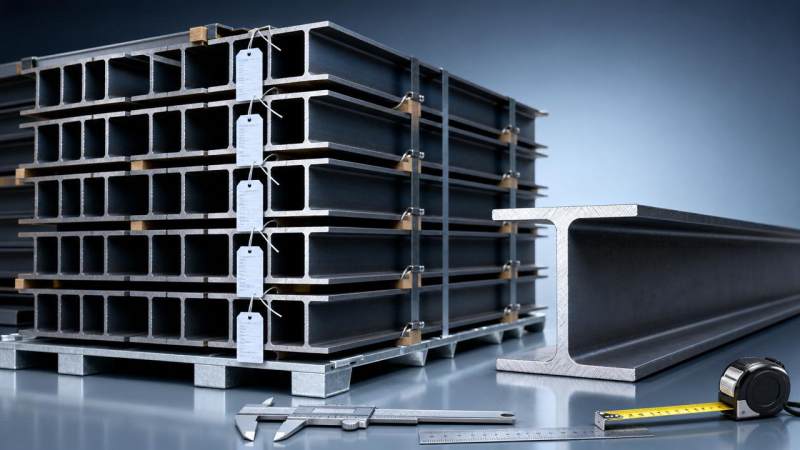
Not all i beam suppliers offer the same consistency in steel grade, dimensional accuracy, traceability, or export support.
A structured comparison prevents decisions based only on price, which often creates hidden costs later.
These costs may include project delays, failed inspections, rework, coating issues, and unexpected logistics problems.
In the steel industry, reliable i beam suppliers should prove stable production, standard compliance, and communication discipline.
That is especially important when sourcing from overseas markets and coordinating multi-stage fabrication schedules.
Core points to compare when reviewing i beam suppliers
Use the following checklist to compare i beam suppliers fairly across technical, commercial, and operational factors.
- Confirm whether the supplier can produce to ASTM, EN, JIS, or GB standards with full mill test certificates and traceable batch records.
- Check dimensional tolerances, straightness, flange thickness, web thickness, and length accuracy against your project drawings and approval requirements.
- Review steel grade availability, including common structural grades, custom specifications, and the ability to support mixed-size orders efficiently.
- Evaluate production capacity, lead time reliability, and whether peak-season output can still meet shipping deadlines without quality compromise.
- Ask about inspection procedures, third-party testing support, and nonconformance handling before comparing quoted prices from multiple i beam suppliers.
- Verify export packaging, corrosion protection, loading methods, and port experience to reduce freight damage and customs clearance issues.
- Assess communication speed, document accuracy, and technical responsiveness because service quality strongly affects project execution after order placement.
- Compare payment terms, incoterms, and claims policy so the total procurement risk is visible, not hidden behind a lower unit price.
1. Standards and certifications
Reliable i beam suppliers should clearly identify applicable standards for each beam type and grade.
Look for documented compliance with ASTM, EN, JIS, or GB, depending on project location and engineering approval.
Certificates should match the shipped batches, not generic templates reused across orders.
2. Manufacturing capability and consistency
A capable source should handle standard and custom beam requirements with repeatable quality.
Ask for recent production photos, equipment details, and examples of similar export orders.
Hongteng Fengda, for example, supplies structural steel products from China with strict quality control and international standard compliance.
3. Inspection and traceability
The best i beam suppliers can explain how they track heats, batches, dimensions, and test results.
Traceability matters when projects require third-party inspection or later quality claims.
Without clear records, it becomes difficult to isolate defects or verify compliance.
4. Logistics readiness and export service
For global sourcing, logistics performance is part of supplier reliability, not a separate issue.
Strong i beam suppliers should coordinate packing lists, marking, loading plans, and shipping documents accurately.
This reduces delays at port, confusion during receiving, and damage during long-distance transport.
How to compare suppliers across different project situations
The right evaluation method can change depending on project type, schedule pressure, and technical demands.
Commercial building projects
Focus on consistent dimensions, weldability, coating compatibility, and documentation for design approvals.
When comparing i beam suppliers, prioritize standard compliance and stable batch quality over a small price difference.
Industrial structures and equipment frames
These applications often involve custom lengths, drilled parts, or additional fabrication steps.
Choose i beam suppliers that can coordinate processing tolerances and packaging around downstream assembly needs.
Infrastructure and transport projects
Infrastructure work usually requires stronger traceability, formal inspections, and dependable delivery windows.
In some sourcing programs, steel buyers also compare related products such as Rail for transport, bridge, or track-side applications.
Available models may include U74, U71Mn, PD2, PD3, Q235, 55Q, and QU70 to QU120 specifications.
Common features include carbon steel or medium manganese steel, lengths from 12m to 30m, and ISO9001-2008 certification support.
Commonly overlooked warning signs
Even experienced teams sometimes miss issues that later affect delivery, compliance, or total cost.
Unclear quotations
If the quote does not define grade, tolerance, standard, coating, or inspection terms, comparison becomes unreliable.
Overpromised lead times
Some i beam suppliers offer aggressive delivery dates to win orders, then delay production during peak periods.
Weak document control
Errors in packing lists, test certificates, or markings can disrupt customs clearance and on-site identification.
Limited problem resolution process
Ask how claims are handled, how quickly responses are issued, and what evidence is required for corrective action.
Practical steps before placing an order
- Create a comparison sheet covering standards, tolerances, lead times, certificates, logistics, and commercial terms.
- Shortlist i beam suppliers that can provide matching technical documents and recent export references.
- Request sample documents, not just marketing materials, including MTCs, inspection reports, and shipping files.
- Confirm production schedule milestones and define acceptance requirements before deposit payment.
- Use a trial order when entering a new supplier relationship for critical structural steel categories.
Simple comparison table for faster evaluation
Frequently asked questions about i beam suppliers
Should price be the first comparison point?
No. Price should be compared only after confirming technical equivalence and service scope.
How many i beam suppliers should be evaluated?
Three to five qualified options usually provide enough range for meaningful comparison without slowing decisions.
What documents are most important?
Mill test certificates, dimension reports, packing lists, and clear production or inspection records are essential.
Final thoughts and next action
Comparing reliable i beam suppliers requires more than checking the lowest quote.
The strongest choice combines verified standards, stable quality, responsive service, and dependable export execution.
Use a structured checklist, request evidence early, and compare total delivery value rather than unit price alone.
That approach helps identify i beam suppliers that can support long-term steel sourcing with lower risk and better project outcomes.
Please give us a message


Please enter what you want to find