Choosing the right Steel Wire is critical for project safety, cost control, and long-term performance. Whether you work with Steel Beam systems, Steel Sheet Pile structures, or Galvanized components in S355JR grade, understanding material specifications helps avoid costly mistakes. This guide explains the key factors buyers, engineers, and project managers should review before selecting steel wire for construction, industrial, and manufacturing applications.
In steel-related projects, wire selection is rarely a minor purchasing detail. It can affect tensile performance, corrosion resistance, fastening reliability, fabrication efficiency, and even compliance with ASTM, EN, JIS, or GB requirements. For procurement teams, the wrong grade or coating can increase replacement frequency and logistics cost. For operators and quality managers, it can create handling risks, welding problems, or premature failure in service.
For global buyers sourcing from China, material consistency, dimensional tolerance, and delivery stability matter just as much as unit price. A qualified structural steel manufacturer should help customers compare use conditions, processing needs, and standard requirements before finalizing a steel wire specification. That approach reduces sourcing risk and supports better project outcomes across construction, industrial, and manufacturing environments.
Understand the Project Requirements Before Choosing Steel Wire
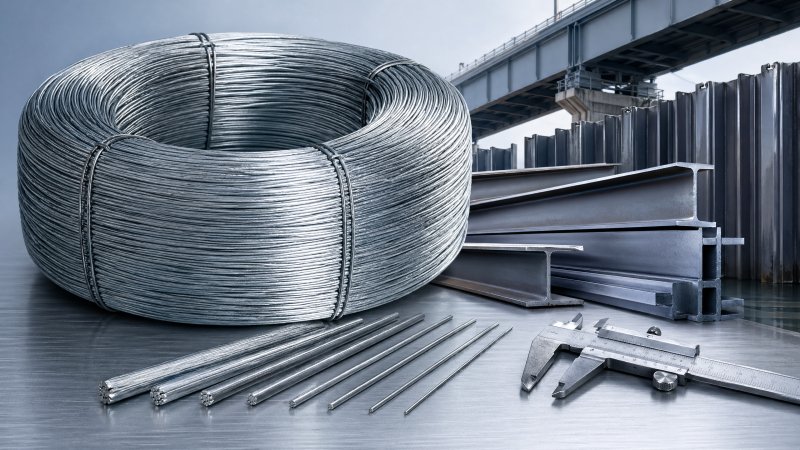
The first step in choosing steel wire is to define the actual working conditions. Steel wire used for binding rebar, supporting formwork, hanging components, reinforcing assemblies, or industrial fabrication does not face the same load, environment, or service life expectations. A project in coastal infrastructure may prioritize corrosion resistance for 10–20 years, while a short-cycle manufacturing fixture may focus more on formability and cost efficiency.
Buyers should confirm at least 4 core items early: required tensile strength, wire diameter range, coating or surface treatment, and fabrication method. In many projects, diameters can range from 0.5 mm for lighter industrial tasks to 6.0 mm or more for structural support and heavy-duty tying applications. Even a 0.2–0.3 mm mismatch may affect tension control, installation speed, or compatibility with downstream tools.
The environment is equally important. Indoor dry use, outdoor exposure, high-humidity zones, chemical contact, and elevated temperatures each call for different material choices. Galvanized steel wire is often preferred where moisture exposure is frequent, while uncoated high-carbon or low-carbon wire may be sufficient for indoor use with limited corrosion risk. If the wire will be bent, twisted, or profiled repeatedly, ductility becomes a key criterion, not just strength.
Technical evaluators should also review whether the wire will interact with other steel products such as beams, channels, sheet piles, cold formed profiles, or galvanized assemblies. In mixed-material systems, the wire should not become the weak link. Matching the service environment of the main steel structure helps reduce differential wear, coating damage, and maintenance frequency over a 12–36 month operating cycle.
Key questions to define before specification
- What load or tension must the steel wire withstand during installation and service?
- Will the wire be used for tying, welding, weaving, reinforcement, suspension, or forming?
- Is the application indoors, outdoors, coastal, high-temperature, or chemically exposed?
- Does the project require ASTM, EN, JIS, or GB compliance?
- What reel size, coil weight, or MOQ best fits site handling and purchasing efficiency?
The table below provides a practical way to link project conditions with common steel wire selection priorities.
A clear use-case definition prevents over-specifying and under-specifying at the same time. Many cost overruns come from buying stronger or more heavily coated material than necessary, while many quality failures come from choosing wire by price alone. A balanced specification should fit the application, standard, and service environment together.
Evaluate Material Grade, Surface Treatment, and Mechanical Performance
Once the application is clear, the next step is to compare wire material properties. Steel wire can vary by carbon content, ductility, tensile range, coating type, and processing route. For example, low-carbon wire is often easier to bend and tie, while higher-strength wire may better resist elongation under load. In practical purchasing terms, the best choice depends on whether fabrication flexibility or load performance matters more.
Surface treatment is another major factor. Bare wire may be acceptable for dry indoor use, but zinc-coated or other treated wire is usually preferred for outdoor, humid, or industrial environments. Coating quality influences not only corrosion protection but also storage stability and appearance. In large-volume procurement, even small differences in coating consistency can affect reject rates across batches of 5 tons, 20 tons, or more.
Mechanical performance should be evaluated with the processing method in mind. If the wire must be straightened, cut, bent, woven, or tensioned, buyers should confirm elongation behavior, bending tolerance, and surface condition. A wire with high strength but poor formability can increase breakage during downstream processing. That creates hidden costs in labor time, scrap handling, and delayed assembly schedules.
For steel-related sourcing, it is also useful to compare steel wire performance with adjacent coated steel products used in the same project. In roofing, enclosure, and light structural systems, buyers often combine wire-based fastening or support with coated sheet or coil materials. A practical example is DX51D Galvalume Steel Coil , which is designed for structural use, roofing, appliances, and industrial applications, with thickness options from 0.23 mm to 3.0 mm, widths from 900 mm to 1250 mm, and an Aluzinc coating range such as AZ40-AZ150.
That type of coated steel product is valued for corrosion resistance, formability, and heat resistance up to 315°C. When buyers understand why such coated materials are selected for related steel systems, they can better judge whether their steel wire also needs enhanced corrosion performance, abrasion resistance, or compatibility with galvanized and aluminized components in the same operating environment.
Important specification points to compare
- Base material type: low-carbon, medium-carbon, or special performance wire.
- Diameter tolerance: confirm acceptable variance based on tooling and installation needs.
- Surface condition: bare, galvanized, anti-rust treated, or other specified finish.
- Mechanical behavior: tensile strength, elongation, bending performance, and break resistance.
- Standard alignment: ensure the quoted material matches the project specification and destination market.
The following comparison table helps technical teams and sourcing managers screen options more efficiently.
For most B2B buyers, the decision should not rely on a single parameter. Material grade, mechanical performance, and surface treatment must work together. A supplier that can explain these trade-offs clearly is usually better positioned to support long-term sourcing, not just one-time price comparison.
Match Steel Wire Selection to Procurement, Quality Control, and Delivery Risk
In international steel sourcing, the right steel wire is not only a technical choice but also a supply chain decision. Procurement teams should evaluate MOQ, packaging method, coil weight, mill traceability, inspection documents, and lead time before placing orders. A competitive unit price can lose its value if the wire arrives with inconsistent diameter, damaged packaging, or incomplete certification documents.
Quality control teams usually focus on 3 checkpoints: incoming material verification, dimensional inspection, and surface condition review. For wire products, practical checks include coil integrity, rust presence, diameter consistency, and sample bending behavior. If the material is intended for automated processing, even minor surface irregularities can reduce feeding stability and cause downtime on the line.
Project managers should also factor in delivery rhythm. For example, a project requiring staged installation over 6–8 weeks may prefer split shipments rather than one large batch. This reduces site storage pressure and lowers the risk of corrosion from prolonged outdoor exposure. On the other hand, distributors or manufacturing plants may prefer larger consolidated lots to simplify freight cost per ton and improve stock turnover planning.
A capable Chinese structural steel manufacturer and exporter can add value by coordinating production capacity, specification confirmation, and export documentation in one process. This is especially useful when buyers are sourcing multiple steel categories such as angles, channels, steel beams, cold formed profiles, and wire-related components under the same purchasing schedule.
A practical 5-step sourcing checklist
- Confirm application details and destination standards before requesting a quotation.
- Request core parameters in writing, including diameter, finish, tensile expectation, and packaging.
- Review sample performance or inspection records before volume production.
- Align delivery schedule with site consumption, storage conditions, and customs timing.
- Check final documentation, including packing list, material details, and agreed inspection items.
Common purchasing mistakes to avoid
One common mistake is selecting steel wire only by initial price per kilogram. Another is assuming all galvanized or coated wire performs the same in outdoor conditions. A third issue is failing to define acceptable tolerances before mass production. These gaps often lead to claims, urgent replacement orders, and project delays that cost far more than the original price difference.
Another avoidable problem is mismatching packaging format to handling equipment. If a warehouse is optimized for certain coil weights or lifting methods, unsuitable packaging can slow unloading and increase damage risk. In many export transactions, getting the packaging and labeling details right saves time at both the port and the jobsite.
Choose a Supplier That Supports Technical Review and Long-Term Project Performance
Steel wire selection becomes easier when the supplier understands both material performance and the broader steel project context. For buyers working in construction, manufacturing, or industrial distribution, the supplier should be able to discuss not only wire specifications but also how those materials relate to beams, channels, galvanized sections, cold formed profiles, and other structural steel components used in the same system.
A professional manufacturer should provide stable production, clear communication, and realistic lead times rather than broad claims. Buyers often benefit from suppliers that can handle standard specifications and OEM requests, especially when a project involves multiple sizes, non-standard lengths, or specific export documentation needs. For many B2B orders, consistency across repeated shipments over 3 months, 6 months, or longer is more valuable than a one-time low quote.
For technical and commercial evaluation teams, the ideal supplier relationship includes 4 elements: specification confirmation, quality traceability, schedule coordination, and response speed when adjustments are needed. This is especially important for global buyers serving North America, Europe, the Middle East, and Southeast Asia, where standards, packaging expectations, and logistics windows may differ from one market to another.
Hongteng Fengda’s business focus as a structural steel manufacturer and exporter from China reflects this project-based approach. With experience in structural steel products and customized solutions, the company supports buyers who need dependable quality, standard compliance, and practical coordination across procurement, fabrication, and delivery. That matters when steel wire must fit into a larger supply package rather than be treated as an isolated commodity item.
Questions to ask before final approval
- Can the supplier match the wire specification to the actual application instead of only quoting a generic product?
- Are inspection items and tolerances confirmed before production starts?
- Can packaging, marking, and shipment planning support your warehouse or project schedule?
- Does the supplier have experience serving export markets with ASTM, EN, JIS, or GB-based requirements?
Final recommendation
The right steel wire is the one that meets the project’s real load, environment, processing, and compliance needs without creating unnecessary cost. When selection is based on actual use conditions, verified mechanical properties, and disciplined quality control, buyers can reduce sourcing risk and improve total project efficiency. If you need support comparing steel wire specifications or matching them with structural steel systems, contact us to discuss your application, request a tailored solution, or learn more about suitable steel products for your next project.
Please give us a message


Please enter what you want to find