Why steel sheet thickness decisions are getting more critical
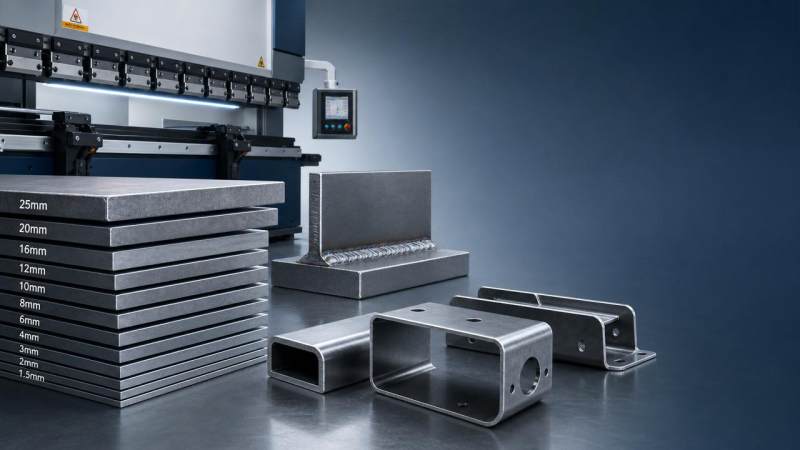
Choosing the right steel sheet is no longer a simple gauge decision. Bending radii are tighter, welding speeds are faster, and forming quality is judged more closely than before.
That shift makes steel sheet thickness a practical control point. A small mismatch can trigger cracks, edge tearing, warping, weak welds, or unnecessary material weight.
Recent shop-floor experience shows a clear pattern. Thickness selection now affects not only fabrication success, but also downstream fit-up, coating performance, transport load, and installation speed.
In structural steel work, this matters even more. Projects increasingly combine strength targets, lighter assemblies, and tighter tolerances across construction and industrial applications.
For companies with broad export supply, consistency becomes part of the thickness discussion. Hongteng Fengda, for example, supports global projects with standardized production, OEM options, and compliance with ASTM, EN, JIS, and GB.
That background changes the question from “What thickness is available?” to “What thickness will perform reliably during bending, welding, and forming without creating new risks?”
The main signal: thinner is attractive, but not always safer
Many fabricators want to reduce weight and save cost. That naturally pushes attention toward thinner steel sheet options, especially in brackets, covers, frames, ducts, and formed panels.
But thinner steel sheet does not automatically mean better efficiency. When thickness drops below the process window, forming becomes less stable and weld heat affects the part more dramatically.
A thin sheet can spring back after bending. It can also distort during welding, especially when heat input is too high or fixture support is uneven.
On the other side, choosing a thicker steel sheet than necessary can create its own problems. More tonnage is needed for bending, tool wear increases, and cycle time may stretch.
The better approach is balance. Thickness should match forming limits, weld design, structural demand, and finish quality at the same time.
What is pushing this change
- Tighter dimensional tolerances in fabricated components.
- More mixed-material assemblies requiring accurate fit.
- Higher demand for clean bends and lower rework rates.
- Pressure to lower shipping weight without reducing service life.
- Greater use of CNC forming and repeatable welding processes.
Thickness behaves differently in bending, welding, and forming
One common mistake is treating all fabrication steps the same. In reality, each process reacts differently to steel sheet thickness.
For bending
Thicker steel sheet generally needs a larger inside bend radius. If the bend radius is too tight, outer fibers stretch too far and cracking becomes more likely.
Material grade also matters. High-strength or less ductile sheet may require more conservative tooling, even when nominal thickness looks workable.
For welding
Thin steel sheet is sensitive to heat. Excessive amperage, slow travel speed, or poor sequence can quickly cause burn-through or visible distortion.
Thicker material can absorb more heat, but it may need edge preparation, stronger penetration control, or multiple passes for sound joints.
For forming
Deep drawing, rolling, stamping, and stretch forming all depend on how thickness distributes strain. If the steel sheet is too thin, local thinning and wrinkling can appear.
If it is too thick, forming loads rise, equipment limits are reached sooner, and surface quality may decline near contact zones.
The real choice depends on more than gauge alone
Thickness is only one variable. Good decisions come from reading thickness together with material grade, part geometry, tolerance needs, and process stability.
In practice, four checkpoints usually determine whether a steel sheet selection works smoothly or causes repeated adjustments.
1. Minimum bend radius
As thickness rises, the safe bend radius often needs to increase. This becomes more important with stronger steels or when bends run across the rolling direction.
2. Heat sensitivity during welding
Thin steel sheet requires tighter control of heat input, joint gap, and fixturing. Even good welding technique can fail if the thickness margin is too narrow.
3. Final function of the part
A cosmetic cover, a support bracket, and a load-bearing component should not be judged by the same thickness logic. Service stress, vibration, corrosion, and impact exposure matter.
4. Standard and supply consistency
Thickness tolerance from one batch to another can change forming behavior. Reliable structural steel suppliers reduce this variation and help maintain stable shop results.
This is where established production systems matter. When steel products are controlled against international standards, thickness selection becomes more predictable across projects and export markets.
Why application context now matters more than before
A steel sheet for an indoor enclosure does not face the same demands as one used in corrosive or high-temperature conditions. The best thickness is always application-specific.
That is increasingly visible in filtration, architecture, and process equipment. In these areas, not only thickness but also mesh, open area, and corrosion resistance shape performance.
For example, applications such as filters, sieves, chemical handling, mine industry use, and architectural infill may benefit from stainless solutions like 316 Stainless Steel Welded Mesh.
With wire diameters from 0.0008″ to 0.12″ and mesh ranges from 2 to 635 mesh, such products show how material selection is becoming more performance-driven than purely thickness-driven.
That wider view is useful even when working with structural steel sheet. It reminds fabricators to assess corrosion, opening geometry, load path, and finishing requirements together.
What usually goes wrong when thickness is chosen too early
In many projects, steel sheet thickness is fixed before tooling, welding sequence, or forming simulation is reviewed. That often leads to expensive correction later.
- Bend allowances are recalculated after trial parts fail.
- Weld distortion forces rework on mating assemblies.
- Surface finish is damaged by over-forming or excessive clamping.
- Weight targets are missed because safety margins were too conservative.
- Lead time stretches when alternate thickness stock is needed.
More noticeable lately is the cost of hidden inefficiency. The wrong steel sheet may still pass inspection, yet consume more labor, fixtures, filler metal, and machine time.
A practical way to judge the right steel sheet thickness
A workable decision starts by narrowing the thickness window instead of looking for one number immediately. That keeps the process realistic.
- Define load, stiffness, and service environment.
- Check bend radius limits against grade and direction.
- Review weld type, heat input, and distortion sensitivity.
- Confirm machine capacity and tooling range.
- Compare standard thickness tolerance from the supplier.
- Run a sample part if geometry is complex.
This approach fits current fabrication reality better than relying on habit. It also aligns with how experienced steel exporters support customized project requirements across different regions.
When supply partners offer stable production, documented standards, and OEM flexibility, the chosen steel sheet thickness is easier to repeat with confidence.
The next move is not just thinner or thicker, but smarter matching
The clearest takeaway is simple. Steel sheet thickness should be matched to the process chain, not selected in isolation.
Current demand is rewarding parts that are lighter, cleaner, and more repeatable. That makes thickness control a quality issue, a cost issue, and a reliability issue at the same time.
A useful next step is to review recurring bending cracks, weld distortion, or forming defects and trace them back to thickness assumptions. That often reveals quick improvement opportunities.
It is also worth comparing material grades, tolerance bands, and application changes before locking the next steel sheet specification. Small adjustments here often prevent much larger problems later.
In a market that values stable quality and dependable lead times, better thickness decisions are becoming part of competitive fabrication, not just a technical detail.
Please give us a message


Please enter what you want to find