Choosing the right steel coil is critical for production efficiency, product quality, and long-term cost control. Whether you also source steel rail, tube stainless steel, ss tube, steel mesh, galvanised sheet steel, galvanised steel sheet, or smls pipe, understanding material grades, coating options, and standards like ASTM A36 helps you make better decisions. This guide explains the key factors to evaluate, from hot galvanizing performance to application-specific requirements.
For buyers, engineers, operators, quality teams, and project managers, steel coil selection is not just a materials issue. It affects forming stability, welding results, corrosion resistance, scrap rate, delivery planning, and even warranty risk. A coil that looks acceptable on paper can still create downtime if its thickness tolerance, surface finish, or coating weight does not match your line conditions.
In global sourcing, the challenge becomes even more practical. You may compare hot rolled, cold rolled, galvanized, and stainless options across ASTM, EN, JIS, and GB standards while balancing MOQ, lead time, and total landed cost. For companies working with a structural steel manufacturer and exporter from China, a disciplined selection process helps reduce sourcing risk and improves consistency from the first order to repeat supply.
Understand the Steel Coil Type Before Comparing Price
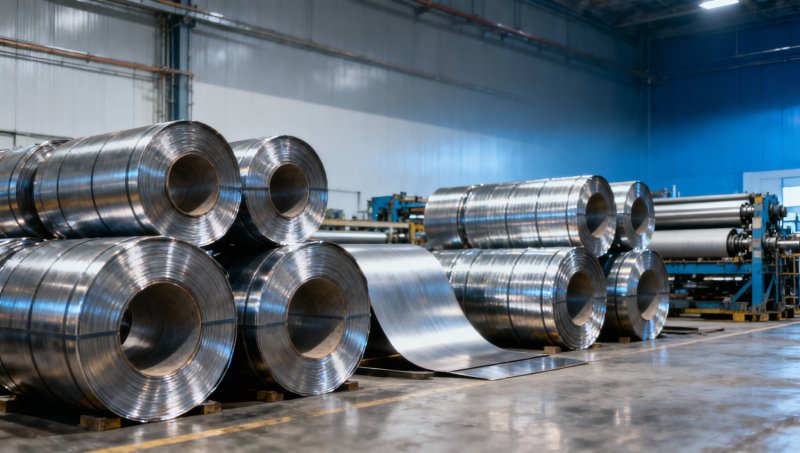
Many purchasing mistakes start with comparing prices between coils that are not technically equivalent. A lower price per ton may reflect a different base steel, coating mass, mechanical property range, or surface condition. Before asking for quotations, define whether your line needs hot rolled coil, cold rolled coil, galvanized steel coil, pre-painted coil, or stainless steel coil. Each category behaves differently in bending, stamping, welding, and outdoor exposure.
Hot rolled coil is commonly selected for structural and general fabrication where thickness usually starts above 1.2 mm and surface appearance is less critical. Cold rolled coil is preferred when tighter tolerance, smoother surface, and better dimensional stability are required, often in ranges such as 0.3-3.0 mm. Galvanized coil adds zinc protection for roofing, ducting, enclosures, and construction components exposed to humidity or outdoor conditions.
Stainless steel coil is often chosen when corrosion resistance, hygiene, or temperature performance matters more than initial cost. In food processing, medical equipment, chemical plants, or transport equipment, selecting the wrong stainless grade can increase maintenance costs over 3-5 years. This is why technical evaluation should come before price negotiation, not after it.
From an operational perspective, the steel coil must also fit your line speed, tooling condition, and downstream process. A coil suitable for manual fabrication may fail on an automated line running at 20-60 meters per minute if edge camber, crown, or lubrication condition is inconsistent. Operators and maintenance teams should therefore be involved early in the specification stage.
Main Coil Categories and Typical Use Cases
The table below gives a practical comparison of common coil types used across construction, manufacturing, and industrial processing lines.
The key takeaway is simple: coil type determines process behavior, service life, and downstream cost. If your line handles multiple products, segment your requirements into at least 3 groups by application rather than trying to buy one universal material for everything.
Questions to Clarify Internally
- What is the actual operating environment: indoor dry, outdoor, coastal, chemical, or food-contact?
- What thickness range and tolerance does the line require, such as ±0.03 mm or ±0.10 mm?
- Will the coil be bent, stamped, welded, laser cut, or deep drawn in 1 or more downstream stages?
- Does your production team need slit coil, full-width coil, or custom cut-to-length sheets?
Match Grade, Mechanical Properties, and Surface Finish to the Line
Once the coil category is clear, the next step is grade selection. This is where technical teams and procurement need to align carefully. A standard like ASTM A36 may be acceptable for general structural fabrication, but it is not a universal answer for all steel coil applications. Yield strength, tensile strength, elongation, hardness, and chemistry all influence how the coil behaves during roll forming, punching, or welding.
For example, if your line produces channels, brackets, or cold formed profiles, too high a strength level may increase springback and tooling wear. On the other hand, if the part must carry load or resist deformation, choosing a softer grade only because it is easier to form can create field-performance risk. In many production lines, the best result comes from balancing 4 factors: formability, final strength, weldability, and surface requirement.
Surface finish is equally important. A bright surface may be needed for visible components, kitchen supplies, or food equipment, while a mill finish may be enough for hidden industrial parts. Stainless products are a good example. Finishes such as 2B, BA, NO.1, NO.4, HL, and 8K are not cosmetic details only; they influence cleanability, appearance, and post-processing needs.
In the middle of many sourcing programs, buyers also compare stainless sheet or plate with coil-based options for specific fabrication jobs. For projects requiring high corrosion resistance and broad dimensional flexibility, 304 Stainless Steel Plate can be relevant for sectors such as medical equipment construction, food industry, chemical processing, agriculture, ship parts, conveyor belts, vehicles, and kitchen supplies. Typical properties include tensile strength of at least 520 MPa, yield strength of at least 275 MPa, elongation around 55-60%, hardness up to 183HB or 100HRB, and thickness options from 0.3 mm to 200 mm.
These details matter because the final material form should support your manufacturing method. A plate or sheet solution may work better for batch fabrication, while coil is usually more efficient for continuous processing and higher output volumes. Good suppliers help you compare both based on waste rate, nesting efficiency, and downstream handling.
Common Grade and Finish Selection Factors
The following matrix helps technical evaluators and buyers connect material selection to real production priorities.
This comparison shows why a grade should never be selected by name alone. Even within similar categories such as 201 and 304 stainless, performance, cost position, and corrosion behavior can differ enough to change total project value.
A Practical Review Checklist
- Confirm the exact standard: ASTM, EN, JIS, or GB.
- Review mill test certificates for chemistry and mechanical properties.
- Check whether the finish matches visible, hygienic, or industrial requirements.
- Run a trial for at least 1 coil or 2-3 tons before volume purchasing.
Check Coating, Corrosion Resistance, and Compliance Requirements
In many projects, especially construction, outdoor manufacturing, HVAC, and agricultural equipment, corrosion protection is a major cost driver. A steel coil with insufficient coating can look competitive at purchase stage but fail much sooner in storage, transit, or field use. This is why coating specification should be written clearly in the inquiry, including coating type, coating mass, passivation, oiling condition, and expected environment.
For galvanized steel coil, buyers often evaluate zinc coating ranges such as Z60, Z100, Z120, or higher equivalents depending on the standard system used. The right level depends on whether the component will be used indoors, in humid industrial plants, or in more aggressive environments. Hot galvanizing performance should also be considered alongside edge protection and whether parts will be cut, punched, or welded after supply.
Compliance matters beyond corrosion. Many global buyers require alignment with ASTM, EN, JIS, or GB for dimensional tolerance, chemistry, and mechanical properties. Quality managers may also request SGS, BV, ISO-related documentation, or third-party inspection arrangements before shipment. While documentation alone does not replace material verification, it helps reduce claims risk and supports internal approval across procurement, quality, and finance teams.
For stainless applications, corrosion resistance must be linked to the real service medium. Water exposure, cleaning chemicals, chloride content, temperature cycling, and welding method all influence grade suitability. A material that performs well in indoor food packaging may not be the best option for coastal installations or highly acidic processing zones.
Coating and Compliance Review Points
- Define the service life target, for example 3 years, 5 years, or more than 10 years in expected conditions.
- Specify coating mass or thickness in the purchase document rather than relying on a general “galvanized” description.
- Confirm whether post-processing such as bending or welding will damage coating continuity.
- Ask for inspection scope: dimensional check, surface check, coating verification, and certificate package.
Common Mistakes in Corrosion Planning
One common error is assuming all galvanized steel sheet performs the same. In reality, coating weight differences can change field durability significantly. Another mistake is ignoring storage conditions. Even a correctly coated coil can develop white rust or surface issues if stored in wet wrapping for 2-4 weeks after arrival.
A third mistake is using a standard carbon steel grade in an environment that actually needs stainless performance. This often happens when the purchasing team focuses on first cost while maintenance teams later face repeated replacement or cleaning issues. The better approach is to compare initial material cost against service interval, replacement labor, and downtime risk.
Evaluate Supply Stability, Processing Fit, and Total Cost
The right steel coil is not only the one with the correct specification. It is the one that your supplier can deliver consistently over time. Stable chemistry, thickness tolerance, surface condition, and packaging quality matter even more when your production line runs repeat orders every month. If one shipment forms well and the next one causes tool marks or extra scrap, the true cost quickly exceeds any unit price advantage.
For B2B buyers sourcing from China, supplier capability should be reviewed in 5 areas: manufacturing range, quality control process, standard compliance, customization ability, and lead-time reliability. A supplier serving global markets should be able to discuss ASTM, EN, JIS, and GB differences, and explain how those standards affect substitution or equivalence. This is especially important when serving North America, Europe, the Middle East, and Southeast Asia with different project specifications.
Total cost should include more than material price per ton. Add slitting or cut-to-length charges, packaging method, inland transport, inspection cost, reject risk, scrap rate, and cash-flow impact from longer lead times. In many cases, a coil that is 2-4% higher in purchase price may reduce line stoppage enough to lower overall operating cost.
A professional structural steel manufacturer and exporter can create value here by combining standard supply with OEM support. If your business needs angle steel, channel steel, steel beams, cold formed steel profiles, and customized structural components along with coil-related materials, consolidated sourcing can simplify approval, documentation, and delivery planning across multiple product groups.
Supplier Assessment Table
Use the following evaluation framework before placing trial or volume orders.
A structured supplier review helps commercial teams justify decisions internally. It also helps finance approvers understand why a technically stronger offer may deliver better cost control over a 6-12 month purchasing cycle.
Recommended Buying Process
- Define line conditions and end-use requirements in writing.
- Request quotations on the same technical basis from 2-3 suppliers.
- Run a trial order and inspect forming, welding, and surface results.
- Review landed cost, lead time, and defect rate before annual supply planning.
FAQ and Final Buying Advice for Steel Coil Selection
Even experienced buyers still face recurring questions when qualifying a new steel coil supplier or launching a new production line. The answers below focus on practical selection issues that affect quality, efficiency, and cost.
How do I know whether hot rolled or cold rolled coil is better for my line?
Choose hot rolled coil for structural fabrication, heavier gauges, and applications where surface appearance is secondary. Choose cold rolled coil when you need tighter thickness control, smoother finish, and more consistent forming for precision parts. If your thickness is below 1.0 mm or appearance is customer-facing, cold rolled is often the safer option.
What should procurement ask for in a steel coil quotation?
At minimum, ask for grade, standard, thickness, width, coil weight, tolerance, surface finish, coating specification if applicable, packing method, inspection documents, MOQ, and lead time. If any one of these items is missing, comparing prices becomes unreliable because the offers may not represent the same product.
How much trial material is usually reasonable?
For many industrial users, a trial of 1 coil or around 2-5 tons is enough to validate forming, welding, and surface behavior. High-speed lines or critical end uses may require a larger validation lot, especially when the material will be used across several SKUs.
Is the lowest-cost stainless option always the most economical?
Not necessarily. Lower initial cost can be offset by shorter service life, more cleaning, more rejects, or compatibility issues with the process environment. When comparing stainless materials, evaluate corrosion exposure, finish requirement, fabrication method, and maintenance interval over the actual life of the part.
Choosing the right steel coil means aligning material type, grade, surface, coating, standards, and supplier capability with your real operating conditions. When that alignment is done well, you get more stable production, fewer quality issues, better cost control, and smoother project execution.
Hongteng Fengda supports global buyers with reliable structural steel products, customized solutions, strict quality control, and supply experience across major international standards. If you are evaluating steel coil options alongside structural steel, stainless products, or OEM components, contact us to get tailored material recommendations, discuss technical details, and request a practical sourcing solution for your next project.
Please give us a message


Please enter what you want to find