Choosing the right stainless pipe is essential for strength, durability, and cost control in construction and industrial projects. Whether you are comparing stainless pipe with prefab structural steel, evaluating structural steel for construction, or sourcing from a stainless steel sheet supplier, the right decision affects long-term performance. This guide will help buyers, engineers, and project teams understand key selection factors, quality standards, and practical purchasing considerations.
In steel-intensive projects, pipe selection is rarely an isolated decision. It affects welding procedures, support design, corrosion allowance, maintenance cycles, and total procurement cost over 5 to 20 years of service. For EPC teams, distributors, fabricators, and end users, the right stainless pipe must match both the operating environment and the broader structural steel system.
For global buyers working with a Chinese structural steel manufacturer and exporter, consistency matters as much as price. Hongteng Fengda supports international construction and industrial projects with standard and customized steel solutions, covering angle steel, channel steel, steel beams, cold formed profiles, and related components produced to ASTM, EN, JIS, and GB requirements. That broader manufacturing perspective is useful when selecting stainless pipe for integrated project delivery.
Understand the Service Conditions Before Choosing a Stainless Pipe
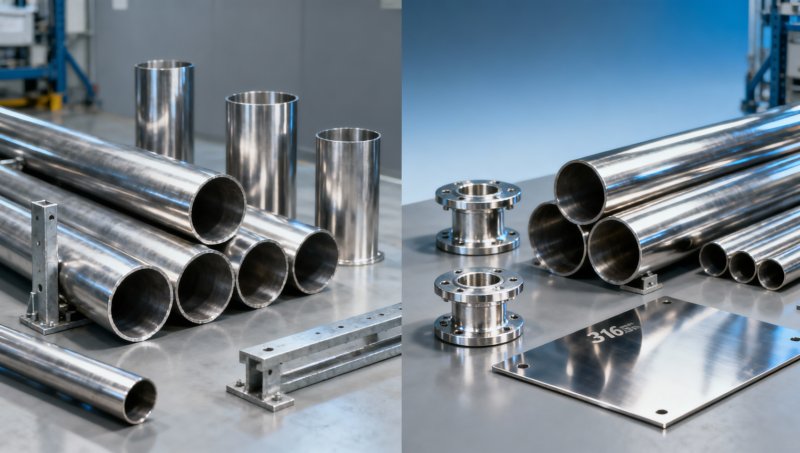
The first step is to define where and how the pipe will be used. Stainless pipe for potable water, food processing, offshore structures, chemical transfer, and high-temperature equipment cannot be evaluated by the same criteria. Buyers should clarify at least 6 points: fluid type, chloride exposure, operating temperature, pressure level, installation method, and expected service life.
In many projects, corrosion risk is underestimated at the purchasing stage. A pipe that performs well indoors may fail much faster in coastal zones, acidic washdown areas, or applications with intermittent chemical cleaning. Even a difference of 1 environment class can change the preferred grade from a general-purpose option to a molybdenum-bearing stainless material.
Temperature also matters. For systems exposed to 60°C, 120°C, or cyclic heating and cooling, thermal expansion, oxidation resistance, and weld-zone stability should be reviewed early. If the pipe is connected to structural steel supports, expansion joints, clamps, and stress points should be coordinated to avoid distortion or premature wear.
Project teams should also define whether they need seamless pipe, welded pipe, or fabricated stainless assemblies. For medium-pressure utility lines, welded pipe is often sufficient and more cost-efficient. For critical service, tighter tolerances, or certain code-driven applications, seamless pipe may provide a stronger margin of safety, though usually at a higher unit cost and longer lead time.
Key questions to answer before specifying material
- Will the pipe be used in neutral, alkaline, or acidic media?
- Is chloride exposure below 50 ppm, moderate, or continuously high?
- Will the operating temperature remain below 80°C, between 80°C and 300°C, or fluctuate frequently?
- Is the pipe part of a visible architectural system, a process line, or a hidden utility network?
- What inspection level is required: mill certificate review only, dimensional check, or PMI and third-party testing?
When these conditions are clear, technical teams can narrow grade selection and procurement teams can compare quotations more accurately. This reduces the common risk of approving low initial cost material that later requires replacement, repolishing, or unexpected shutdown maintenance within 12 to 36 months.
Typical matching logic by operating environment
The table below provides a practical starting point for matching service conditions to stainless pipe priorities. It is not a substitute for formal engineering calculation, but it helps non-specialist buyers and cross-functional teams align technical and commercial expectations.
The main takeaway is simple: pipe selection should follow service conditions, not habit. A grade that works well in one project type can become a hidden cost driver in another. That is why experienced buyers review environment, fabrication, and lifecycle risk together instead of focusing only on initial quotation.
Compare Material Grades, Dimensions, and Fabrication Requirements
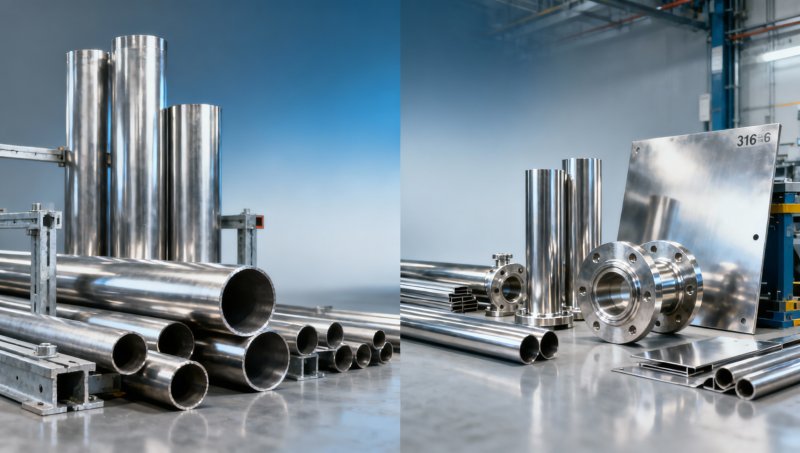
After defining service conditions, the next step is to compare material grades and dimensional requirements. Stainless pipe selection usually involves 3 connected decisions: grade, schedule or wall thickness, and finish. These choices influence structural integrity, corrosion performance, weldability, and processing cost from the first RFQ to final installation.
For example, if the project includes chloride exposure, acidic cleaning, or higher operating temperature, specifiers often consider molybdenum-containing stainless options. In related supply chains, sheet and plate materials used for tanks, brackets, covers, and custom fabricated components must also be aligned with the pipe grade to reduce galvanic and maintenance issues across the system.
A practical example is 316 Stainless Steel Plate, which is widely selected for chemical, food industry, medical equipment construction, ship parts, kitchen supplies, and transport-related components. With tensile strength of at least 520, yield strength of at least 275, elongation of 55% to 60%, hardness up to 183HB or 100HRB, and density of 7.98, it offers strong corrosion performance for supporting fabricated parts used together with stainless piping systems.
Its technical value is especially relevant when the project requires resistance to pitting and corrosion, improved high-temperature performance, and better behavior in acidic environments. The 2% to 3% molybdenum content supports resistance against media such as acetic acid and certain chloride-bearing conditions. Available thickness ranges from 0.3 mm to 200 mm, with common lengths including 2000 mm, 3000 mm, 6000 mm, and 12000 mm, plus finishes such as BA, 2B, NO.1, NO.4, HL, and 8K.
Grade and specification checkpoints
- Confirm the material standard and grade equivalence before order release, especially when ASTM, EN, JIS, and GB references appear in the same project package.
- Check OD, wall thickness tolerance, straightness, and cut length. A deviation of even ±0.5 mm can affect fit-up for automated welding or modular assembly.
- Review surface finish based on use. Decorative or hygienic systems may need smoother finishes than hidden structural or utility installations.
- Align pipe material with connected fittings, flanges, brackets, and fabricated sheet or plate components to avoid inconsistent corrosion performance.
The comparison table below helps buyers balance grade selection with cost and application risk. It also shows why stainless pipe should be evaluated as part of the full steel package, especially in projects that combine pipe runs, supports, frames, and custom fabricated stainless parts.
For many buyers, the lowest-cost quote becomes expensive when tolerances are inconsistent or when welding rework delays the installation sequence. A better approach is to compare material certificates, dimensional consistency, and fabrication readiness together. That is especially important when pipe supply is coordinated with structural steel packages, modules, or OEM assemblies.
Check Standards, Quality Control, and Inspection Documents
A stainless pipe is only as reliable as the documentation and quality controls behind it. Reputable suppliers should provide traceable mill test certificates, grade identification, size confirmation, and inspection records that match the purchase order. In export business, buyers often need documents aligned with ASTM, EN, JIS, or GB, depending on project specifications and destination market expectations.
Quality review should go beyond a visual surface check. At minimum, procurement and QA teams should verify chemical composition, mechanical properties, dimensions, heat number traceability, and marking consistency. For more critical projects, PMI, hydrostatic testing, weld seam inspection, or third-party witness inspection may be required. This is particularly common for process plants, public infrastructure, and regulated industrial sectors.
When stainless pipe is part of a larger steel procurement package, consistency across materials becomes an added checkpoint. Structural supports, channels, brackets, and formed profiles should be produced under similarly disciplined quality systems. Hongteng Fengda’s manufacturing model, based on modern facilities and strict quality control, is relevant here because mixed-material projects often succeed or fail based on supply consistency rather than one product alone.
International buyers should also agree on inspection timing. A typical sequence includes 3 stages: pre-production confirmation, in-process inspection, and pre-shipment verification. This structure helps prevent common disputes related to finish, tolerance, quantity variance, or packing condition after goods arrive at port or site.
Documents and inspections buyers should request
- Mill test certificate with heat number and mechanical properties.
- Dimensional inspection report covering OD, wall thickness, and cut length.
- Surface and finish confirmation, especially for polished or hygienic applications.
- Packing list and marking photos before shipment.
- Optional third-party inspection when contract value, end user policy, or project risk justifies the additional cost.
Common quality risks to watch
The most frequent issues in cross-border stainless procurement are not always dramatic failures. More often they involve mixed heats, incomplete documents, incorrect finish, tolerance drift, or package damage during transport. Each one can delay installation by 3 to 10 days, especially when pipe is part of a prefabricated system and replacement pieces must match existing spools.
A disciplined supplier should be able to explain inspection frequency, nonconformance handling, and corrective action workflow. That level of transparency reduces sourcing risk for procurement officers, project managers, and finance approvers who need confidence that cost savings will not create avoidable site disruption later.
Evaluate Cost, Lead Time, and Supply Chain Reliability
Price matters, but stainless pipe procurement should be judged by total delivered value. In B2B purchasing, the quote per ton or per meter is only one part of the decision. Buyers should also compare packaging quality, delivery accuracy, documentation completeness, customization capability, and supplier response speed when specifications change.
Lead time planning is especially important for construction and industrial projects. Standard sizes may ship in 2 to 4 weeks, while special grades, unusual wall thicknesses, polished finishes, or fabricated spools may require 4 to 8 weeks or longer depending on production load and export scheduling. If pipe is linked to steel beam supports or modular frames, one delayed item can affect the installation sequence of multiple trades.
Reliable exporters help reduce these risks by offering stable production capacity, consistent quality, and realistic delivery commitments. This is where working with a supplier experienced in broader structural steel manufacturing can be useful. Projects often need coordinated procurement across beams, channels, angles, cold formed sections, and stainless-related components, not isolated purchasing from multiple disconnected vendors.
Commercial teams should also calculate hidden cost drivers. These include repolishing, rejected welds, freight inefficiency from poor packing, inspection rework, and overtime caused by out-of-sequence delivery. A 3% lower unit price can quickly disappear if site productivity drops or if emergency replacement must be air-shipped.
Practical procurement checklist
Before placing the order, use the following decision framework to compare suppliers on measurable criteria rather than on quotation alone.
The strongest suppliers are not always the cheapest in a one-line quote comparison. They are the ones that keep projects moving, reduce sourcing uncertainty, and support engineering changes without losing control of quality or delivery. For long-term buyers, that reliability has a direct commercial value.
Installation, Maintenance, and Common Mistakes to Avoid
Even the right stainless pipe can underperform if installation and maintenance are poor. Material should be stored in a clean, dry area, separated from carbon steel contamination sources, and handled with protected lifting tools whenever possible. Surface contamination from iron particles is one of the most common reasons buyers mistakenly assume that the stainless material itself is defective.
Welding procedures should match the grade, thickness, and service demands. Heat tint removal, pickling, passivation, and proper cleaning after fabrication are often overlooked, especially in fast-track construction. In corrosive or hygienic applications, these finishing steps can have a major effect on long-term performance and ease of cleaning.
Maintenance planning should be based on actual environment. In low-risk indoor service, visual inspection every 6 to 12 months may be enough. In marine, food processing, or chemical environments, more frequent review may be needed, especially around welds, supports, low-drain areas, and splash zones. Early detection of staining or pitting usually costs far less than replacement after leakage or structural weakening.
For project managers and after-sales teams, it is useful to create a short acceptance and maintenance record after commissioning. This record should include material grade, finish type, installed location, date, and any special cleaning instructions. That simple discipline supports warranty review, replacement planning, and future procurement consistency.
Frequent mistakes in stainless pipe selection and use
- Choosing by price only without checking chloride exposure, acid contact, or temperature profile.
- Ignoring tolerance compatibility with fittings, spool fabrication, or modular support systems.
- Using stainless pipe with poorly matched accessories that create avoidable corrosion or maintenance issues.
- Skipping cleaning and passivation steps after welding or on-site cutting.
- Assuming all export suppliers provide the same level of documentation and traceability.
FAQ: questions buyers often ask
How do I know whether I need a higher corrosion-resistant grade? If the pipe will face marine air, chloride-bearing washdown, acidic media, or repeated chemical cleaning, a more corrosion-resistant grade should be evaluated early. The cost premium is often justified when service life is expected to exceed 5 years.
What should I check first in a supplier quotation? Review grade, size, wall thickness, finish, standard, delivery term, and documentation scope. If any of these 6 items are unclear, price comparison is incomplete.
How long does stainless pipe delivery usually take? Standard products may be available in 2 to 4 weeks, while custom sizes, polishing, or fabricated assemblies may take 4 to 8 weeks depending on order volume and export planning.
Can one supplier support both stainless and structural steel needs? Yes, and this often improves coordination. When pipe systems connect with beams, channels, angles, or custom supports, bundled sourcing can reduce interface errors, shorten communication loops, and simplify quality follow-up.
Choosing the right stainless pipe means balancing environment, grade, dimensions, fabrication method, documentation, and supply reliability. Buyers who evaluate these factors together are better positioned to control corrosion risk, installation efficiency, and total lifecycle cost. For projects that also involve structural steel for construction, prefabricated components, or OEM steel fabrication, coordinated sourcing creates additional value in planning and execution.
Hongteng Fengda supports global customers with dependable production, international-standard quality control, and customized steel solutions for construction, industrial, and manufacturing applications. If you need help comparing stainless pipe options, matching them with structural steel systems, or reviewing a project-specific steel package, contact us today to get tailored recommendations, product details, and a practical sourcing solution.
Please give us a message


Please enter what you want to find