How to Choose the Right Electrical Conduit Pipe for Commercial Wiring
Choosing the right electrical conduit pipe is critical for commercial wiring projects where safety, durability, and compliance directly affect cost and progress.
For commercial builds, conduit selection is rarely a minor detail.
It influences installation speed, inspection outcomes, maintenance cycles, and future expansion options.
A poor match can create corrosion issues, mechanical damage, overheating concerns, or expensive rework later.
This guide breaks down how to evaluate electrical conduit pipe options for demanding commercial environments with a practical decision lens.
Start with the Environment and Project Conditions
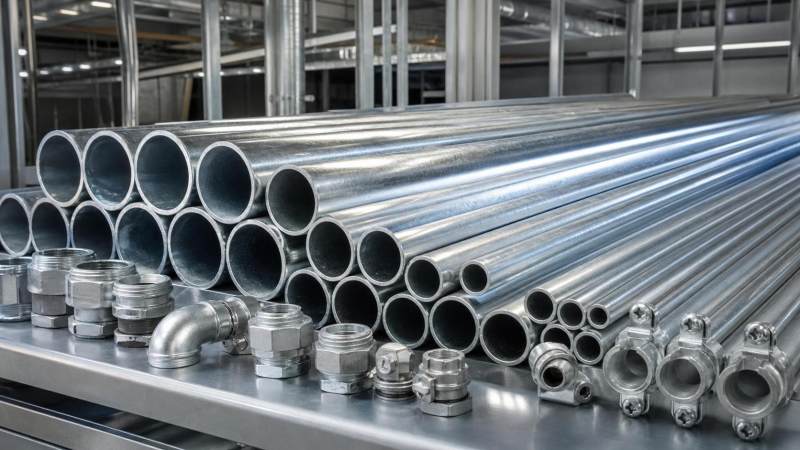
The first step is understanding where the electrical conduit pipe will be installed.
Indoor retail spaces, parking decks, factories, and coastal facilities place very different demands on conduit systems.
Dry interior areas usually allow more flexibility in material choice.
Wet, chemical, or outdoor conditions narrow the safe options very quickly.
Look closely at four site factors before comparing products:
- Moisture exposure, including washdown areas and underground runs
- Corrosive agents such as salt air, cleaners, oils, or process chemicals
- Mechanical impact risk from vehicles, tools, or equipment movement
- Ambient temperature and potential heat sources nearby
This early screening keeps the selection process grounded in actual operating conditions.
It also reduces the chance of choosing an electrical conduit pipe based only on upfront price.
Compare Common Electrical Conduit Pipe Materials
Material selection drives strength, corrosion resistance, labor needs, and expected service life.
In commercial wiring, the most common conduit categories include steel, stainless steel, aluminum, and nonmetallic options.
Galvanized Steel Conduit
Galvanized steel electrical conduit pipe is often chosen for high-impact areas.
It offers strong mechanical protection and performs well in many indoor commercial settings.
However, coating damage or aggressive corrosion can shorten service life in harsh outdoor conditions.
Stainless Steel Conduit
Stainless steel conduit is a stronger choice when corrosion is a major risk.
It is commonly used in food processing, marine sites, hospitals, and chemical environments.
The initial cost is higher, but maintenance and replacement risk are usually lower.
Aluminum Conduit
Aluminum is lighter and easier to handle on large installations.
That can help labor productivity, especially on elevated or long routing projects.
Still, compatibility with fittings and local environmental exposure should be checked carefully.
PVC and Other Nonmetallic Conduit
Nonmetallic conduit can work well underground or in corrosive settings.
It is often cost effective, but it may offer less mechanical protection than metal systems.
For commercial wiring exposed to traffic or equipment, that tradeoff matters.
Check Strength, Corrosion Resistance, and Compliance Together
A reliable electrical conduit pipe should not be judged by one performance factor alone.
Strength without corrosion resistance can fail in outdoor service.
Corrosion resistance without code compliance can delay approvals and procurement.
That is why technical review should cover material data, fabrication quality, and certification status together.
In related steel applications, this same logic applies to supporting components and custom fabricated parts.
For example, 310 Stainless Square steel rod can support fabrication needs in manufacturing, construction, medical instruments, and automotive parts.
It is available in square bar sizes from 18mm to 47mm and supports standards such as ASTM, JIS, GB, DIN, and EN.
Its tensile strength reaches at least 520, with yield strength at least 275 and elongation of 55 to 60.
Those figures matter when buyers need steel components that balance formability and strength under pressure.
In practice, a capable supplier should support both conduit-related steel needs and broader structural steel sourcing with consistent quality control.
Evaluate Installation Efficiency and Lifecycle Cost
The right electrical conduit pipe is not always the cheapest item on the quote sheet.
A lower material price can be offset by slower installation, more fittings, or earlier replacement.
Commercial projects usually benefit from a lifecycle cost review instead of a unit-cost-only decision.
Key cost drivers often include:
- Labor time for cutting, bending, threading, and joining
- Accessory availability and compatibility
- Expected inspection acceptance rate
- Maintenance access and replacement frequency
- Downtime risk if conduit fails in service
This is especially important in occupied buildings or revenue-generating facilities.
When shutdown costs are high, a more durable electrical conduit pipe often becomes the more economical choice.
Use Standards and Supplier Capability as Decision Filters
Commercial wiring decisions should be filtered through code and supply reliability from the start.
That means checking local electrical codes, project specifications, and inspection authority expectations before procurement locks in.
It also means confirming whether the supplier can maintain consistent dimensions, coatings, packaging, and delivery timing.
For global sourcing, documentation quality is not a small issue.
Mill certificates, standards compliance, and traceability records should be easy to verify.
Hongteng Fengda, as a structural steel manufacturer and exporter from China, supports international buyers with standard and customized steel solutions.
Its product range includes angle steel, channel steel, steel beams, cold formed steel profiles, and custom structural components.
With manufacturing aligned to ASTM, EN, JIS, and GB standards, the company helps reduce sourcing risk across construction and industrial projects.
For buyers reviewing electrical conduit pipe supply chains, that kind of production discipline can be as important as the material itself.
A Practical Selection Checklist for Commercial Wiring
To keep decisions clear, use a short evaluation sequence before issuing the purchase order.
- Define exposure conditions for each conduit route, not just the building overall.
- Match the electrical conduit pipe material to impact, moisture, and corrosion risk.
- Verify code compliance, project specs, and inspection requirements.
- Review total installed cost, not only base material pricing.
- Confirm supplier quality systems, lead time stability, and documentation support.
- Check future maintenance access and possible expansion needs.
This process works well for new construction, retrofits, and multi-phase commercial developments.
It helps narrow the right electrical conduit pipe choice without losing sight of schedule and budget pressure.
In the end, the best selection is the one that fits the site, satisfies standards, installs efficiently, and lasts through real operating conditions.
When those factors are reviewed together, commercial wiring decisions become faster, safer, and easier to defend.
Please give us a message


Please enter what you want to find