Key Factors When Selecting Bending Angle Iron
Selecting the right bending angle iron is crucial for ensuring structural integrity and cost-efficiency in your construction or manufacturing project. As a project manager, you need durable, precisely fabricated steel components that meet international standards while optimizing material usage. This guide explores key factors when choosing bending angle iron - from material grades and load-bearing capacity to corrosion resistance and customization options - helping you make informed decisions for your specific application requirements.
Material Specifications
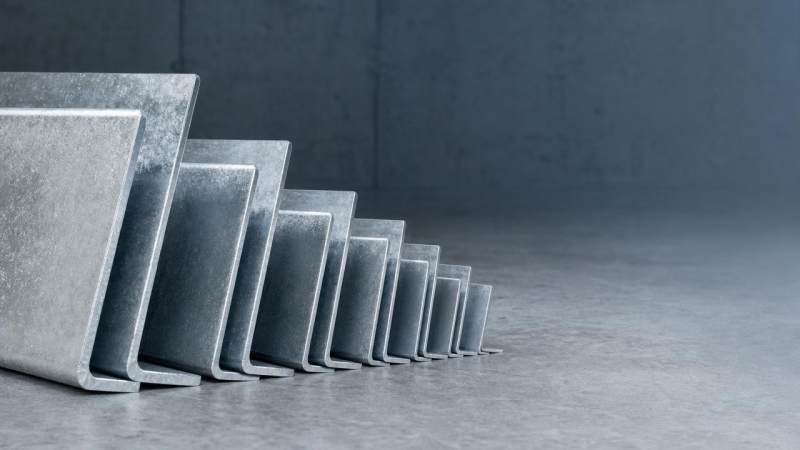
The material grade directly impacts the performance and longevity of bending angle iron. Common steel grades include ASTM A36 with yield strength of 250 MPa, ASTM A572 Grade 50 (345 MPa yield strength), and corrosion-resistant options like ASTM A588. For projects requiring galvanized protection, hot-dip galvanizing typically provides 65-300 g/m² zinc coating depending on environmental exposure levels.
Load-Bearing Capacity
Structural calculations should determine the required section modulus and moment of inertia for your bending angle iron. Standard sizes range from 20x20x3mm to 200x200x20mm, with load capacities varying by thickness and leg length. For critical applications, verify calculations with a 1.5-2.0 safety factor against maximum expected loads.
Customization and Fabrication Considerations
Precision bending requires specialized equipment to maintain dimensional accuracy within ±1° angle tolerance and ±0.5mm leg length variation. Cold bending is suitable for most applications, while hot bending (900-1100°C) may be needed for thicker sections exceeding 12mm.
Corrosion Protection Options
For projects requiring supplementary steel components, consider Galvanized Steel Wire Rope with zinc coating options ranging from 15-260 g/m² for different corrosion conditions. This product complements structural steel systems in applications like cranes, elevators, and marine structures.
Common protective treatments for bending angle iron include:
- Hot-dip galvanizing (80-300 µm coating)
- Epoxy powder coating (60-120 µm)
- Zinc-rich primers (50-100 µm)
Quality Assurance and Compliance
Reputable manufacturers should provide Mill Test Certificates (MTCs) verifying chemical composition and mechanical properties. International standards like EN 10025, ASTM A6, and JIS G3192 define testing requirements for dimensional tolerances, straightness, and surface quality.
Common Pitfalls to Avoid
Project managers frequently encounter these challenges when specifying bending angle iron:
- Underestimating corrosion protection needs for the service environment
- Accepting dimensional tolerances beyond project requirements
- Overlooking weldability characteristics of the selected material grade
Conclusion and Next Steps
Choosing the optimal bending angle iron requires balancing material properties, fabrication requirements, and project specifications. Partnering with an experienced structural steel manufacturer ensures you receive components that meet exact technical requirements while optimizing material costs and lead times.
For project-specific recommendations or to discuss custom bending angle iron solutions, contact our engineering team today. We provide technical support from initial design through final delivery, helping you achieve structural performance goals within budget and schedule constraints.
Please give us a message


Please enter what you want to find