Choosing the right stainless steel pipe exporter is critical for quality, cost control, and project success. Whether you are comparing ss pipe price, evaluating a stainless steel pipe manufacturer, or looking for a dependable stainless steel pipe supplier, understanding production standards, export capability, and service support can help you make a smarter sourcing decision.
For most buyers, the best exporter is not simply the one with the lowest quotation. A reliable partner should be able to prove material quality, deliver stable supply, meet your required standards, support documentation and inspection, and reduce the risk of delays or claims. If you are sourcing for construction, industrial processing, distribution, or OEM applications, your decision should focus on total procurement value rather than unit price alone.
What really matters when choosing a stainless steel pipe exporter?
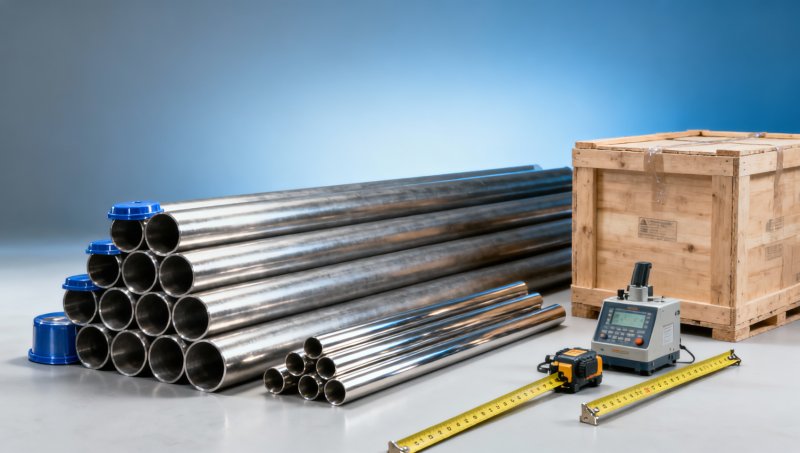
The core search intent behind this topic is practical vendor evaluation. Buyers usually want to know how to identify a trustworthy exporter, avoid quality and delivery problems, and make a safe purchasing decision for international sourcing.
That means the most important factors are:
- Product quality consistency rather than one-time sample quality
- Compliance with international standards such as ASTM, EN, JIS, or GB
- Export experience and documentation accuracy
- Stable production capacity and lead time control
- Responsive technical and commercial communication
- Clear quality control and after-sales handling
- Reasonable total cost, including packaging, logistics, inspection, and claim risk
If an exporter cannot clearly answer questions about grade, tolerance, surface finish, testing, packing, and delivery responsibility, that is a warning sign. In global steel sourcing, weak communication often leads to stronger downstream problems.
How to verify whether the exporter can truly meet your technical requirements
Many buyers begin with price, but technical mismatch is usually the real cause of failed orders. Before comparing offers, confirm whether the exporter understands your application and can match the specification exactly.
Key points to check include:
- Material grade: For example, 201, 304, 316, 316L, or other required stainless grades
- Manufacturing method: Seamless or welded pipe
- Dimensions: Outer diameter, wall thickness, length, and tolerance
- Surface finish: Pickled, polished, bright annealed, etc.
- Testing requirements: PMI, hydrostatic test, flattening test, eddy current test, third-party inspection
- Standards: ASTM, ASME, EN, JIS, DIN, or project-specific standards
- Application environment: Corrosive media, pressure, temperature, outdoor use, food processing, construction, or mechanical use
A capable exporter should ask detailed questions instead of giving a generic quote immediately. That is often a good sign, because it shows they are trying to prevent errors before production starts.
For technical evaluators and quality managers, request mill test certificates, sample reports, inspection procedures, and previous export references for similar projects. For project managers and procurement teams, confirm whether the supplier can maintain consistency across multiple batches, not just for one shipment.
Why export capability is just as important as manufacturing capability
A strong stainless steel pipe manufacturer is not automatically a strong exporter. International orders involve much more than production. Documentation, packaging, loading, customs coordination, and communication all affect whether your cargo arrives correctly and on time.
Ask the exporter about the following:
- Export markets served: North America, Europe, Middle East, Southeast Asia, etc.
- Document handling: Invoice, packing list, MTC, COO, fumigation certificate, Form E or other required trade documents
- Packing method: Seaworthy packing, end caps, bundles, wooden cases, anti-rust protection, marking
- Inspection support: SGS, BV, TUV, or customer-appointed inspection agencies
- Incoterm flexibility: EXW, FOB, CFR, CIF, DDP if needed
- Lead time transparency: Production cycle, peak season capacity, shipment booking ability
If the exporter regularly serves global project buyers, distributors, and industrial customers, they are more likely to understand schedule pressure, compliance requirements, and claim prevention. This matters especially for enterprise buyers who need predictable execution and low supply risk.
For example, some buyers source multiple corrosion-resistant steel products for one project. In such cases, it can be useful to work with suppliers who also understand related steel categories and standards. If your project includes coated steel materials in addition to stainless pipe, reviewing options from Galvanized Steel Coil Manufacturers may help you compare broader anti-corrosion sourcing solutions and supplier capabilities across product lines.
How to compare ss pipe price without making a costly mistake
One of the most common search motivations is understanding ss pipe price. However, the lowest quote may hide major differences in raw material, tolerance control, polishing level, inspection scope, or packaging quality.
When comparing quotes, check whether all suppliers are quoting the same basis:
- Same grade and standard
- Same size and thickness tolerance
- Same surface treatment
- Same quantity and batch size
- Same testing and certification scope
- Same packing method
- Same trade term and destination basis
You should also ask:
- Is the material from prime raw steel or downgraded source?
- Does the quote include third-party inspection?
- Will there be extra charges for cut length, special marking, or export packing?
- What is the claim policy if material fails inspection or arrives damaged?
For procurement and business decision-makers, total landed cost is more useful than product unit price. A slightly higher quote from a dependable stainless steel pipe supplier may save more money by reducing project delays, replacement costs, and dispute handling.
Questions you should ask every stainless steel pipe supplier before placing an order
If you want to shortlist suppliers efficiently, use a structured evaluation checklist. The right questions often reveal whether the exporter is experienced, transparent, and operationally reliable.
- What standards do your products comply with?
- Can you provide recent MTCs and test reports for similar grades?
- Do you support third-party inspection before shipment?
- What is your normal lead time for this specification and quantity?
- How do you control dimensional tolerance and weld quality?
- What export markets do you serve most often?
- How do you handle non-conforming goods or quality complaints?
- Can you support OEM marking, custom length, or special packaging?
- What is your minimum order quantity?
- Who will handle technical clarification and order follow-up?
The answers should be clear, specific, and supported by documents. Vague replies such as “no problem,” “high quality,” or “best price” are not enough for serious sourcing decisions.
How to judge long-term reliability, not just one-order performance
For distributors, contractors, manufacturers, and project owners, a supplier relationship often matters beyond a single shipment. The goal is to find an exporter that can support repeated orders, stable quality, and smoother coordination over time.
Signs of long-term reliability include:
- Consistent communication before and after order confirmation
- Stable production planning and realistic lead time promises
- Traceable quality records and inspection discipline
- Ability to support customization when project requirements change
- Experience serving different industries with different compliance expectations
Companies with broader structural steel and industrial steel export experience often understand how buyers evaluate risk. For example, exporters serving construction, manufacturing, and industrial projects usually place greater attention on documentation, standard compliance, and batch consistency. That sourcing mindset is especially valuable for buyers who need dependable planning rather than opportunistic low-price trading.
Final checklist for choosing the right exporter
Before you make the final decision, confirm these five points:
- The product matches your exact technical requirement
- The exporter can prove quality with documents and inspection support
- The quoted price is transparent and comparable on the same basis
- The supplier has real export execution ability, not just factory capacity
- The company shows stable communication and problem-solving capability
In short, choosing a stainless steel pipe exporter should be based on risk control, compliance, delivery reliability, and long-term value. A qualified partner helps you do more than buy steel pipe—they help you protect budgets, maintain schedules, and reduce sourcing uncertainty. If you evaluate suppliers with this practical framework, you will be in a much stronger position to select a partner that supports both immediate orders and future business growth.
Please give us a message


Please enter what you want to find