Choosing a reliable stainless steel coil factory is essential for procurement professionals who need stable quality, competitive pricing, and on-time delivery. With so many suppliers in the global steel market, understanding how to evaluate production capacity, quality standards, customization ability, and export experience can help reduce sourcing risks and support long-term project success.
For buyers in construction, fabrication, machinery, and industrial supply, the right supplier is not simply a low-price source. A dependable factory should support consistent material performance, clear documentation, manageable MOQ levels, and delivery schedules that fit project timelines of 2–8 weeks.
This matters even more when you are purchasing from overseas. Freight planning, packaging quality, export compliance, and communication speed can affect the total landed cost as much as the coil price itself. A strong partner helps procurement teams control both commercial and technical risk.
Why Factory Selection Directly Affects Procurement Results
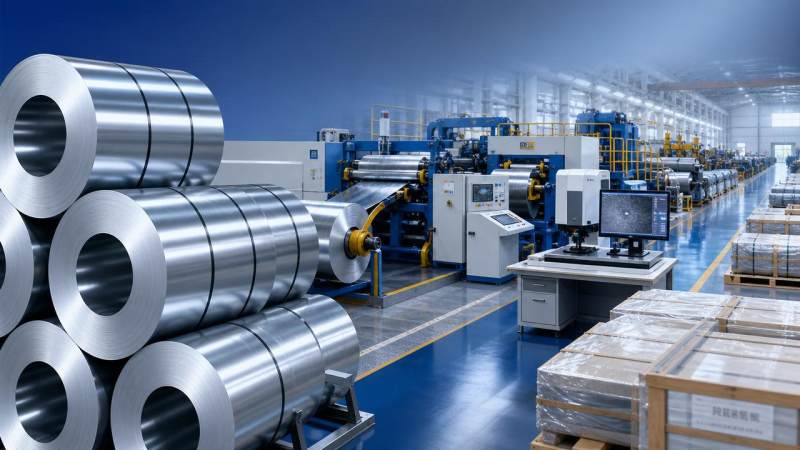
When evaluating a stainless steel coil factory, procurement professionals usually focus on 4 core outcomes: stable quality, predictable lead time, cost control, and after-sales responsiveness. If one of these areas fails, downstream production may stop, rework may increase, or project acceptance may be delayed.
In steel sourcing, even a small issue such as thickness deviation beyond the agreed tolerance, mixed heat numbers, or improper edge condition can create measurable losses. For processors, a variance of just ±0.1 mm may affect forming, slitting, or welding efficiency.
The Main Risks Buyers Face
The most common sourcing problems are not always visible in the quotation stage. Some suppliers trade coils without stable mill control, some outsource production to different workshops, and others lack export discipline. These issues often appear only after the order is placed.
- Inconsistent chemistry or mechanical properties between batches
- Lead time slippage of 7–20 days during peak demand periods
- Insufficient traceability for ASTM, EN, JIS, or GB standard requests
- Surface damage caused by weak packing for sea freight of 20–40 days
- Slow complaint handling after goods arrive at the destination port
Why Export Experience Matters
A factory serving North America, Europe, the Middle East, and Southeast Asia usually understands documentation, port handling, and packing methods better than a supplier focused only on the domestic market. That experience reduces avoidable delays and helps buyers match local compliance requirements.
For example, projects may require mill test certificates, packing lists with heat numbers, dimensional inspection records, or specific marking instructions. A reliable stainless steel coil factory should manage these details as standard practice rather than as special exceptions.
Quick Supplier Comparison Framework
Before shortlisting 2–3 suppliers, buyers can use a structured evaluation matrix. This makes factory comparison more objective and helps avoid decisions based only on unit price.
The key takeaway is simple: the most reliable supplier is often the one with fewer hidden costs. A quote that is 2% lower may become more expensive if quality variation, packaging loss, or delayed shipment causes disruptions in fabrication or installation.
How to Evaluate a Reliable Stainless Steel Coil Factory
A practical assessment should combine technical review, commercial review, and supply chain review. Procurement teams should not rely on brochures alone. Instead, ask for measurable information that can be verified before the first order and again after the trial order.
1. Check Production Capacity and Equipment Stability
Start with the factory’s actual manufacturing capability. Ask whether the supplier is a direct manufacturer, a processor, or a trader working with multiple mills. Capacity stability is especially important if your annual requirement exceeds 500–1,000 tons or if you need repeat deliveries every 30–45 days.
Useful questions include the number of processing lines, supported thickness range, standard coil widths, and whether they can maintain the same grade and finish across multiple shipments. A strong factory should clearly explain its production flow from raw material sourcing to final packing.
What Buyers Should Confirm
- Standard production lead time, such as 15–25 days for routine orders
- Peak season delay risk and buffer planning for 1–2 extra weeks
- Ability to support custom slitting, cut-to-length, or edge conditions
- Minimum order quantity for standard versus customized specifications
2. Verify Standards, Testing, and Traceability
A reliable stainless steel coil factory should be comfortable working with common international standards such as ASTM, EN, JIS, and GB. Compliance is not only about labeling a grade correctly. It also means controlling chemistry, mechanical properties, dimensions, and surface condition within agreed tolerances.
Traceability is equally important. Each batch should connect heat number, coil number, inspection data, and shipping marks. This is especially valuable when goods will be further processed into tubes, profiles, structural components, or fabricated assemblies.
3. Review Quality Control at Three Levels
Procurement teams should check whether inspection is performed at incoming material stage, in-process stage, and before shipment. A supplier that only inspects after packing may miss process-related issues that affect flatness, finish, or dimensional consistency.
This three-level approach is often more important than broad marketing claims. It helps identify whether the factory can consistently meet agreed requirements instead of depending on sorting at the last minute.
Useful Factory Qualification Checklist
The following checklist can be used during supplier screening, factory audit, or pre-order discussion. It is especially practical when comparing a new source against an existing approved vendor.
If a supplier can answer these points clearly and consistently, the chance of successful repeat procurement is much higher. Reliability is not one single certificate; it is the ability to repeat the same quality and service level order after order.
Customization, Product Range, and Cross-Category Supply Value
Many buyers searching for a stainless steel coil factory also need related stainless or structural steel products for fabrication and project completion. A supplier with broader processing capability can reduce vendor management time, simplify documentation, and improve material coordination across different product categories.
For example, some projects combine stainless materials with structural sections, cold formed profiles, or custom fabricated parts. A manufacturer and exporter with experience in multiple steel product lines can often provide a more efficient sourcing plan than a single-product vendor.
Mid-Project Flexibility Matters
In real procurement, specifications often change after drawing review or after fabrication trials. Buyers may need revised lengths, additional bars, or matching products for secondary use. This is where customization support becomes commercially valuable, not just technically convenient.
As one example, buyers sourcing stainless materials for fabrication or decorative applications may also require Stainless Square steel rod as a complementary item. In 201 stainless steel, typical square bar sizes include 18 mm to 47 mm, with custom lengths from 1 to 6 meters.
This type of material is commonly used in kitchenware, urban decoration, construction, automotive parts, shipbuilding, and low-grade household products. Typical mechanical data may include tensile strength of at least 520, yield strength of at least 275, elongation around 55–60, and hardness up to 183HB or 100HRB.
For procurement teams, these details show whether a supplier understands not only basic steel trading, but also product application, forming requirements, and cross-category support. Broader product competence often leads to better communication when orders involve several materials under one shipment plan.
Signs of Strong Customization Capability
- Support for standard and OEM specifications in the same order cycle
- Ability to provide multiple finishes such as bright polished, BA, No. 4, or matte treatment
- Production planning for mixed items without excessive lead time extension
- Technical communication on material suitability for forming, welding, or outdoor use
Commercial Terms, Delivery Control, and Long-Term Supplier Fit
Once technical capability is confirmed, buyers should evaluate the commercial side with the same discipline. A stainless steel coil factory may offer acceptable quality, but if payment terms, packing standards, or complaint handling are weak, the relationship may still create operational risk.
Look Beyond Unit Price
The best purchasing decision is based on total procurement cost, not only the ex-works or FOB price. Buyers should compare freight efficiency, packing durability, claim rate risk, and communication speed. These factors can influence real cost by several percentage points over a 6–12 month purchasing cycle.
Ask for a clear quotation structure covering grade, size, finish, tolerance, quantity, incoterm, packing, lead time, and document list. If any of these points are vague, later disputes become more likely.
Delivery Performance Should Be Measured
Reliable suppliers should be able to indicate standard lead time, realistic shipment window, and what may affect schedule. Procurement teams often benefit from setting a delivery KPI such as on-time shipment within a ±3 day window for routine orders.
For international buyers, pre-shipment photos, packing verification, and container loading records can also reduce uncertainty. These are simple controls, but they help verify whether the order was prepared exactly as agreed.
Questions to Ask Before Approving a Supplier
- Can you provide repeat supply with the same grade and finish for the next 3–6 months?
- What is your normal response time for technical and shipping questions?
- How do you handle non-conforming material after arrival?
- What export markets do you regularly serve, and what standards do you often work with?
- Can you support both standard steel products and customized project requirements?
Why Buyers Value Full-Service Steel Partners
For many procurement teams, a supplier with both manufacturing and export experience offers a practical advantage. Companies that already support construction, industrial, and manufacturing customers across several regions often have stronger discipline in planning, inspection, and document coordination.
A structural steel manufacturer and exporter such as Hongteng Fengda reflects this broader supply capability. With experience in angle steel, channel steel, steel beams, cold formed profiles, and customized structural components, such a partner can support project buyers who need more than one steel category under reliable quality control.
This multi-product approach is especially useful when procurement teams want fewer suppliers, clearer accountability, and more predictable lead times. It can also help reduce sourcing risk in projects where one delay affects several downstream activities.
Final Procurement Advice for Choosing the Right Supplier
The right stainless steel coil factory should demonstrate more than product availability. Buyers should look for 5 practical strengths: stable production, clear quality control, export-ready documentation, customization support, and responsive communication. These factors are what make repeat sourcing safer and more efficient.
A useful approach is to begin with a trial order, verify certificates and dimensional consistency, review packing performance after transit, and then move to scheduled repeat procurement. This step-by-step method gives procurement professionals real evidence before increasing order volume.
If you are comparing suppliers for stainless steel coils or related steel products for construction and industrial use, choose a partner that can combine quality discipline with flexible service. To reduce sourcing risk and improve project delivery, contact us to discuss your specifications, request a customized solution, or learn more about available steel products and export support.
Please give us a message


Please enter what you want to find