Choosing the right steel cold rolled coil affects product performance, cost control, and long-term reliability. For buyers, engineers, and project managers, understanding key factors such as material grade, surface finish, thickness tolerance, and supplier capability is essential. This guide explains how to evaluate steel cold rolled coil effectively while also considering related processing needs like custom steel profiles and structural steel cutting for industrial and construction applications.
What should you check first when choosing steel cold rolled coil?
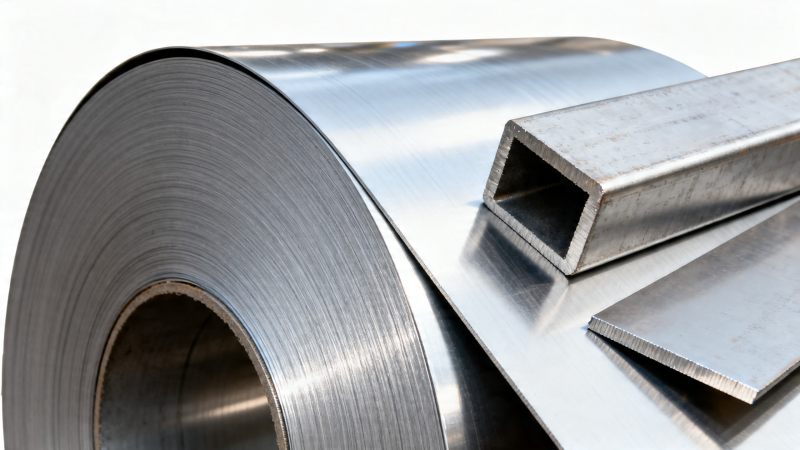
The first step is to define the actual use condition. Steel cold rolled coil used for indoor cabinets, appliance panels, light structural parts, or fabrication blanks may require different grades, thickness ranges, and surface expectations. In most purchasing cases, 4 core indicators decide the starting point: base steel grade, thickness tolerance, width, and required forming performance. If any one of these is unclear, quotation comparisons become misleading and downstream processing risks increase.
For technical evaluators and quality teams, thickness consistency is not only a dimensional issue. It affects stamping stability, welding quality, coating performance, and finished part assembly. A coil that looks acceptable on paper can still create waste if the tolerance window is too wide for the line. Buyers should therefore ask for measurable tolerance data, not only nominal thickness such as 0.5 mm, 1.0 mm, or 2.0 mm.
Commercial teams and project managers usually focus on the balance between price and delivery. That is important, but it should come after confirming the technical baseline. A lower unit price may lead to higher total cost if rework, rejected parts, coating defects, or late replacement orders occur. In practical B2B sourcing, the total decision window often includes 3 stages: technical confirmation, sample or document review, and batch order execution.
If the coil will be further processed into profiles, brackets, channels, or cut-to-length parts, users should also review flatness, residual stress behavior, and edge condition. These details matter in continuous production. A reliable supplier should be able to discuss both the raw material and the next process, especially when the order supports construction, machinery, or OEM manufacturing projects.
A practical 5-point pre-selection checklist
- Confirm the application environment: dry indoor use, humid workshop use, outdoor exposure, or coated fabrication.
- Define the dimensional range: for example 0.12 mm to 3.5 mm thickness and 600 mm to 1500 mm width if multiple products are planned.
- Check forming and joining needs: bending radius, punching density, roll forming speed, and welding requirements.
- Review compliance expectations: ASTM, EN, JIS, or GB alignment depending on the target market.
- Evaluate supplier response capability: documentation speed, customization support, and realistic lead time.
The checklist above helps different stakeholders speak the same language. Operators care about runnability, engineers care about fit-for-purpose properties, procurement cares about cost and lead time, and management cares about supply continuity. A good steel cold rolled coil selection process aligns all 4 interests before the purchase order is released.
How do grade, finish, and dimensional tolerance affect performance?
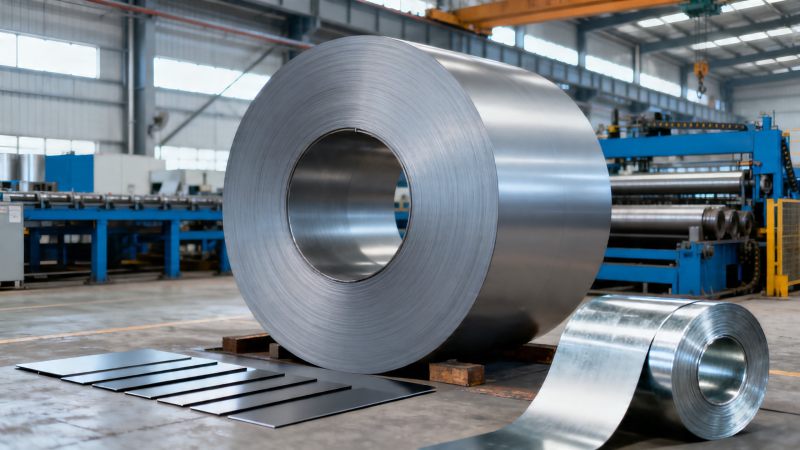
Steel cold rolled coil is often chosen because of its better surface quality, tighter dimensional control, and suitability for precise forming compared with more basic hot rolled feedstock. However, not every cold rolled option performs the same way. Grades differ in yield strength, tensile range, and ductility. Surface conditions also vary depending on whether the end use requires painting, galvanizing, exposed appearance, or simple structural function.
When the use scenario involves corrosion resistance in building processing or construction, galvanized material may become the more suitable option after cold rolling related requirements are reviewed. In that context, an inserted solution such as Gi Sheet Coil can support buyers who need a galvanized steel option with common models such as DX52D and SGCD1, thickness from 0.12 mm to 3.5 mm, width from 600 mm to 1500 mm, and zinc coating ranges such as 60–275 g/m² for hot galvanizing.
This matters because some projects do not simply ask how to choose steel cold rolled coil in isolation. They ask whether the final component needs corrosion protection, welding performance, or a better balance between forming and outdoor durability. For those cases, comparing bare cold rolled substrate with galvanized alternatives helps avoid a wrong specification at the beginning of the procurement cycle.
Thickness and width selection should reflect the actual fabrication route. Thin coils such as 0.12 mm to 0.8 mm may suit lightweight panels and formed sections, while medium gauges such as 1.0 mm to 3.5 mm often fit structural accessories, enclosures, and construction components. Width also affects yield and scrap. Choosing 1000 mm, 1219 mm, or 1500 mm without nesting analysis can change the real production cost per finished piece.
Key technical factors that influence the final result
The table below summarizes the most common decision points when selecting steel cold rolled coil for industrial and construction-related use. It is especially useful for technical assessment teams, purchasing departments, and project owners who need a shared evaluation framework.
A technical table like this prevents superficial price comparison. It also helps financial approvers understand why two offers with the same nominal thickness may still differ in operational value. In many projects, coil compatibility with equipment and downstream quality control can be more decisive than a small difference in initial material price.
When galvanized coil becomes the better fit
If the part will face humidity, storage cycles, construction site exposure, or delayed painting, galvanized steel can reduce corrosion risk significantly. Typical specifications such as DX51D+Z, DX52D+Z, SGCC, S250GD+Z, and S350GD+Z are often considered when corrosion protection and processability must be balanced. Buyers should still verify whether the zinc layer, bendability, and welding behavior match the real application, rather than selecting by grade name alone.
Which procurement criteria matter most in B2B steel sourcing?
In B2B steel sourcing, the right decision is rarely based on technical data alone. Procurement teams also assess supply stability, document readiness, quality consistency, packaging protection, and lead time reliability. For many import buyers, a practical supplier review covers at least 6 items: specification accuracy, mill or inspection documentation, production capacity, export packing, shipment coordination, and after-sales communication speed.
A common mistake is to compare only quotation totals without analyzing what is included. Some suppliers quote base material only, while others support slitting, cut-to-length, profile forming coordination, or customized structural steel processing. For project managers and distributors, this difference affects internal handling cost, schedule risk, and the number of vendors that must be managed across 2 to 4 procurement stages.
Hongteng Fengda’s advantage in this area is not limited to supplying standard steel products. As a structural steel manufacturer and exporter from China, the company supports global construction, industrial, and manufacturing projects with angle steel, channel steel, steel beams, cold formed steel profiles, and customized structural steel components. That broader capability matters when steel cold rolled coil must connect with profile forming, structural fabrication, or OEM component production.
For importers in North America, Europe, the Middle East, and Southeast Asia, standards alignment is another key checkpoint. Material specifications may need to follow ASTM, EN, JIS, or GB requirements depending on the project. A supplier with experience across multiple standard systems can reduce clarification cycles and lower the risk of ordering the wrong equivalent grade.
Supplier evaluation table for steel cold rolled coil purchasing
The following table helps procurement, technical, and business evaluation teams score suppliers using criteria that directly affect delivery success, cost control, and product suitability.
This comparison is particularly useful for enterprises that need internal approval from engineering, finance, and management at the same time. It converts an abstract supplier discussion into observable procurement criteria. In practice, this can shorten internal review by 1 to 2 decision rounds because the evaluation logic becomes clearer across departments.
A 4-step buying process that reduces sourcing risk
- Define use case and specification package, including grade, dimensions, finish, compliance, and monthly volume.
- Request technical confirmation and available standards cross-reference before comparing prices.
- Review delivery scope, packing method, and whether downstream processing support is available.
- Finalize order after aligning lead time, inspection expectations, and claim handling process.
For large buyers and distributors, repeating this 4-step process across suppliers creates a more consistent sourcing benchmark. It also helps separate attractive offers from truly dependable supply partners.
How do standards, applications, and cost considerations shape the final choice?
The final selection of steel cold rolled coil should match both regulatory expectations and application economics. In some projects, ASTM or EN references are necessary for approval workflows. In others, JIS or GB alignment is acceptable if the technical equivalence and downstream performance are clear. Quality managers and safety personnel should review not only the standard name but also the specific property requirements that affect forming, joining, and service condition.
Application also changes the cost logic. If the material is for interior fabricated parts with low corrosion exposure, bare cold rolled steel may be sufficient and more economical. If the parts will face periodic humidity, storage outdoors, or construction-site delays before installation, galvanized steel can reduce lifecycle cost even if the initial price is higher. This is where finance teams should look beyond purchase price and include maintenance, rejection, and replacement considerations.
A practical cost review often compares at least 3 factors: purchase cost per ton, processing efficiency, and expected service environment. For example, a slightly more expensive material that runs faster in forming lines, lowers welding defects, or avoids early corrosion may deliver better total value. This is especially relevant in medium and large-volume procurement where even a small scrap reduction per batch can influence annual cost noticeably.
For construction and industrial buyers, supplier integration also saves cost. When the same partner can support standard structural steel products, customized cold formed profiles, and related fabricated components, coordination time drops and specification continuity improves. That is one reason global buyers often prefer manufacturers with both export experience and structural steel processing understanding.
Typical application decision logic
- Choose standard cold rolled coil when surface quality, precision, and indoor fabrication performance are the main priorities.
- Choose galvanized options when corrosion protection, outdoor storage tolerance, or construction-site exposure becomes important.
- Choose customized dimensions or downstream processing support when scrap control, assembly fit, or OEM efficiency is a key business target.
FAQ for buyers, engineers, and project teams
How do I know whether steel cold rolled coil is suitable for my application?
Start with 3 questions: what environment the part will serve in, what fabrication processes it will undergo, and what standard the customer or project requires. If the use is primarily indoor and precision forming is important, steel cold rolled coil is often a strong choice. If corrosion risk is moderate to high, compare it with galvanized alternatives before finalizing the order.
What are the most important specifications to send to a supplier?
At minimum, send grade, thickness, width, required quantity, surface condition, and intended use. If possible, also include tolerance expectations, coil ID preference such as 508 mm or 610 mm, and whether slitting or cut-to-length is needed. These details reduce quotation revisions and help the supplier recommend the right steel solution faster.
How long is the usual delivery cycle?
The common lead time for export steel orders varies with grade availability, quantity, and processing scope. A standard range of 2–6 weeks is often used for planning, but urgent or highly customized orders may require separate confirmation. Buyers should also account for inspection time, packing, inland transport, and sea shipment when planning project milestones.
What mistakes should procurement teams avoid?
Do not compare offers by nominal thickness and price alone. Avoid missing details such as tolerance, surface condition, coating range, or standards equivalence. Another common mistake is selecting a supplier that can sell the coil but cannot support the downstream application or documentation needs. This creates delays later in the project rather than savings at the start.
Why work with a structural steel manufacturer that understands the full project chain?
Choosing steel cold rolled coil is easier when your supplier understands more than raw material trading. Hongteng Fengda supports global buyers with structural steel manufacturing and export experience across construction, industrial, and manufacturing projects. This broader background is useful when coil selection must fit later steps such as forming, welding, structural integration, or OEM component supply.
The company’s product scope includes angle steel, channel steel, steel beams, cold formed steel profiles, and customized structural steel components, supported by modern manufacturing facilities and strict quality control. For buyers, this means discussions can move beyond generic quotations and toward workable solutions covering dimensions, standards, processing coordination, and project delivery expectations.
If your team is comparing steel cold rolled coil, galvanized alternatives, or customized structural steel components, the most effective next step is to send a clear requirement package. This can include thickness range, width, grade candidates, application environment, annual or project quantity, target standard, and desired delivery schedule. A detailed inquiry usually shortens the communication cycle and improves quotation accuracy within the first review round.
You can contact us for parameter confirmation, product selection, lead time review, customized solutions, standards matching, sample support, and quotation discussion. If your project involves both steel cold rolled coil and related structural steel processing, sharing drawings, usage scenarios, or target market requirements will help our team recommend a more suitable supply plan with fewer sourcing risks.
Please give us a message


Please enter what you want to find