Choosing a small steel angle for light structural support looks simple at first, yet the decision often shapes stability, fabrication time, and downstream cost. In platforms, brackets, frames, guards, and equipment bases, the wrong size or grade can lead to overdesign, awkward welding, or weak connections. A better approach is to match the section to actual load paths, service conditions, and fabrication needs, while keeping supply consistency and standards compliance in view.
Why small steel angle matters in light support work
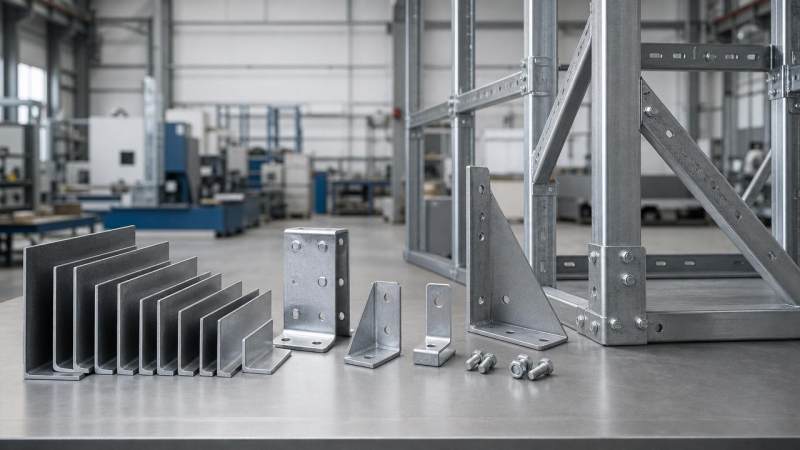
Small sections are widely used where full beam capacity is unnecessary.
A small steel angle can provide edge stiffness, connection support, and simple framing without adding too much weight.
That balance matters in industrial skids, maintenance platforms, machine guards, cable racks, and secondary steel members.
From a project perspective, angle selection is not only about strength. It also affects cutting loss, hole layout, coating performance, transport efficiency, and installation speed.
When repeated across many assemblies, a poor section choice can quietly increase labor hours and material waste.
Start with the section geometry, not only nominal size
Many buyers focus on leg length first.
In practice, the performance of a small steel angle depends on three linked dimensions: leg size, thickness, and section shape.
Equal angle sections work well for general framing and symmetric load transfer. Unequal angles are useful when one leg needs a wider fixing face.
Thickness is often more critical than expected. A slightly thicker section may improve bolt bearing, reduce local distortion, and simplify welding control.
At the same time, too much thickness for a light assembly can create unnecessary cost and harder fitting during fabrication.
Key geometry checks before ordering
- Confirm whether the load acts mainly in compression, bending, or as a connection support.
- Check if one leg needs enough width for bolts, slots, or weld access.
- Review member length, because slender long angles may govern by buckling, not material strength.
- Allow for galvanizing buildup or paint thickness where tight tolerances matter.
Steel grade and standard should fit the real environment
A small steel angle used indoors in dry conditions does not need the same specification as one installed outdoors or near chemicals.
That is why grade selection should connect mechanical performance with exposure conditions and certification needs.
Common project references include ASTM, EN, JIS, and GB. The important point is not the label alone, but whether the material traceability, chemistry, and dimensional tolerance are reliable.
For export projects, mixed standards can create confusion during drawing review or site inspection. It is better to align the purchasing standard with the design basis early.
Hongteng Fengda works across angle steel, channel steel, steel beams, and cold formed profiles, with production aligned to major international standards. That kind of supply capability becomes useful when a project needs matching sections across several product categories.
Typical decision points
Load path and connection details often decide the best option
A small steel angle may carry modest loads, but connection details can still control the final choice.
For example, a support bracket may fail by bolt tear-out or weld weakness before the angle section reaches its nominal capacity.
This is why drawings should be reviewed together with connection spacing, edge distance, weld size, and installation sequence.
Short members used as cleats or stiffeners can tolerate compact sizing. Longer pieces used as rails or frame edges need more attention to twist and local bending.
If vibration is present, stiffness and fastening reliability deserve extra weight in the decision.
Where mistakes usually happen
- Selecting by catalog size without checking actual span and support conditions.
- Ignoring hole proximity to the heel or edge of the angle.
- Assuming coating or welding will not distort small, thin sections.
- Using one section for every location, even when functions differ.
Corrosion protection should match service life expectations
For interior assemblies, shop primer may be enough.
For outdoor supports, humid sites, agricultural facilities, or utility installations, corrosion resistance becomes central to section selection.
A galvanized small steel angle usually offers better lifecycle value where repainting is difficult. It may cost more at the start, but often reduces maintenance and downtime.
Related accessories matter too. Ties, fasteners, and reinforcement parts should not become the weak link in an otherwise durable assembly.
In some support systems, wire products are used alongside angle sections for lashing, bracing, or fastening elements. In those cases, Premium Galvanized Cold Drawn Steel Wire Rod (1.6mm - 6mm) can be relevant where accurate diameter, smooth finish, and corrosion protection are required.
Its available sizes from 1.6mm to 6.0mm, tensile strength options from 350 MPa to 900 MPa, and customizable zinc coating can support light reinforcement or fastening-related applications without disrupting the broader steel specification strategy.
Fabrication efficiency is part of the cost equation
A lower section price does not always mean a lower project cost.
If the chosen small steel angle is hard to cut, easy to warp, or inconsistent in tolerance, labor costs will rise during fit-up and installation.
Consistent production quality matters especially in repeat fabrication. Reliable straightness and dimensional control help keep jigs, drilling patterns, and weld preparation stable across batches.
This is one reason many global buyers prefer suppliers with modern facilities, test documentation, and stable lead times rather than sourcing only on unit price.
A supplier that can also provide customized structural steel components may reduce coordination risks when standard angles must integrate with OEM parts.
Useful questions during supplier review
- Can mill test reports be supplied for each batch?
- Are ASTM, EN, JIS, or GB specifications available as required?
- How stable are straightness, leg tolerance, and thickness control?
- Can the order include matching profiles or customized components?
- What lead time protection exists for multi-stage project schedules?
A practical way to narrow the choice
When several section sizes look acceptable, it helps to rank them against actual project constraints.
A practical shortlist usually compares load adequacy, connection space, coating need, fabrication ease, and supply reliability.
For many light structural assemblies, the best small steel angle is not the strongest available section. It is the one that safely meets the design intent with predictable fabrication and low coordination risk.
That perspective is especially useful in mixed international supply chains, where material consistency and delivery timing often influence site performance as much as nominal strength values.
Before issuing the final order, align the section list with drawings, confirm the governing standard, and verify whether any outdoor or corrosive zones require a different finish. That extra review usually saves more time than it costs.
Please give us a message


Please enter what you want to find