Why galvanized sheet for roofing cannot be chosen by one standard
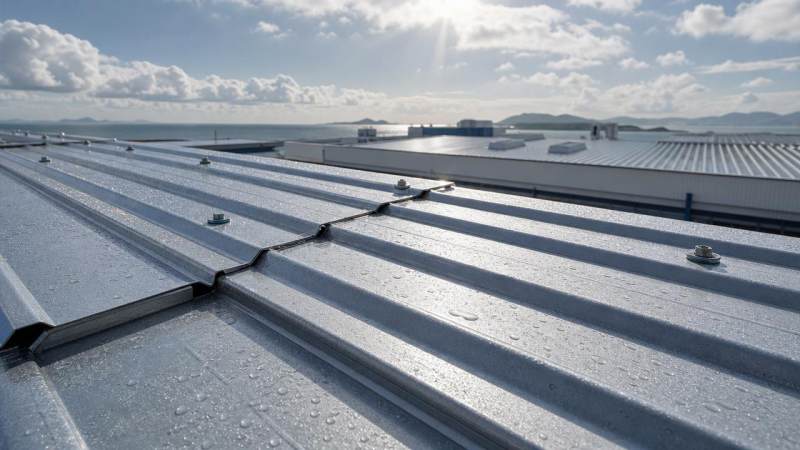
Choosing galvanized sheet for roofing is rarely a simple thickness decision.
In coastal, rainy, and high-heat regions, roof failure usually starts with the environment, not the drawing.
Salt, trapped moisture, thermal movement, and poor detailing can shorten service life long before the structure reaches its design limit.
That is why galvanized sheet for roofing should be selected as part of a real use condition review.
The same panel may perform well in one project and fail early in another with similar appearance.
The difference often comes from exposure level, drainage design, ventilation, fixing details, and maintenance access.
In practical steel supply work, globally shipped roofing materials also need stable quality, standard compliance, and processing consistency.
That matters especially when projects involve different codes such as ASTM, EN, JIS, or GB.
Actual site conditions change what “good roofing sheet” really means
A warehouse near the sea does not judge roofing steel the same way as a factory in a tropical inland city.
Both may ask for galvanized sheet for roofing, yet their risk points differ.
In marine zones, the zinc layer is consumed faster by airborne salt.
In heavy-rain areas, the bigger issue may be standing water around laps, fasteners, and penetrations.
In high-heat areas, repeated expansion and contraction can loosen connections and damage coatings over time.
A reliable selection process usually checks four things together.
- Exposure severity, including salt, humidity, UV, and rainfall pattern.
- Mechanical demand, such as span, foot traffic, wind uplift, and maintenance loading.
- Processing route, including roll forming, bending radius, cutting method, and edge treatment.
- Whole-roof compatibility with fasteners, sealants, insulation, and drainage details.
Without that full view, galvanized sheet for roofing is often under-specified or specified for the wrong failure mode.
Near the coast, corrosion resistance matters more than nominal sheet value
Coastal roofing looks stable at handover, then starts aging from the edges, cut ends, and fixing points.
Marine air does not attack every surface equally.
Undersides facing condensation, sheltered overlaps, and splash-prone roof zones usually degrade first.
For galvanized sheet for roofing in these areas, zinc coating mass deserves close attention.
A low coating may reduce initial cost, but replacement and shutdown cost can quickly erase that saving.
It is also risky to judge only by top surface appearance.
If the roof design traps salt and moisture below the sheet, visible color can remain acceptable while corrosion progresses underneath.
Common checks for coastal projects include:
- Higher zinc coating selection for exposed marine atmosphere.
- Careful treatment of cut edges and penetrations.
- Compatible fasteners to avoid galvanic issues.
- Roof geometry that drains quickly and avoids salt accumulation.
In rainy regions, drainage detail often decides roof life more than base metal alone
Rain-heavy climates create a different kind of pressure on galvanized sheet for roofing.
Continuous wet-dry cycles accelerate coating wear at joints and scratches.
Where rainfall is intense, roof slope and panel profile become practical material decisions, not only design preferences.
A strong sheet with poor runoff conditions can still suffer staining, seepage, and localized corrosion.
This is where supply flexibility also becomes useful.
For projects requiring formed steel components or custom profiles, mid-process consistency matters as much as the coating itself.
In some building structure applications, a material route built from Steel Cold Rolled Coil offers better forming accuracy.
Q355 carbon steel can provide high strength, enhanced toughness, good workability, and good weldability for processed roofing-related parts.
Available thickness from 0.12 to 12mm and width from 600 to 2000mm also helps when drainage details need tailored fabrication.
The point is not to replace roofing selection with another product choice.
It is to match the roofing system with supporting steel components that can be bent, cut, flattened, or surface treated reliably.
High-heat locations need roofing steel that tolerates movement, not just sunshine
Heat-exposed roofs fail differently.
The major issue is often repeated thermal movement rather than immediate corrosion.
Galvanized sheet for roofing in hot regions should be reviewed for panel length, fixing strategy, and coating durability under UV exposure.
Long sheets can reduce laps, but they expand more.
If movement is restricted, stress builds around fasteners and openings.
That may lead to enlarged holes, oil canning, leakage, or cracked protective layers.
In very hot industrial zones, the underside temperature can also rise sharply.
So roof performance depends on ventilation and insulation layout, not the sheet alone.
A common mistake is assuming thicker steel automatically solves heat-related issues.
Thickness helps stiffness, but it does not remove expansion stress or poor detail design.
Different environments call for different judgment priorities
A side-by-side comparison makes the selection logic clearer.
This is why one specification sheet rarely answers every roofing question by itself.
What is often misjudged before the order is placed
Several errors appear repeatedly across steel roofing projects.
- Treating similar climates as equal, even when one site is much closer to salt spray.
- Comparing only purchase price, without estimating maintenance access or replacement disruption.
- Ignoring processing damage from cutting, punching, or forming.
- Selecting roofing steel without checking purlins, clips, sealants, and drainage components together.
- Overlooking certification and supply consistency for export or multi-region projects.
Companies with stable manufacturing and strict quality control reduce some of these risks early.
That is especially relevant when steel products must align with ASTM, EN, JIS, and GB expectations across different markets.
For global construction and industrial work, dependable lead time is also part of technical suitability.
A practical way to match galvanized sheet for roofing to the site
A useful selection routine starts with the roof in service, not the catalog.
- Map the site exposure: coast distance, annual rainfall, temperature peaks, and prevailing wind.
- Confirm the roof form: slope, span, penetrations, valleys, and drainage points.
- Set the material priorities: coating mass, thickness, profile type, and forming needs.
- Review accessory compatibility: fasteners, sealants, clips, flashings, and support steel.
- Check long-term service factors: cleaning frequency, inspection access, and replacement difficulty.
When that review is done early, galvanized sheet for roofing becomes a controlled engineering choice rather than a reactive replacement issue.
The best next step is to sort the project by actual exposure level, then compare coating, profile, and detail requirements against expected service life.
That approach helps clarify cost, risk, maintenance demand, and fabrication feasibility before the roof is committed.
Please give us a message


Please enter what you want to find