Choosing the right galvanized sheet thickness is essential for strength, corrosion resistance, and cost control in construction and manufacturing. Whether you work with lightweight steel roofing, structural steel erection, or industrial fabrication, understanding thickness standards helps avoid material waste and performance risks. This guide explains how to evaluate galvanized sheet options with practical insights from a trusted structural steel manufacturer.
For buyers, engineers, quality inspectors, and project managers, sheet thickness is never just a number on a quotation. It affects load performance, forming behavior, coating durability, welding results, transport weight, and the total cost of ownership across a project life cycle that may last 10, 20, or even 30 years depending on the environment.
In global steel sourcing, misunderstanding thickness can lead to mismatched specifications, rejected deliveries, or premature corrosion in service. This is especially important when galvanized sheet is used alongside structural sections such as angle steel, channels, beams, and custom fabricated components. A correct selection process helps reduce procurement risk and keeps fabrication, installation, and maintenance on schedule.
Why Galvanized Sheet Thickness Matters in Real Projects
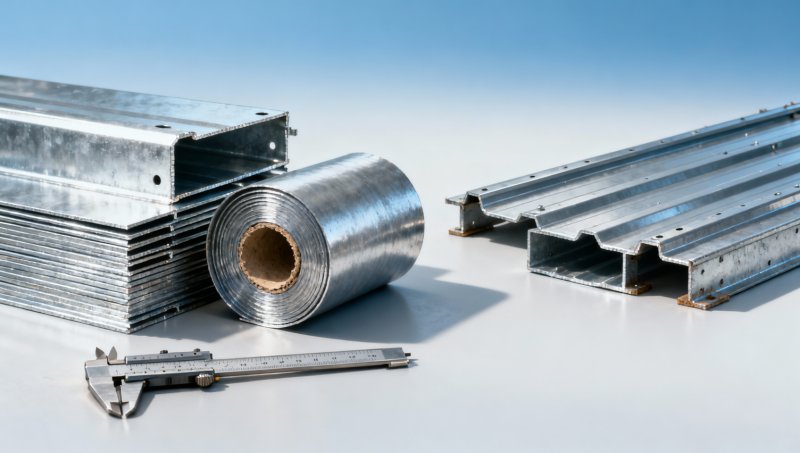
Galvanized sheet thickness directly influences three core performance factors: mechanical strength, corrosion life, and processability. A sheet that is too thin may deform during roll forming, stamping, or installation. A sheet that is too thick may raise material cost by 8% to 20% in some applications without creating proportional value.
In construction, common galvanized sheet applications include roofing, wall cladding, decking, ductwork, cable trays, machine covers, and enclosure panels. These uses do not all require the same base metal thickness. For example, a light interior panel may use 0.4 mm to 0.8 mm, while industrial protective panels or load-related fabricated parts may require 1.5 mm to 3.0 mm or more.
Thickness also affects zinc coating performance in practice. The coating protects steel from corrosion, but the base steel must still withstand impact, forming stress, and service loads. In coastal, marine-adjacent, or high-humidity industrial environments, the wrong thickness may accelerate failure if the part flexes, cracks, or traps moisture in service.
Another important point is the difference between nominal thickness and delivered thickness tolerance. Buyers should confirm whether the specification refers to base metal thickness only or total thickness including coating. Even a variation of ±0.03 mm to ±0.08 mm can affect fit-up, weight calculation, and forming consistency in batch production.
Typical thickness ranges by application
The table below gives a practical view of galvanized sheet thickness selection across common steel industry uses. Actual values should still be verified against design loads, local codes, and fabrication methods.
The key conclusion is simple: thickness should match the actual duty of the steel part. Over-specifying material increases cost and weight, while under-specifying it raises performance and safety risks. A balanced choice requires both engineering logic and supply-side understanding.
Key Criteria for Choosing the Right Thickness
A reliable thickness decision usually starts with four questions: What load will the sheet carry? What environment will it face? How will it be processed? What is the acceptable cost range? These questions help technical teams and purchasing teams align before placing an order, especially when sourcing from overseas manufacturers.
Load conditions include static weight, wind pressure, vibration, foot traffic, and fastening stress. Even for non-structural sheet applications, local buckling and oil-canning can become visible if the sheet is too thin. For exposed panels with longer unsupported spans, increasing thickness by 0.1 mm to 0.2 mm can materially improve stiffness.
Environmental exposure is equally important. Indoor dry service may allow thinner and lighter sheet. Outdoor exposure, chemical splash, marine air, or industrial humidity often justify a thicker base metal and careful control of zinc coating weight. In severe conditions, service-life planning should consider not only coating class but also section loss tolerance over time.
Processing method also changes the selection. If the steel will be bent, stamped, punched, welded, or deep formed, the buyer must balance thickness with ductility and tolerance. A sheet that performs well as a flat panel may crack or distort in secondary processing if the grade and thickness are not properly matched.
A practical 5-step evaluation method
- Define the use environment: indoor, outdoor, coastal, industrial, or high-moisture.
- Confirm the mechanical need: decorative, protective, semi-load-bearing, or load-bearing assembly.
- Check processing route: cutting, punching, roll forming, welding, or stamping.
- Review standards and tolerances: ASTM, EN, JIS, or GB according to project requirements.
- Compare total cost: material price, scrap rate, coating life, transport weight, and installation efficiency.
This method is especially useful for multinational projects where engineering, procurement, quality control, and fabrication may be handled by different teams. Aligning these 5 steps early can reduce RFQ revisions, sample delays, and production disputes during the 2 to 6 week order cycle.
Common thickness selection mistakes
- Choosing by price per ton only, without considering finished part performance.
- Ignoring tolerance and ordering a nominal gauge that does not fit the assembly.
- Using the same thickness for indoor and outdoor applications.
- Assuming heavier always means better, even when forming or transport efficiency suffers.
Standards, Coating, and Material Matching
Thickness selection should never be separated from standards and material grade. In global trade, galvanized steel may be supplied under ASTM, EN, JIS, or GB systems, and each may define thickness tolerance, coating designation, testing method, and mechanical properties differently. That is why specification matching is critical at the quotation stage.
For technical evaluation teams, it is important to distinguish between base steel thickness and zinc coating mass. A thicker zinc coating improves corrosion resistance, but it does not replace base metal strength. If the application includes impact, repeated assembly, or structural connection points, the base steel dimension remains a primary design factor.
The relationship between galvanized sheet and other steel products is also worth noting. In many projects, sheet products are combined with structural sections, rods, profiles, and custom steel parts. For example, components such as brackets, anchoring parts, fasteners, or fabricated accessories may require matching corrosion protection across the whole assembly rather than in sheet alone.
In such cases, buyers often review supplementary products like Galvanized Round Steel for connected applications. This product is typically used in electric power towers, communication towers, railway works, highway protection systems, marine components, and building steel structure components, with diameter options from 16 mm to 250 mm and customized lengths for project-specific fabrication.
How related galvanized products support thickness decisions
When a project includes sheet, profiles, and round steel in one corrosion-protected system, engineers should evaluate compatibility in coating method, expected service life, and fabrication sequence. Hot galvanizing is widely used because it adapts to a broad range of environments and provides a durable, glossy surface suitable for construction and industrial use.
For example, DC01-based galvanized round steel with tensile strength in the 570-820 MPa range may be selected for machined parts, stamped components, hardware accessories, or support elements where anti-corrosion performance and tolerance control are important. This helps procurement teams compare whether sheet thickness should be upgraded or whether support parts should carry more of the mechanical load.
The table below shows how standards-related factors influence galvanized sheet thickness decisions in practical sourcing.
The main takeaway is that thickness, grade, and coating must be treated as one selection package. A purchasing decision based on thickness alone often creates downstream quality issues, especially in export projects with mixed standards and multiple subcontractors.
Procurement, Quality Control, and Cost Optimization
From a procurement perspective, galvanized sheet thickness affects more than raw material price. It changes shipping weight, container utilization, scrap generation, machine settings, labor time, and replacement frequency. In many cases, selecting the correct thickness can lower total project cost by improving manufacturability and reducing field corrections.
Quality control teams should verify at least six items on incoming material: thickness, coating condition, surface defects, width and length tolerance, edge quality, and identification marking. If the steel will be used for visible building components or precision fabrication, flatness and surface appearance should also be checked before production release.
For overseas sourcing, buyers should also consider production stability and lead time. A manufacturer with modern facilities and established quality control can usually support more consistent batch performance. In typical export practice, standard galvanized steel orders may require about 2 to 4 weeks, while customized structural steel components may require 4 to 8 weeks depending on processing complexity and order volume.
Hongteng Fengda serves global buyers across North America, Europe, the Middle East, and Southeast Asia with structural steel products, custom profiles, and OEM support. For projects that combine galvanized sheet with angle steel, channel steel, steel beams, cold formed profiles, or fabricated accessories, coordinated sourcing can simplify quality control and reduce supply-chain risk.
Procurement decision matrix
The following matrix can help buyers and project teams compare thickness options more objectively before issuing a purchase order.
In many B2B purchasing scenarios, the best option is not the thinnest or the thickest sheet, but the thickness that meets specification with the lowest total lifecycle cost. That is why technical review and supplier communication should happen before mass production, not after the first shipment arrives.
Inspection points before approval
- Measure thickness at multiple points, not just one edge or one coil sample.
- Confirm whether the inspection standard follows ASTM, EN, JIS, or GB project requirements.
- Review surface for scratches, uncoated spots, excessive spangle variation, or storage stains.
- Check packaging and moisture protection if transit time exceeds 20 to 35 days by sea.
FAQ and Practical Recommendations for Buyers and Engineers
Many galvanized sheet inquiries look simple at first, but the right answer depends on the project environment, manufacturing method, and downstream performance target. The questions below reflect common concerns from technical evaluators, operators, distributors, and decision-makers.
How do I choose thickness for roofing versus industrial fabrication?
For roofing and cladding, buyers often start in the 0.30 mm to 0.70 mm range, then adjust based on span, wind load, profile depth, and traffic exposure during installation. For industrial fabrication, such as machine guards, heavy covers, or brackets, 1.20 mm to 3.00 mm is more common because the steel must resist impact, fastening stress, and deformation during service.
Is a thicker galvanized sheet always better for corrosion resistance?
Not necessarily. Corrosion resistance depends heavily on coating quality, exposure condition, drainage design, and maintenance. A thicker base sheet may survive longer after wear or damage, but the zinc coating system is still the first corrosion barrier. In many outdoor applications, proper coating selection and good detailing are as important as adding 0.2 mm or 0.5 mm of steel thickness.
What should distributors and procurement teams ask suppliers before ordering?
Ask for the steel grade, thickness tolerance, coating specification, applicable standard, surface condition, packing method, and expected lead time. If the material will be processed after delivery, also ask about bendability, weldability, and whether test samples can be provided. For repeat orders, clarify batch consistency and inspection documents before confirming quantity.
How can project managers reduce sourcing risk?
Use approved drawings and written specifications, align engineering and purchasing before RFQ release, and request pre-shipment verification for critical items. On projects with mixed steel products, working with a structural steel manufacturer that can support standard sections and custom solutions often shortens communication time and helps control tolerance, quality, and delivery milestones.
Final practical advice
If you are comparing galvanized sheet options for construction, industrial fabrication, or export procurement, focus on the full combination of thickness, grade, coating, tolerance, and service condition. That approach leads to better product fit, lower rework rates, and more predictable project outcomes.
Hongteng Fengda supports global customers with structural steel manufacturing, exporting experience, customized solutions, and quality control aligned with ASTM, EN, JIS, and GB requirements. If you need help evaluating galvanized sheet thickness, matching related steel products, or confirming a project-specific solution, contact us now to discuss your specification, request technical support, or get a tailored quotation.
Please give us a message


Please enter what you want to find