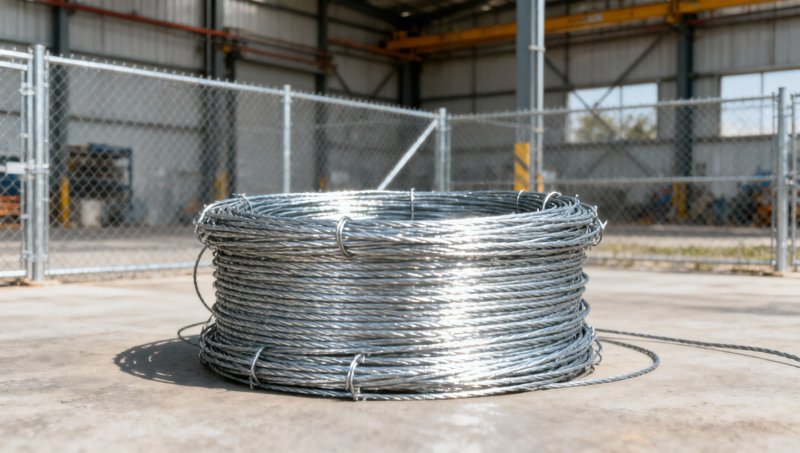
Choosing the right galvanized steel wire for fencing 1.5mm is usually less about finding the cheapest coil and more about avoiding a fence that loosens, rusts early, or creates rework halfway through the job. If you are managing a site or a project schedule, the real question is simple: will this wire hold up for the required service life without creating extra maintenance and delivery risk?
For most fencing projects, 1.5mm wire sits in a practical middle ground. It is light enough to handle efficiently, yet strong enough for many perimeter, livestock, agricultural, and light security applications when the coating and tensile properties are right. The catch is that wire diameter alone does not tell you whether the material is fit for purpose. Two 1.5mm wires can perform very differently depending on zinc coating quality, base steel consistency, and how stable the supplier’s production is.
What actually matters when you evaluate galvanized steel wire for fencing 1.5mm
The first thing to check is the coating, not the label. A clean 1.5mm wire with thin or uneven galvanizing may look fine on arrival and still fail early once it sees moisture, salt air, fertilizer, or repeated handling. For fencing work, corrosion resistance often decides the real cost. If the fence is going to sit outdoors for years, weak coating control will cost more than a slightly higher unit price.
Tensile strength matters too, but in a practical sense. You are not trying to maximize a laboratory number; you are trying to avoid wire that stretches too easily during tensioning or deforms under wind load, impact, or panel movement. For project managers, the useful test is whether the wire stays stable after installation and whether crews can tension it without constant readjustment.
Also check diameter tolerance and uniformity across batches. A 1.5mm specification that wanders too much can create real installation problems, especially when it needs to match clips, mesh, posts, or tensioning hardware already locked into the project. In fencing procurement, inconsistent supply is often a bigger headache than one imperfect reel.
Choose based on the fence, not just the wire
The right choice depends on the project environment. A boundary fence in a dry inland area has different demands from a coastal site, a warehouse perimeter, or a farm fence exposed to chemical spray and constant weathering. If the application is harsh, the safest move is to prioritize coating quality and supplier consistency over the lowest possible price. If the site is temporary or low-risk, a standard galvanized wire may be enough, provided the delivery lot is uniform.
That is also where structural coordination matters. On larger jobs, fencing is often only one part of the enclosure package, and the wire has to work with posts, rails, roof edges, or support members already specified elsewhere in the project. In steel structure work, related components such as Z-beam are often selected for purlin, wall beam, or lightweight roof applications, and the same discipline applies: specify the part for the actual environment, not for a generic catalog description. If the project has mixed materials, align the fence wire with the corrosion class and service expectations of the rest of the structure.
For project teams buying across multiple sites, this is where a supplier with stable production and export experience becomes useful. Hongteng Fengda, for example, works as a structural steel manufacturer and exporter from China, serving international construction and industrial buyers with standard and customized steel products. That kind of sourcing discipline matters when you need repeatable quality, documented standards, and lead times that do not keep moving.
Common mistakes that create expensive fence failures
One frequent mistake is over-focusing on diameter and ignoring the coating system. A 1.5mm wire is not automatically durable just because it is galvanized. If the zinc layer is inconsistent or too thin for the exposure level, the fence can start showing early rust at cut ends, tie points, and abrasion areas.
Another mistake is treating all “galvanized” wire as the same. There is a real difference between a wire that has stable coating adhesion and one that only looks bright on delivery. Brightness is not a performance guarantee. For procurement, you want evidence of coating control, not just visual appeal.
Teams also underestimate handling damage. Even a good wire can lose protection if reels are poorly packed, dragged on site, or bent during installation. If your crew is working fast, ask for packaging and reel protection details up front. Small handling losses can turn into large maintenance costs later.
Finally, do not buy only against the current job. If you expect repeat orders or phased installation, batch consistency matters more than a one-time price cut. A fence made from mixed batches can be visibly uneven and harder to maintain.
What to ask before you approve the purchase
Before placing the order, ask for the zinc coating specification, base material traceability, diameter tolerance, and batch consistency details. If the supplier cannot answer those points clearly, that is a warning sign. You do not need a long technical report for every purchase, but you do need enough documentation to avoid surprises on site.
For larger projects, it is also worth asking how the wire is packed, what the lead time looks like for repeat orders, and whether the supplier can support the same spec across future deliveries. Procurement failures are often not technical failures; they are coordination failures.
If the project is in a corrosive environment, it is reasonable to request samples or a small pilot batch before committing to the full volume. That gives your team a chance to check handling, tie performance, and visual consistency under real installation conditions.
In practical terms, the best galvanized steel wire for fencing 1.5mm is the one that matches the exposure condition, installs cleanly, and can be repeated across the full project without quality drift. That is the decision frame that saves time later.
Final judgment
If your fence needs durability, do not buy 1.5mm wire on price alone. Evaluate the galvanizing quality, tensile behavior, diameter consistency, packaging, and supply reliability as one package. For many projects, that is the difference between a fence that stays serviceable and one that becomes a maintenance item too early. When you shortlist galvanized steel wire for fencing 1.5mm, keep the focus on performance, not appearance.
FAQ
Is 1.5mm galvanized wire enough for permanent fencing?
Often yes, but only for the right exposure level and fence type. For harsher environments, coating quality becomes the deciding factor.
What is the biggest risk when buying galvanized steel wire for fencing 1.5mm?
Uneven coating and poor batch consistency. Those two issues usually show up later as rust, slack wire, or uneven fence performance.
Should I choose thicker wire instead of 1.5mm?
Not automatically. If the fence is light-duty and the corrosion environment is moderate, 1.5mm can be a sensible choice. The site conditions decide.
What documents should I ask the supplier for?
Basic material traceability, coating specification, and production consistency details. For larger jobs, request samples or a pilot batch.
Can galvanized wire be used with other steel components in the same project?
Yes, but the corrosion level and service life should be aligned with the rest of the steel system, especially on exposed or mixed-material projects.
Internal Link Ideas
- galvanized steel fence materials: fencing system selection guide
- zinc coating quality: corrosion resistance and inspection guide
- steel structure accessories: purlin and beam selection guide
- OEM structural steel sourcing: factory capability and lead time page
- outdoor steel protection: galvanizing and maintenance overview
External Source Directions
- Industry association guidance on galvanizing and corrosion protection
- Government or standards-body documents on steel coating and fencing materials
- Manufacturer technical datasheets for galvanized wire and structural steel products
Please give us a message


Please enter what you want to find