Buying Wholesale Corrugated Roofing Sheets requires more than comparing prices—it means checking material grade, coating performance, supplier capability, and delivery reliability. For buyers sourcing coil coated steel, Cold Rolled Steel Sheet in Coil, or products from a trusted PPGI Coil Factory, understanding quality standards and application needs is essential. This guide explains how to evaluate suppliers, control costs, and choose roofing sheets that deliver long-term value.
For importers, contractors, distributors, engineers, and project managers, wholesale roofing sheet purchasing sits at the intersection of technical performance and commercial control. A low unit price may look attractive at quotation stage, but poor coating adhesion, inconsistent thickness tolerance, or delayed shipment can increase lifecycle cost by 10%–25% on medium and large projects.
In the steel supply chain, corrugated roofing sheets are often selected for workshops, warehouses, agricultural buildings, temporary project facilities, factories, and residential extensions. The right sourcing decision depends on at least 4 core variables: base metal, coating system, sheet profile, and supplier execution ability. Buyers who define these factors early can reduce rework, claims, and installation delays.
Understand What You Are Really Buying
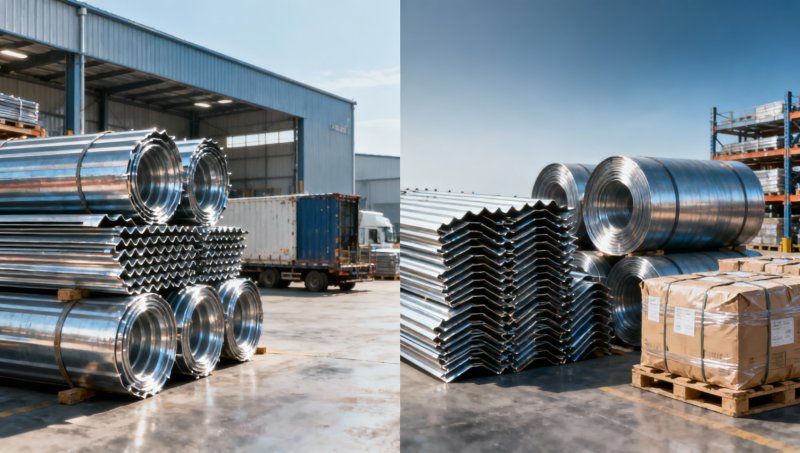
Wholesale corrugated roofing sheets are not a single commodity category. In practice, buyers may compare galvanized sheets, galvalume sheets, pre-painted galvanized iron sheets, and color coated steel roofing panels. These products can look similar in photos, yet differ significantly in corrosion resistance, coating weight, paint durability, and expected service life.
The first technical checkpoint is the substrate. Many roofing sheets are produced from galvanized steel coil, galvalume steel coil, or pre-painted coil. Base steel thickness may range from 0.20 mm to 0.80 mm for common commercial use, while industrial buildings often prefer 0.40 mm to 0.60 mm for better stiffness and installation stability. Buyers should always confirm whether quoted thickness is base metal thickness or total thickness including coating.
The second checkpoint is coating performance. Zinc coating and paint system directly affect outdoor durability. In coastal or high-humidity regions, coating levels and paint type matter more than a small difference in sheet price. Polyester systems may work for general environments, while SMP or PVDF coatings are more suitable for projects requiring stronger weather resistance over 10–20 years.
The third factor is profile design. Corrugation depth, effective width, crest spacing, and rib geometry influence drainage, load distribution, and overlap efficiency. A profile that reduces water retention and improves stiffness can lower installation risk, especially on long roof spans or in rainy areas. That is why technical evaluation should include both steel properties and formed sheet geometry.
Key specifications to confirm before asking for a final quote
Before comparing suppliers, prepare a specification sheet with the same criteria for every quotation. This prevents price confusion caused by different assumptions in coating, tolerance, or packaging.
- Base steel type: galvanized, galvalume, or pre-painted steel.
- Thickness range: for example 0.30 mm, 0.45 mm, or 0.50 mm.
- Coating level: such as common zinc or higher coating for harsher climates.
- Sheet width and effective coverage width after corrugation.
- Required length tolerance, color, packing method, and delivery term.
If your project includes structural framing, purlins, channels, or customized steel components, coordinating roofing sheet supply with a structural steel manufacturer can improve schedule control. Companies with export experience in ASTM, EN, JIS, and GB related products are usually better prepared to handle drawing review, dimensional communication, and container loading plans.
The table below shows how common roofing sheet options differ in purchasing logic. It is not a universal ranking, but a practical framework for deciding what fits your project conditions.
The main conclusion is simple: corrugated roofing sheet procurement should start with performance requirements, not with price alone. When the material category is aligned with the climate, load condition, and service expectation, quotation comparison becomes much more meaningful.
How to Evaluate Suppliers Beyond Price
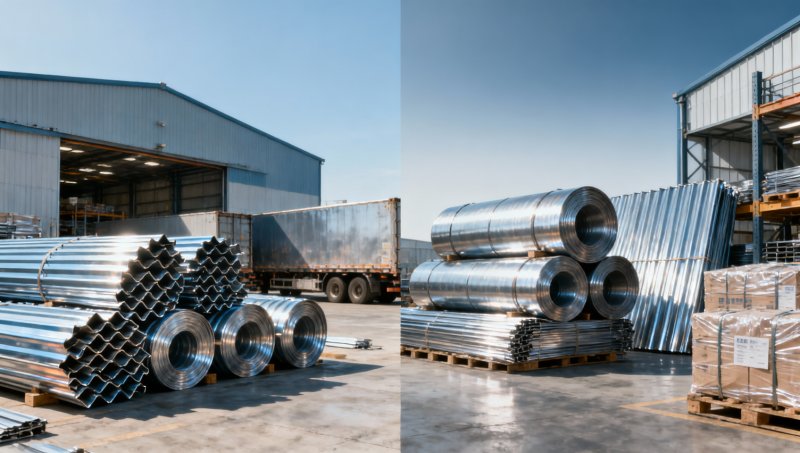
A competitive quote is only one part of supplier evaluation. In wholesale steel purchasing, the real risk often appears after order confirmation: inconsistent thickness, unstable coating quality, weak packaging, missing inspection records, or shipping delays of 2–4 weeks. For this reason, professional buyers normally assess supplier capability in 5 areas: manufacturing, quality control, export experience, customization support, and communication speed.
Start by asking whether the supplier is a manufacturer, trader, or mixed operation. A manufacturer with controlled production planning can usually offer better consistency in batch orders, especially when you require custom lengths, profile changes, or repeated supply across several shipments. This is particularly important for project buyers who need the same specification over 3 to 6 months rather than one spot order.
Next, review quality control documents. Instead of asking only for “high quality,” request measurable items: thickness tolerance, coating weight inspection, paint thickness report if applicable, mechanical properties, and packing details. If the supplier supports third-party inspection before shipment, that adds another layer of purchasing confidence for importers and finance approvers.
Delivery capability also deserves careful review. A supplier may provide a good sample but still struggle with container loading plans, mixed specification orders, or urgent production windows. Buyers should ask about standard lead time, peak season capacity, port proximity, and whether the supplier can coordinate related steel items such as channels, beams, angles, or cold formed sections in one export schedule.
A practical supplier screening checklist
- Confirm whether production is in-house or outsourced.
- Request 2–3 recent inspection records for similar specifications.
- Check export markets and familiarity with local documentation needs.
- Verify packaging method for sea freight and container protection.
- Review response speed for technical revisions, usually within 24–48 hours.
For buyers sourcing from China, a structural steel manufacturer with integrated export service may offer broader value than a single-product seller. Hongteng Fengda, for example, focuses on structural steel manufacturing and export, serving global construction and industrial projects with angle steel, channel steel, steel beams, cold formed profiles, and customized steel components. This kind of supply background is useful when roofing sheets are part of a larger steel package and schedule coordination matters as much as unit cost.
The following comparison table helps procurement teams and engineering reviewers judge suppliers on execution strength rather than sales language alone.
A reliable supplier should be able to explain not only what they sell, but also how they control deviation at each stage from raw material to loading. That level of visibility helps technical teams, procurement staff, and management approve orders faster and with lower sourcing risk.
Control Total Cost, Not Just Unit Price
When buying wholesale corrugated roofing sheets, the most expensive choice is often the material that looks cheapest on paper. Total cost includes scrap, overlap loss, installation speed, maintenance frequency, claim handling, and service life. On a project with 20,000 to 50,000 square meters of roofing area, even a small thickness shortfall or poor profile consistency can create major labor and replacement cost.
A practical approach is to compare quotations on a landed and usable basis. Instead of asking only for price per ton, also calculate price per effective coverage area, expected coating durability, packaging adequacy, and replacement risk. This is especially relevant when one supplier quotes a lower nominal thickness or weaker coating while appearing cheaper in the first comparison round.
Packaging and logistics are also cost variables. Roofing sheets exported by sea need moisture protection, proper stacking, edge protection, and secure fastening. Damage at port unloading or during inland transport can lead to coating scratches and sheet deformation. If defect rate rises above 2%–3% on arrival, the initial savings from a lower purchase price may disappear quickly.
Many B2B buyers also bundle related steel items into one supply plan. For example, roofing sheets may be purchased together with structural members, purlins, steel channels, or fixing accessories. In some applications such as fencing, mesh support, packaging reinforcement, or light industrial use, buyers may additionally source wire products like Galvanized Stainless Steel Wire. With a wire diameter range of 0.25 mm–5.0 mm, zinc coating thickness of 8–25 g/m2, and tensile strength of 350–550 Mpa, it is suitable for construction, wire mesh, packaging, breeding, barrier isolation, and daily industrial handling where flexibility and corrosion resistance are both required.
Common cost traps in wholesale roofing sheet procurement
- Quoting by total thickness while using a thinner steel substrate than expected.
- Ignoring coating type and repainting cost in corrosive environments.
- Accepting weak export packaging that increases transit damage.
- Ordering mixed lengths without confirming loading efficiency and waste ratio.
- Choosing suppliers with slow response, causing project idle time of 7–14 days.
Procurement teams should therefore build a cost model that includes product, freight, unloading risk, installation loss, and maintenance expectation. This creates a more realistic basis for comparing suppliers and justifying decisions to finance and management stakeholders.
A simple total-cost review framework
Use 4 checkpoints in every quotation review: technical compliance, effective coverage cost, logistics protection, and post-installation risk. If a supplier performs well in all 4, the offer usually represents better long-term value than a lower but less transparent quotation.
Match Roofing Sheet Specifications to the Actual Project Environment
Different projects require different roofing sheet solutions. A warehouse in a dry inland location has a very different risk profile from a poultry house in a humid region or a factory near the coast. The right wholesale buying decision should account for wind exposure, humidity, chemical atmosphere, roof pitch, and expected service period. In many projects, selecting one grade too low can shorten usable life by several years.
For basic storage buildings and temporary structures, thinner sheets in the 0.25 mm to 0.35 mm range may be acceptable if load conditions are modest and replacement is manageable. For industrial workshops, logistics centers, and long-span roofs, buyers often move toward 0.40 mm to 0.60 mm products to gain better rigidity and more secure installation performance.
Color-coated roofing sheets are often preferred where appearance, branding, or heat reflectivity matters. However, visual quality should not overshadow substrate quality and coating system. A bright finish with poor adhesion can fail much earlier than a less decorative but technically stronger sheet. Technical and commercial teams should review both appearance criteria and base material specifications before approval.
If a project is part of a larger steel package, coordination with structural members is essential. Purlin spacing, roof slope, fastener placement, and sheet length planning affect both material use and site installation speed. Manufacturers experienced in customized structural steel can often support better cross-item coordination and reduce mismatch between roof covering and support system.
Project-based selection guide
The table below offers a practical starting point for matching roofing sheet choices with common applications. Final selection should still be confirmed against local design requirements and environmental conditions.
The key point is that the “best” corrugated roofing sheet depends on use conditions, not on a universal product hierarchy. Buyers who match the material to the operating environment usually gain lower maintenance burden and more predictable project performance.
Inspection, Delivery, and FAQ for Wholesale Orders
Even when the product specification is correct, order execution still requires a disciplined inspection and delivery process. Before mass shipment, buyers should confirm sample approval, production schedule, inspection timing, and packing method. A standard export cycle may take 2–6 weeks depending on coil availability, production queue, and destination port arrangement.
At pre-shipment stage, quality teams should review at least 6 items: thickness, width, length, profile accuracy, surface condition, and packaging integrity. If color-coated products are involved, paint finish and scratch control should also be included. Photos and inspection reports are useful, but they should match the actual batch and loading sequence.
For distributors and repeat importers, after-sales response matters too. Ask in advance how claims are handled, what evidence is needed, and how quickly the supplier can reply. A realistic response commitment of 24–72 hours for technical or commercial issues is more useful than broad promises without procedure.
Experienced structural steel exporters can support this process with broader coordination, especially when your order also includes angle steel, channel steel, steel beams, cold formed profiles, or custom fabricated steel components. This reduces the communication gap between engineering approval, procurement, packing, and shipment release.
FAQ: What buyers ask most often
How do I compare two roofing sheet quotes fairly?
Compare at least 5 items side by side: base metal thickness, coating type or coating weight, effective coverage width, packing method, and delivery term. If one quote is 8% cheaper but uses a thinner substrate or weaker coating, it may not be the better purchase.
What is a reasonable MOQ for wholesale corrugated roofing sheets?
MOQ varies by supplier and specification complexity. Common export practice ranges from 1 container load for standard items to higher volumes for special colors, lengths, or customized profiles. Mixed orders may be possible, but buyers should confirm production efficiency and packing feasibility first.
How long should roofing sheets last?
Service life depends on environment, coating system, installation quality, and maintenance. In moderate conditions, properly selected coated steel sheets can serve for many years, while corrosive environments require stronger coating choices and tighter inspection discipline. The correct question is not only “how long,” but “under what conditions and maintenance level.”
What documents should I request before shipment?
Request a commercial invoice, packing list, inspection report, and any agreed product specification confirmation. For some buyers, loading photos and batch identification records are also useful for internal approval and goods receipt verification.
Buying wholesale corrugated roofing sheets successfully means balancing technical suitability, supplier reliability, and total procurement cost. When buyers verify material grade, coating performance, profile design, inspection procedure, and export execution together, they reduce risk across the full project cycle. If you are sourcing roofing sheets alongside structural steel products for industrial, commercial, or construction use, working with an experienced Chinese manufacturing and export partner can improve quality consistency and delivery coordination. Contact Hongteng Fengda to discuss your specification, request a tailored quotation, or get a customized steel supply solution for your next project.
Please give us a message


Please enter what you want to find