For sourcing teams and business evaluators, choosing the right channel steel supplier directly affects lead time risk, project continuity, and total procurement cost. A dependable supplier does more than deliver steel on schedule—it supports planning accuracy, quality consistency, and smoother global logistics. Understanding this impact is essential when assessing suppliers for construction, industrial, and manufacturing projects.
Why lead time risk changes across steel project scenarios
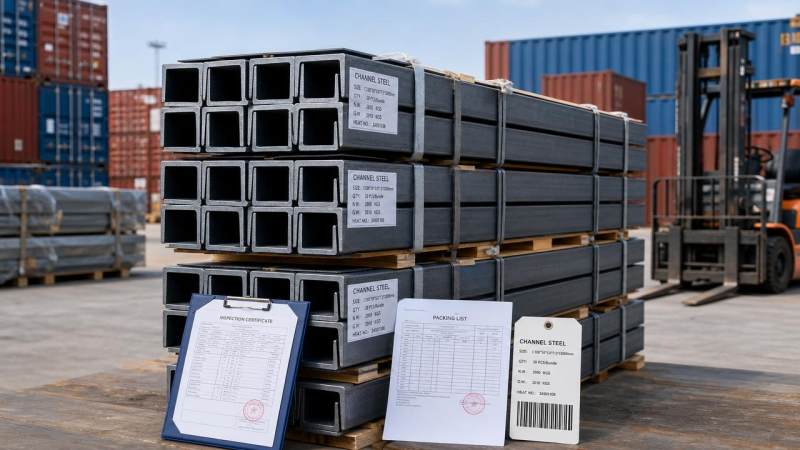
Lead time risk is not the same in every steel application. The impact depends on project timing, specification complexity, and transport distance.
A reliable channel steel supplier reduces uncertainty before production starts. This matters when schedules depend on phased delivery, fabrication sequencing, or site installation windows.
In structural steel sourcing, delays rarely come from one cause alone. They usually come from mismatched inventory, weak planning, incomplete documentation, or unstable export coordination.
That is why supplier evaluation should focus on scenario fit. A channel steel supplier that performs well in one case may still create risk in another.
Construction schedules need predictable channel steel supply
Building projects often use channel steel in frames, supports, bracing, and secondary structures. Here, lead time risk directly affects labor planning and equipment booking.
If a channel steel supplier cannot confirm rolling schedules, inspection timing, and shipping windows, site progress becomes difficult to control.
Construction jobs also require consistency across batches. Dimensional variance or coating issues can stop installation even when material arrives on time.
For this scenario, the best supplier is not only fast. The better choice is the one with stable production capacity, clear documentation, and repeatable quality control.
Core checks for construction-related orders
- Mill capacity aligned with required tonnage
- Support for ASTM, EN, JIS, or GB specifications
- Batch traceability and inspection records
- Export packing suitable for port and inland handling
- Delivery plans matching site installation phases
Industrial fabrication projects face specification-driven delays
Industrial projects usually involve more customized processing. Punching, cutting, welding preparation, or coating can extend production lead time.
In these cases, a channel steel supplier must coordinate raw steel supply with downstream fabrication steps. Weak coordination creates bottlenecks between production and assembly.
Documentation speed is also critical. Material certificates, inspection files, and drawing confirmation often determine when fabrication can begin.
Some buyers also source supporting materials together. For example, A36 Carbon Steel Round Bar may be added for construction, engineering, or manufacturing use where excellent strength and wear resistance are required.
A supplier with broader structural steel capabilities can simplify mixed orders. This lowers communication delays and reduces the risk of split shipments.
Export-oriented sourcing adds logistics and compliance pressure
For cross-border steel purchases, lead time includes more than factory production. Port handling, customs paperwork, container availability, and route congestion all matter.
A qualified channel steel supplier should understand destination requirements and export procedures. This is especially important for North America, Europe, the Middle East, and Southeast Asia.
International standards compliance reduces rejection risk. If the wrong standard, marking, or certificate is issued, the shipment may be delayed after production is complete.
Reliable exporters also provide realistic transit estimates. Overpromising on shipping time can be as harmful as slow production.
Export lead time risk often increases when:
- Specifications are changed after order confirmation
- Destination compliance documents are incomplete
- Packing standards do not match transport conditions
- Booking plans are delayed until production ends
- Multiple suppliers are used without coordination
Different application scenarios require different supplier strengths
Not every channel steel supplier is equally suitable for every project type. Matching supplier strengths to the use case reduces total lead time risk.
How to judge whether a channel steel supplier fits your risk profile
Lead time risk should be evaluated through evidence, not promises. The right review process makes supplier performance more predictable.
Useful evaluation points
- Check monthly production capacity for channel steel orders.
- Review how the supplier handles urgent changes.
- Confirm supported standards and inspection methods.
- Ask for recent export examples by destination market.
- Verify whether packaging and marking are standardized.
- Assess response speed for drawings, certificates, and claims.
A strong channel steel supplier should also explain what cannot be done quickly. Honest lead time boundaries are a sign of reliable planning.
This is where established structural steel exporters from China can add value. Integrated production, standard compliance, and steady capacity often improve delivery reliability.
Practical sourcing suggestions for lower lead time exposure
The best approach is to reduce preventable delays before the purchase order is released. Small preparation steps can protect the overall schedule.
- Lock dimensions, grades, tolerances, and standards early.
- Align shipping terms with realistic production milestones.
- Request pre-shipment inspection timing in writing.
- Combine related structural steel items when possible.
- Keep buffer time for customs and destination handling.
- Use sample documents to confirm certificate format first.
For mixed structural steel demand, combining channel steel with beams, angles, cold formed profiles, or A36 Carbon Steel Round Bar may improve shipment coordination when one supplier manages the package.
Common mistakes that increase channel steel lead time risk
Many delays come from avoidable assumptions. These problems often appear before steel enters production.
Frequent misjudgments
- Choosing only by unit price, not delivery capability
- Ignoring the difference between stock and made-to-order supply
- Assuming all standards are interchangeable
- Underestimating the time needed for export documents
- Changing specifications after the rolling plan is fixed
- Not checking whether quality control is in-house or outsourced
Another mistake is treating every channel steel supplier as a general commodity source. In reality, experience with structural steel projects greatly affects schedule control.
A dependable supplier supports cost control as well as timing
Lead time risk is closely linked to total cost. Delays can trigger expedited freight, idle labor, project penalties, and rescheduling losses.
A dependable channel steel supplier helps avoid those hidden costs through better forecasting, consistent output, and professional export support.
When evaluating steel partners, focus on scenario suitability, process discipline, and proven delivery performance. These factors matter more than a short-term quote advantage.
If your project requires channel steel, beams, angle steel, cold formed profiles, or customized structural components, the next step is simple. Compare suppliers based on production stability, standards compliance, and logistics coordination to reduce lead time risk before it reaches the jobsite.
Please give us a message


Please enter what you want to find