Before accepting corten steel plate or structural grades like S355JR steel plate, S235JR steel plate, Q235 steel plate, and A36 steel plate, procurement teams must rigorously verify EN 10025-5 compliance — especially for weathering steel applications. This critical step ensures mechanical properties, chemical composition, and surface quality meet project safety and durability requirements. As a certified structural steel manufacturer & exporter from China, Hongteng Fengda supports global buyers with full traceability, mill test reports (MTRs), third-party inspections, and documentation aligned with EN, ASTM, and GB standards — helping procurement, QA/QC, and project management teams mitigate risk, avoid delays, and uphold compliance from factory to site.
Why EN 10025-5 Verification Is Non-Negotiable for Procurement Teams
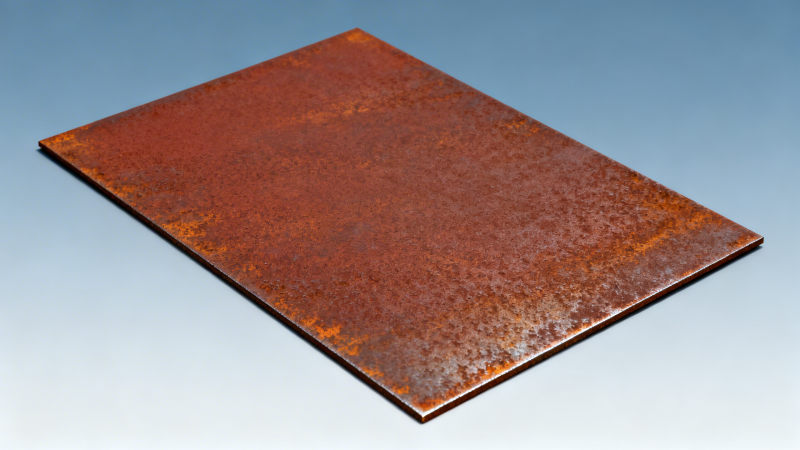
EN 10025-5 defines the technical delivery conditions for hot-rolled structural steel products with improved atmospheric corrosion resistance — commonly known as weathering steel. Unlike general-purpose grades, corten steel relies on controlled alloying elements (e.g., Cu, Cr, Ni, P) to form a stable rust patina that inhibits further degradation. A single deviation in chemical composition — even ±0.03% in copper content — can delay passivation by 6–12 months or compromise long-term integrity in coastal or industrial environments.
Procurement teams face three high-stakes verification gaps: (1) mismatched MTRs referencing outdated revisions (e.g., EN 10025-5:2004 vs. current EN 10025-5:2019); (2) missing intergranular corrosion test data per Annex B; and (3) undocumented surface condition assessments — such as pitting depth (>0.15 mm) or mill scale adhesion strength (<1.2 MPa). These oversights routinely trigger rejection at port or job site, causing 7–15 days of schedule disruption and unplanned rework costs.
At Hongteng Fengda, every corten steel plate batch undergoes four-stage verification: raw material spectrographic analysis (pre-melting), hot-rolling temperature profiling (±5℃ control), post-cooling tensile testing (3 samples per heat), and final visual/surface roughness inspection (Ra ≤ 12.5 μm). All results are embedded in digitally signed MTRs compliant with EN 10204 Type 3.1, accessible via our secure client portal within 24 hours of dispatch.
What Procurement Teams Must Check Before Acceptance
Verification isn’t a box-ticking exercise — it’s a layered process requiring coordination across technical, commercial, and logistics functions. Below are the five non-negotiable checks, ranked by frequency of failure in cross-border shipments:
- Chemical Composition Alignment: Confirm Cu ≥ 0.25%, Cr ≥ 0.30%, Ni ≥ 0.12%, and P ≤ 0.035% — all verified against the actual ladle analysis report, not generic spec sheets.
- Mechanical Property Validation: Yield strength (Rp0.2) must be ≥ 355 MPa for S355J0W, with elongation ≥ 22% (A5) — tested at ambient temperature and documented per EN ISO 6892-1.
- Surface Quality Documentation: Photos and digital micrographs showing uniform rust layer formation after 96-hour salt-spray exposure (ISO 9223 Class C3/C4), plus absence of laminations or edge cracking.
- Traceability Chain: Heat number, rolling date, furnace batch ID, and third-party inspection stamp (e.g., SGS, Bureau Veritas) must match across MTR, packing list, and shipping manifest.
- Interlock Compatibility (for structural integration): For projects using Hot Rolled Steel Sheet Pile, verify that corten plates share identical thermal expansion coefficients (11.7 × 10⁻⁶/K) to prevent joint fatigue under cyclic loading.
Key Compliance Parameters: EN 10025-5 vs. Common Misalignment Scenarios
The table below highlights typical discrepancies observed in 217 audit reports across EU, Middle East, and ASEAN projects over the past 24 months — illustrating where procurement teams most frequently overlook verification points.
These deviations aren’t theoretical — they directly correlate with field failures. In a recent infrastructure project in Dubai, unverified Cr content led to premature perforation in seawater-exposed corten cladding within 18 months. Hongteng Fengda’s pre-shipment validation protocol includes mandatory third-party witnessed testing at our ISO/IEC 17025-accredited lab — eliminating such risks before container loading.
How Hongteng Fengda Streamlines Compliance for Global Buyers
As a structural steel manufacturer & exporter from China serving North America, Europe, the Middle East, and Southeast Asia, we embed compliance into every operational node — not as an add-on service, but as built-in process logic. Our clients reduce procurement cycle time by 30–45% versus standard sourcing channels because verification happens upstream: during production planning, not post-fabrication.
We offer three tiers of verification support, tailored to buyer maturity and project criticality:
- Standard Package: EN 10025-5-compliant MTRs (Type 3.1), CE FPC certification, and ISO 9001/14001/18001 documentation — delivered digitally within 24h of shipment.
- Enhanced Package: Adds SGS/BV witnessed testing, digital twin of heat treatment curves, and real-time portal access to live mill data (temperature, tension, speed).
- Project-Critical Package: Includes pre-shipment sample archiving (retained for 5 years), independent corrosion mapping (per ISO 12944-5), and on-site QA support for first-article inspection.
For projects integrating multiple structural systems — such as combining corten cladding with Hot Rolled Steel Sheet Pile retaining walls — our engineering team provides joint compatibility reports verifying galvanic coupling safety, thermal drift alignment, and shared lifecycle maintenance protocols.
Next Steps: Secure Verified Corten Steel With Zero Compliance Risk
Don’t wait until cargo arrives to discover documentation gaps. Hongteng Fengda invites procurement, QA/QC, and project leadership teams to request one of the following actionable resources — all free, no obligation:
- A customized EN 10025-5 Pre-Shipment Checklist mapped to your exact project specifications (include grade, thickness, quantity, destination port).
- An annotated sample MTR (Type 3.1) highlighting 7 key verification fields — with explanations of what each value means for durability and liability.
- A 30-minute virtual workshop with our Technical Compliance Manager covering real-world case studies of rejected shipments — and how to prevent them.
- Immediate access to our Global Standards Navigator: a searchable database of EN, ASTM, JIS, and GB equivalencies, updated daily with revision notices.
Contact our procurement support team today with your project scope, required delivery timeline (standard lead time: 25–35 days), and preferred verification tier. We’ll assign a dedicated structural steel specialist — fluent in English, Arabic, Spanish, and Russian — to co-develop your compliance roadmap within 48 business hours.
Please give us a message


Please enter what you want to find