Why hot rolled stainless coil is gaining attention in heavy-duty steel applications
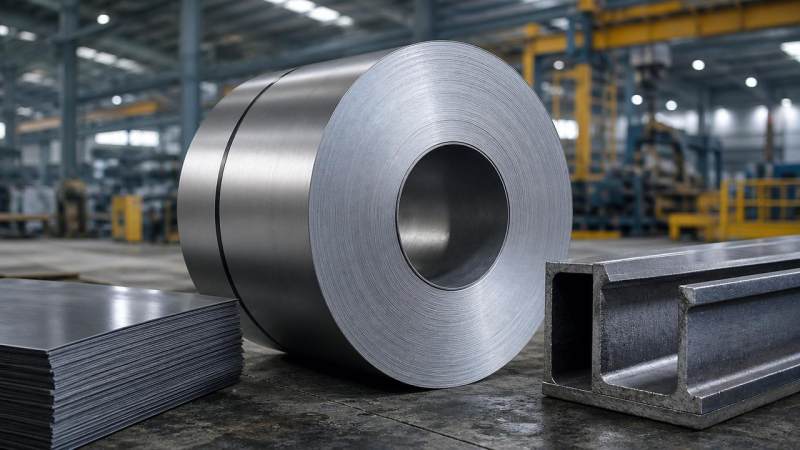
When selecting stainless steel for demanding environments, the choice between hot rolled stainless coil and cold rolled material directly affects strength, cost, and processing performance.
For construction, industrial equipment, and structural fabrication, this decision now carries greater weight than before.
Projects are moving toward larger loads, tougher service conditions, and tighter compliance expectations.
As a result, hot rolled stainless coil is increasingly evaluated not only on price, but on total performance in heavy use.
The market signal is clear.
Buyers are comparing hot rolled stainless coil and cold rolled products through a broader lens that includes weldability, section thickness, forming limits, and durability.
In steel-related industries, the right material route can reduce fabrication risk and improve project efficiency.
What is changing in heavy-use stainless steel selection
Heavy-use applications are no longer judged by surface appearance alone.
Mechanical reliability, section stability, and compatibility with downstream fabrication have become stronger decision drivers.
This shift matters when comparing hot rolled stainless coil with cold rolled sheet or strip.
Cold rolled material offers tighter tolerances and a smoother finish.
However, hot rolled stainless coil often becomes more practical for heavy structural service, thick sections, and robust welded assemblies.
In real project environments, exposure conditions are also becoming harsher.
Moisture, chemical contact, thermal cycling, and impact loads all influence whether hot rolled stainless coil is the better long-term choice.
The main trend signals behind this shift
- Thicker stainless sections are being specified more often.
- Welded assemblies are replacing lighter decorative components.
- Lifecycle cost is now prioritized over initial finish quality.
- International standards demand consistent mechanical performance.
- Large-scale fabrication favors materials with stable processing behavior.
Why hot rolled stainless coil fits many heavy-use scenarios better
Hot rolling and cold rolling create different material characteristics.
For heavy use, the comparison should focus on performance under load and during fabrication.
This does not mean hot rolled stainless coil is always superior.
It means the material often aligns better with heavy loads, larger members, and industrial fabrication routes.
When the final part will be welded, galvanized, reinforced, or integrated into structural systems, the finish difference may matter less than mechanical practicality.
Key drivers behind growing use
- Lower processing cost for thick and heavy material.
- Better suitability for industrial frames and support members.
- Flexible use across ASTM, EN, JIS, and GB-based specifications.
- Reliable performance where appearance is secondary to durability.
How this trend affects fabrication, sourcing, and structural design
The increased use of hot rolled stainless coil changes more than material purchasing.
It affects drawing assumptions, welding plans, section selection, and stock strategy.
Designers may favor stronger support sections that tolerate harsher service.
Fabricators may benefit from easier procurement in thicker dimensions.
Sourcing teams may reduce cost volatility by matching process route to actual use conditions.
A useful example is channel-based structural work.
In projects involving frames, wall beams, lightweight roofs, brackets, or mechanical columns, section performance often matters more than decorative finish.
For such cases, Metal Channel options can complement hot rolled stainless coil sourcing strategies.
Available grades may include Q195, Q235B, Q345B, Duplex, 201, 202, 304, and 316.
Typical thickness ranges from 1.5mm to 25mm, with heights from 80mm to 160mm.
Standards such as AISI, ASTM, DIN, JIS, BS, and GB/T support wider project compatibility.
For many steel structures, anti-corrosion performance, weldability, and stable dimensional control remain central evaluation points.
What should be checked before choosing hot rolled stainless coil
Selection should be evidence-based rather than habit-based.
Heavy use does not automatically mean every hot rolled stainless coil grade will fit the job.
Core checkpoints for evaluation
- Required thickness and section size.
- Corrosion exposure, including chlorides or industrial chemicals.
- Welding method and heat input sensitivity.
- Surface finish expectations after fabrication.
- Applicable standard, certification, and tolerance needs.
- Availability of matching downstream forming or cutting services.
If the part requires tight flatness, exact thickness consistency, or visible architectural surfaces, cold rolled material may still be preferred.
If the part must carry load, withstand rough service, or support thick-wall fabrication, hot rolled stainless coil often offers the better balance.
A practical way to judge the next move
The strongest material decision links service condition to process route.
That is where hot rolled stainless coil should be evaluated.
Current demand patterns show a steady move toward practical, performance-led material choices.
In that environment, hot rolled stainless coil remains highly relevant for heavy use.
It delivers clear value when thickness, strength, fabrication efficiency, and structural reliability take priority.
Before finalizing material selection, compare grade, tolerance, processing route, and standards against the actual duty cycle.
A well-matched hot rolled stainless coil specification can reduce sourcing risk, improve production stability, and support long-term project performance.
For steel structures, industrial assemblies, and export-oriented builds, that is often the most important result.
Please give us a message


Please enter what you want to find