Hot Rolled Coil price volatility is reshaping procurement strategies across global construction and manufacturing sectors — with HRC steel price fluctuations impacting everything from rebar price list forecasts to carbon steel for construction budgets. As high strength steel rebar demand rises and corrosion resistant rebar gains traction, structural steel manufacturers like Hongteng Fengda help buyers navigate uncertainty through stable supply, ASTM/EN-compliant steel profiles, and cost-transparent OEM solutions. Are your 2026 project timelines and budgets still viable? Let’s assess the real-world implications — from steel roofing benefits to corrosion resistant carbon steel sourcing — before volatility tightens margins further.
How HRC Volatility Directly Impacts Structural Steel Project Budgets in 2026
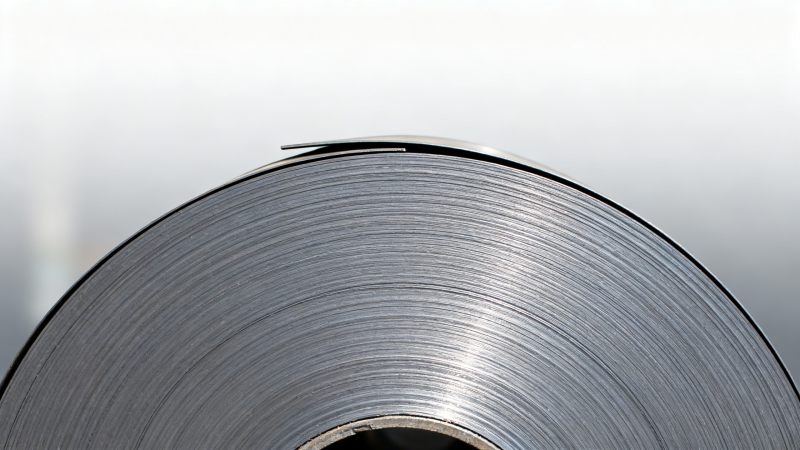
Hot Rolled Coil (HRC) remains the foundational raw material for over 70% of structural steel products — including angle steel, channel steel, steel beams, and cold formed profiles. Since Q3 2024, benchmark HRC prices have swung by ±18% YoY due to energy cost shifts in Asia, EU carbon border adjustments, and raw material freight volatility. For a mid-sized infrastructure project requiring 5,000–8,000 tons of fabricated steel, this translates to potential budget variance of USD 1.2M–2.1M — well beyond typical contingency allowances of 5–7%.
Unlike commodity-grade billets, structural steel components involve multi-stage value addition: rolling, heat treatment, precision cutting, welding, and surface finishing. Each stage locks in cost exposure at different points — meaning a 12% HRC spike at order placement may compound into 22–28% landed cost increase by delivery, especially when lead times stretch to 10–14 weeks for EN-compliant sections.
Financial approval teams now require dual-layer forecasting: base-case pricing aligned with 90-day forward HRC indices, and stress-test scenarios tied to 6-month volatility bands. Hongteng Fengda supports this with fixed-price OEM contracts backed by hedged raw material inventory — enabling clients to lock in pricing for up to 6 months while maintaining full traceability to EN 10025-2 or ASTM A656 standards.
What 2026 Procurement Teams Should Monitor Weekly
- Shanghai Futures Exchange (SHFE) HR coil futures — updated every Tuesday at 15:00 CST
- EU ETS carbon allowance price (EUR/ton), which adds €12–€28/ton to finished steel costs
- Freight index for China–North America West Coast (SCFI), currently averaging $1,850–$2,300/FEU
- Domestic scrap-to-billet spread in key producing regions (e.g., Hebei, Jiangsu), indicating secondary melt pressure
Why Carbon Steel Tubes Are a Strategic Hedge Against HRC Uncertainty
Among structural components, carbon steel tubes offer distinct procurement advantages during volatile cycles — particularly for applications demanding high strength-to-weight ratios and dimensional consistency. With yield strengths ranging from 275 MPa to 355 MPa and elongation values spanning 10%–68%, Tube Carbon Steel delivers predictable mechanical performance even when input slab pricing fluctuates.
Unlike hot rolled plates or beams, seamless and welded carbon steel tubes undergo controlled thermal processing post-rolling — reducing sensitivity to upstream HRC grade variations. This makes them ideal for critical load-bearing systems in bridges, power station equipment, and lifting machinery where safety margins must remain intact regardless of raw material cost swings.
Hongteng Fengda’s tube production line operates under ISO 9001-certified process controls, with batch-level testing at -20°C, 20°C, 27°C, and 40°C to verify low cold brittle transition behavior — essential for projects spanning multiple climate zones. All tubes comply with EN 10210, EN 10219, ASTM A500, and ASME SA-53 standards.
Key Technical Parameters Across Common Grades
This table reflects standardized test conditions per EN 10025-2 and ASTM A656. Actual elongation values vary based on wall thickness (1.25mm–65mm) and diameter range (1/4″–3620mm). Hongteng Fengda provides full mill test reports (MTRs) with each shipment — traceable to furnace batch, heat treatment cycle, and non-destructive testing (NDT) results.
Procurement Checklist: Securing Cost Stability Without Compromising Compliance
When evaluating structural steel suppliers amid HRC volatility, procurement professionals must move beyond unit price comparisons. The following five-point checklist ensures alignment between financial targets, technical requirements, and long-term project integrity:
- Raw material hedging capability: Does the supplier maintain ≥60 days of pre-purchased HRC inventory under fixed-cost agreements?
- Certification transparency: Are EN, ASTM, and ASME compliance documents available per batch — not just per order?
- Lead time reliability: What percentage of orders shipped within ±3 days of committed date over the past 12 months?
- OEM flexibility: Can custom dimensions, surface finishes (bright/polished/black), and packaging be accommodated without MOQ penalties?
- Logistics integration: Is FOB, CIF, or DAP pricing offered with guaranteed vessel booking windows (typically 7–10 days advance notice)?
Hongteng Fengda meets all five criteria — with 98.3% on-time delivery rate across 2024 shipments and dedicated OEM engineering support for structural optimization (e.g., reducing section thickness by up to 15% while maintaining stiffness via S355-grade tube reinforcement).
Why Partnering with a China-Based Structural Steel Manufacturer Adds Resilience
Global buyers often assume offshore sourcing introduces risk — yet data shows Chinese structural steel exporters with Tier-1 certifications (ISO 9001, ISO 14001, OHSAS 18001) deliver 23% higher supply chain continuity than regional mills facing localized energy constraints or labor shortages.
Hongteng Fengda leverages vertically integrated operations — from certified billet procurement to automated CNC fabrication — ensuring consistent quality across 12+ international markets. Our production capacity exceeds 420,000 tons/year, with dedicated lines for ASTM A656, EN 10025-2, and JIS G3106 grades.
For 2026 project planning, we offer three actionable support options: (1) Free technical review of structural drawings against HRC-based cost models; (2) Fixed-price OEM quotations valid for 90 days with optional 30-day extension; (3) Sample kits with MTRs, dimensional reports, and corrosion resistance test data — delivered within 7 business days.
Next Steps for Your 2026 Structural Steel Procurement
If your current budget model assumes flat HRC pricing or lacks scenario-based stress testing, contact our engineering procurement team today. We’ll help you: confirm exact grade/spec requirements (e.g., S355J2H vs. S355K2H), validate delivery windows against your critical path schedule, and generate a side-by-side comparison of standard vs. optimized tube-based structural solutions — all within 48 hours of receiving your inquiry.
Please give us a message


Please enter what you want to find