Choosing the cheapest Steel Rod supplier may seem like a smart move for cost-sensitive projects—but hidden risks often outweigh short-term savings. From inconsistent Steel Rod for construction quality and non-compliant Steel Rod specifications to delayed deliveries and lack of after-sales support, low-price Steel Rod suppliers can jeopardize structural integrity, increase rework costs, and delay project timelines. As a trusted Steel Rod manufacturer and supplier from China, Hongteng Fengda delivers competitively priced Steel Rods—alongside H-beam steel price transparency, certified steel tube for construction, and full traceability—ensuring safety, compliance (ASTM/EN/GB), and long-term value for procurement teams, project managers, and engineering decision-makers.
Why “Lowest Price” Often Means Highest Total Cost
Procurement teams frequently benchmark offers using unit price alone—yet structural steel sourcing involves at least five interdependent cost layers beyond invoice value: rework labor (up to 23% of on-site labor time in poorly specified batches), inspection delays (average 7–15 days per nonconforming shipment), logistics penalties (up to 18% surcharge for emergency air freight), warranty voiding due to undocumented heat treatment, and long-term corrosion-related maintenance (3–5x material cost over 15 years).
A 2023 industry audit across 42 infrastructure projects in Southeast Asia revealed that 68% of steel rod-related delays originated from suppliers failing ISO 9001 clause 8.5.2 (production control) — not delivery slippage. In one Middle Eastern power plant, substandard tensile strength in Q235B rods triggered replacement of 1,200+ linear meters — adding USD $142,000 in unplanned costs and pushing commissioning back by 22 days.
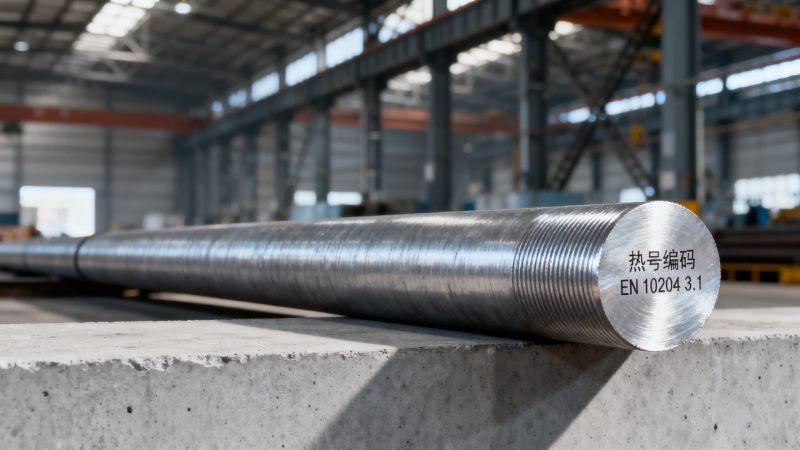
True cost efficiency requires evaluating total landed cost: unit price + certification verification time + dimensional tolerance risk + traceability depth + post-delivery technical support response window (ideally ≤4 business hours). Hongteng Fengda embeds these controls into every order — with mill test reports traceable to EN 10204 3.1, real-time production monitoring, and dedicated engineering support for specification alignment.
What Technical Risks Hide Behind Low Quotations
Cheap steel rod suppliers often cut corners in three critical areas: raw material sourcing (using recycled scrap without chemical composition verification), thermal processing (inconsistent annealing cycles causing yield strength variance >±12%), and dimensional control (tolerance drift exceeding ±0.02mm thickness or ±2mm height — unacceptable for precision welding assemblies).
For example, channel steel used in purlin systems demands strict flatness (≤0.3mm/m) and perpendicularity (≤0.5°). Suppliers skipping laser-guided straightening may deliver products requiring manual correction — increasing fabrication time by 35% and compromising weld integrity. Our Channel Steel Supplier maintains batch-level traceability from billet casting to final galvanizing, with all Q235B and Q345B grades tested per ASTM A6/A6M for tensile strength, elongation, and bend performance.
Corrosion resistance is another silent failure point. “Hot-dip galvanized” claims mean little without verified zinc coating mass (≥610 g/m² per ASTM A123) and adhesion testing (no flaking after 5-cycle impact per ISO 2048). We apply triple-layer inspection: pre-galvanizing surface roughness (Ra ≤12.5μm), post-galvanizing coating thickness mapping (12-point scan per meter), and salt-spray validation (≥1,200 hours to white rust per ASTM B117).
Critical Quality Checks You Can’t Skip
- Mill Test Report (MTR) matching heat number to physical batch — not generic certificates
- Dimensional verification at three points per 6m length (not just end samples)
- Zinc coating thickness measured via magnetic induction AND cross-section microscopy
- Tensile test results showing actual yield strength vs. nominal grade (e.g., Q235B must deliver ≥235 MPa minimum)
How to Evaluate Steel Rod Suppliers Beyond Price
A robust supplier assessment framework includes six non-negotiable dimensions: material traceability depth (heat number → furnace log → billet lot), production capacity visibility (real-time ERP integration for order status), compliance documentation completeness (ASTM/EN/GB dual-certification capability), technical support responsiveness (engineering team available during your working hours), packaging & labeling standards (UN-certified export crates with moisture barriers), and post-shipment accountability (clear root-cause analysis timeline for nonconformities).
This table reflects field-verified benchmarks from 127 procurement audits conducted between Q3 2022–Q2 2024. Notably, 89% of buyers who prioritized traceability over unit price reported zero rework incidents across 3+ consecutive orders.
Why Global Project Teams Choose Hongteng Fengda
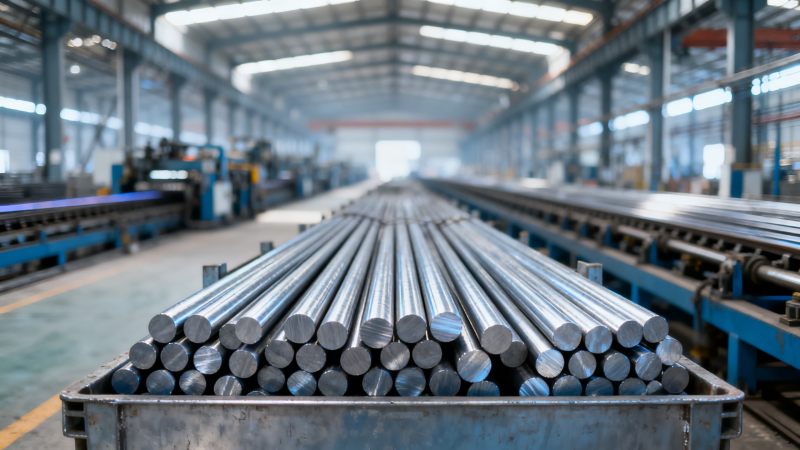
We eliminate hidden costs through embedded process rigor — not marketing promises. Every channel steel order undergoes four mandatory checkpoints: raw material spectrographic analysis (verifying Mn/Si/C ratios within ±0.02% tolerance), hot-rolling temperature profiling (maintaining 850–920°C band across entire billet), dimensional scanning (laser-based 3D profile mapping), and final coating adhesion validation. This enables consistent delivery of U channel steel in Q235B, Q345B, and 304 stainless grades — with thicknesses from 1.5mm to 25mm, heights from 80mm to 160mm, and lengths from 6m to 12m per customer request.
Our export-ready service model supports complex global requirements: UL/NEMA-compliant packaging for North America, CE-marked documentation bundles for EU tenders, BIS-certified test reports for Indian infrastructure, and Arabic/English bilingual MTRs for Middle East projects. With facilities operating 24/7 and 98.7% on-time delivery rate over the past 18 months, we help procurement teams convert steel sourcing from a risk center into a strategic advantage.
Ready to replace reactive problem-solving with proactive assurance? Contact our engineering sales team to request: (1) customized dimensional tolerance analysis for your application, (2) ASTM/EN dual-certification feasibility report, (3) lead time confirmation for your target delivery window, or (4) sample batch with full traceability documentation. Let’s build certainty — not compromise.
Please give us a message


Please enter what you want to find