Hot-rolled coil (HRC coil) price volatility is reshaping cost calculations for structural framing—especially for buyers sourcing from steel wire manufacturers, carbon coils, galvanized coil suppliers, and angle steel or H-beam producers. As global markets face supply-chain shifts and raw material fluctuations, procurement teams, project managers, and financial decision-makers must reassess whether hot coil steel remains truly cost-effective versus alternatives like cold-drawn wire, galvannealed coil, or pre-finished galvanized sheet. At Hongteng Fengda—a certified structural steel manufacturer and exporter compliant with ASTM, EN, and GB standards—we help global clients navigate HRC coil price uncertainty with stable lead times, quality-controlled rolled coil solutions, and value-engineered framing components—from mild steel wire to galvanized expanded metal sheets.
How volatile is HRC coil pricing—and what does it mean for structural framing budgets?
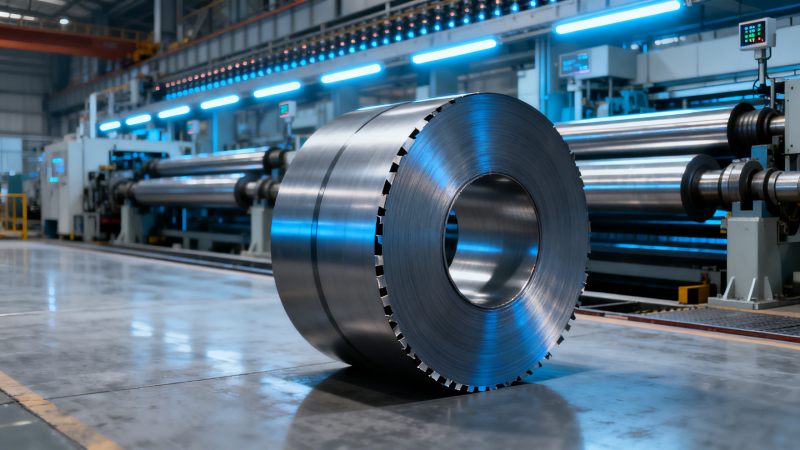
HRC coil prices have experienced average quarterly swings of ±12–18% since Q2 2022, driven by iron ore freight costs, energy input volatility (coal and electricity), and regional export policy adjustments. For structural framing projects requiring angle steel, channel sections, or custom cold-formed profiles, raw material cost exposure can account for 60–75% of total bill-of-materials spend.
Unlike finished structural members—which lock in pricing at order confirmation—HRC coil purchases are often subject to monthly index-based adjustments tied to CRU or TSI benchmarks. This introduces forecasting risk across multi-month projects, especially where fabrication lead times exceed 6–8 weeks.
At Hongteng Fengda, we mitigate this exposure through dual-sourcing flexibility: offering both hot-rolled base materials and fully processed structural components (e.g., pre-cut, drilled, or galvanized beams). This allows clients to defer raw material exposure until fabrication begins—reducing working capital pressure by up to 30% on mid-size infrastructure contracts.
When does HRC coil still make sense—and when should you consider alternatives?
The answer depends on three interlocking criteria: volume scale, dimensional tolerance requirements, and surface performance expectations. For high-volume, non-critical applications (e.g., temporary bracing, scaffold supports), HRC coil remains competitive—especially when sourced directly from integrated mills with <7-day rolling-to-shipment cycles.
For projects prioritizing speed-to-install, long-term durability, or aesthetic consistency—such as commercial roof systems, façade cladding, or agricultural sheds—the Color Coated Galvanized Roof Sheet PPGI delivers measurable lifecycle savings despite a 10–15% higher initial material cost. Its factory-applied PE/SMP/PVDF coatings eliminate field painting delays and reduce onsite labor by up to 40%.
What technical specs matter most when evaluating HRC-derived vs. pre-finished framing?
Three dimensions define real-world performance: dimensional stability under thermal cycling, coating adhesion strength after bending, and tensile uniformity across coil width. HRC coil used for structural framing typically requires minimum yield strength ≥235 MPa (ASTM A656 Gr. 50), thickness tolerance ±0.05 mm, and flatness ≤2 mm/m.
Pre-finished options like Color Coated Galvanized Roof Sheet PPGI add critical parameters: top-side coating thickness 11–35 μm, back-side 5–14 μm, and guaranteed adhesion ≥4B per ASTM D3359. These ensure no flaking during roll-forming into trapezoidal or wavy profiles—even at bend radii as tight as 2× material thickness.
Hongteng Fengda validates all coil-based products against EN 10346 (for galvanized grades) and ASTM A792 (for aluminum-zinc alloys), with full traceability from heat number to delivery documentation. Every batch undergoes salt-spray testing (≥1,000 hrs per ISO 9227) before release.
Why choose Hongteng Fengda for volatility-resilient structural steel sourcing?
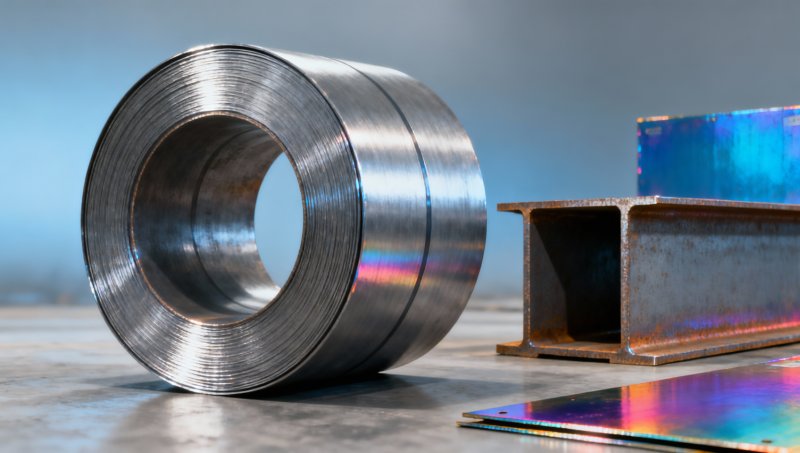
We combine vertical integration with procurement agility: operating our own hot-rolling line for base coil production *and* dedicated finishing lines for galvanizing, color coating, and precision cold forming. This lets us offer fixed-price contracts with 120-day validity—backed by inventory buffers covering 4–6 weeks of typical project demand.
Our clients receive more than product: engineering support for section optimization (reducing weight by 8–12% without compromising load capacity), coordinated logistics across 12+ ports, and compliance documentation aligned with local building codes—including UL certification support for North American projects and CE marking for EU tenders.
Whether you’re evaluating HRC coil viability for a new warehouse frame, comparing galvanized vs. PPGI roofing for a solar farm canopy, or validating ASTM/EN equivalency for cross-border procurement—contact us for a free technical consultation, sample kit, or customized ROI analysis based on your project’s scope, timeline, and budget constraints.
Please give us a message


Please enter what you want to find