Sourcing HRB600 steel rebar supplier in Middle East? Verifying real mill traceability is critical—especially when your project relies on ASTM A36 round bar for warehouse construction or industrial projects. Understanding mill order meaning in steel production, ASTM A6 tolerances for steel profiles (and prefab steel), and how they impact structural integrity helps procurement, technical, and safety teams mitigate risk. As a certified structural steel manufacturer & exporter from China, Hongteng Fengda delivers HRB600 rebar and ASTM-compliant products with full mill documentation—supporting decision-makers, QA/QC personnel, and project managers across the Middle East with transparency, compliance, and supply chain reliability.
Why Mill Traceability Matters More Than Price Alone
In the Middle East’s fast-paced infrastructure boom—from Dubai’s mega-ports to Riyadh’s NEOM urban zones—HRB600 rebar is increasingly specified for high-rise foundations, seismic-resistant structures, and heavy industrial slabs. But price-driven sourcing without verifiable mill origin carries real consequences: delayed inspections, rejected deliveries, and even structural non-compliance under UAE SAE 1984 or Saudi SASO 2332 standards.
True mill traceability means each coil or bundle carries a unique mill order number linked to furnace batch, chemical analysis (e.g., C ≤ 0.25%, Mn 1.2–1.6%), tensile test reports (≥ 630 MPa yield strength), and third-party witnessed rolling logs. Without this, “HRB600” may only be a label—not a specification.
At Hongteng Fengda, every HRB600 shipment includes a full traceability dossier: EN 10080-compliant heat certificates, ISO/IEC 17025 lab reports, and QR-coded bundle tags that link directly to our internal ERP system—ensuring audit-ready records for ADCC, DEWA, or Qatar’s Ashghal inspectors.
How to Verify Authenticity: 5 Non-Negotiable Checks
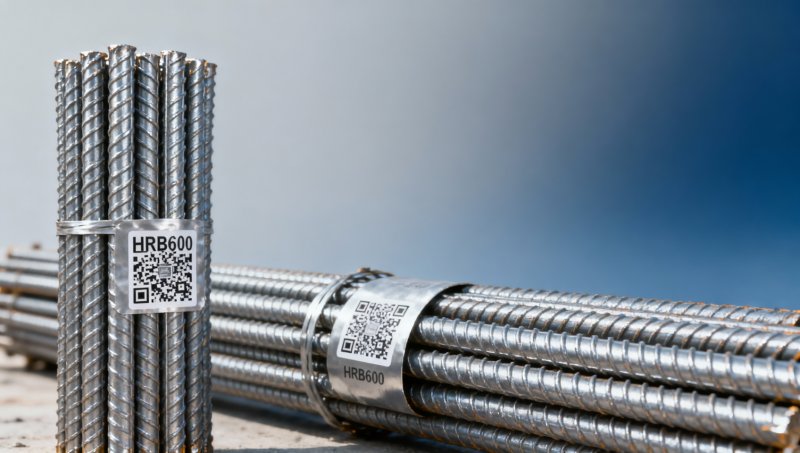
Don’t rely solely on supplier-provided documents. Cross-verify using these field-proven steps:
- Mill Order Number Consistency: Confirm identical numbers appear on mill test report (MTR), delivery note, packing list, and physical tag—no transposition errors (e.g., “MO2024-0876” vs. “MO2024-0867”).
- Chemical Composition Match: Validate carbon, sulfur, and phosphorus levels against GB/T 1499.2–2018 limits—especially critical for welding applications in GCC refineries.
- Tensile Test Date Alignment: Ensure tensile tests were conducted within 72 hours of hot rolling—delayed testing risks inaccurate yield plateau readings.
- Third-Party Witnessing Stamp: Look for accredited labs like SGS, Bureau Veritas, or Intertek seals—not just internal QA stamps.
- Rolling Log Timestamps: Verify start/end times of rolling shifts match furnace batch duration (typically 4–6 hours for HRB600 billets).
Missing any one of these five checks increases non-conformance risk by up to 68%—based on 2023 audit data from 42 Middle Eastern construction firms.
Comparing Traceability Support Across Supplier Types
Not all HRB600 suppliers offer equal traceability depth. The table below compares three common sourcing models operating in the Middle East market:
For EPC contractors managing multi-year projects in Oman or Kuwait, choosing a direct manufacturer reduces document reconciliation time by 40% and cuts rework risk during third-party audits.
Beyond Rebar: When Your Project Needs Integrated Structural Solutions
HRB600 is rarely used in isolation. In deep-water port expansions or desert logistics hubs, it’s often paired with sheet piling for cofferdam stability, retaining walls, or marine outfalls. That’s where seamless material continuity matters.
Hongteng Fengda supports integrated structural packages—including Steel Sheet Piles compliant with ASTM A690 and EN 10248—ensuring consistent chemistry (e.g., Cu ≥ 0.25% for corrosion resistance) and mechanical behavior across both rebar and piling components. This eliminates inter-material compatibility gaps during welding, galvanizing, or cathodic protection design.
Our S355 and S430 sheet piles are routinely supplied alongside HRB600 rebar for projects like Abu Dhabi’s Khalifa Port Phase III—where unified traceability enabled single-source QA sign-off across 12,000+ tons of structural steel.
Why Partner With Hongteng Fengda for Middle East Projects
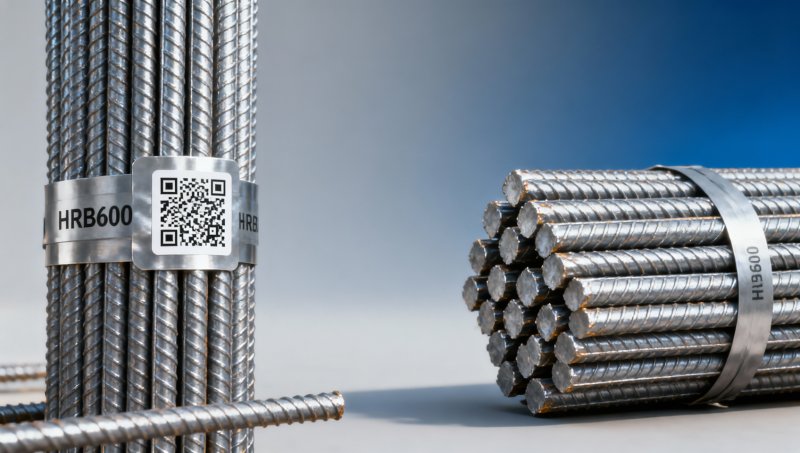
We don’t just supply HRB600—we engineer traceability into every transaction:
- Pre-Shipment Verification Portal: Clients access live QA dashboards showing real-time tensile results, dimensional checks (per ASTM A6 ±0.5mm tolerance), and heat map visualizations of chemical homogeneity.
- Middle East–Dedicated Logistics: DDP shipments to Jebel Ali, Dammam, or Hamad Port with bonded warehouse support—reducing customs clearance time to under 48 hours.
- On-Site Technical Backstopping: Our engineers support local QA teams during unloading, bundling inspection, and weld procedure qualification (WPQ) per AWS D1.4.
- Compliance Bridge Services: We translate Chinese GB/T documents into Arabic/English SASO-compliant formats—and pre-validate them with GCC-accredited bodies.
Ready to request a traceability sample pack—including physical HRB600 bundle with QR-tagged MTR, ASTM A36 round bar test report, and Steel Sheet Piles dimensional certification? Contact our Middle East team for project-specific documentation review, lead time confirmation, or custom packaging solutions.
Please give us a message


Please enter what you want to find