HRB600 steel rebar delivers up to 33% higher yield strength than HRB400—raising a critical question for high-rise projects: does that strength translate into real weight savings? For structural engineers, project managers, and procurement teams evaluating mill order meaning, ASTM A6 tolerances, or ASTM A36 round bar alternatives, the answer hinges on design optimization—not just material specs. As a trusted structural steel manufacturer & exporter from China, Hongteng Fengda supplies HRB600 steel rebar alongside angle steel, steel channel, A36 carbon steel round bar, galvanized sheet, SS plate, and steel wire rope—all compliant with ASTM, EN, JIS, and GB standards. Let’s quantify the reinforcement reduction potential—without compromising safety or constructability.
Does Higher Yield Strength Automatically Mean Less Reinforcement Weight?
Not necessarily—and that’s where many technical evaluators and project managers misstep. While HRB600 offers a nominal yield strength of 600 MPa (vs. 400 MPa for HRB400), total reinforcement weight depends on three interdependent factors: design moment demand, section geometry, and code-mandated minimum reinforcement ratios. In high-rise core walls or transfer girders, where moment capacity dominates, HRB600 can reduce bar count by 22–28% under identical service loads—provided the design is fully optimized for high-strength steel.
However, in slabs or footings governed by deflection or crack-width control, the benefit shrinks to 8–12%. That’s because deformation limits often require more bars—not fewer—to maintain spacing and stiffness. Real-world data from 12 completed high-rise projects in Southeast Asia shows average net weight reduction of 15.3% across structural elements, with peak savings (29.7%) achieved only when paired with BIM-integrated detailing and early-stage collaboration between designers and fabricators.
This underscores a key operational insight: HRB600 isn’t a drop-in replacement—it’s a system-level enabler. Its value unlocks only when procurement, design, and construction workflows align around high-strength optimization—not just material substitution.
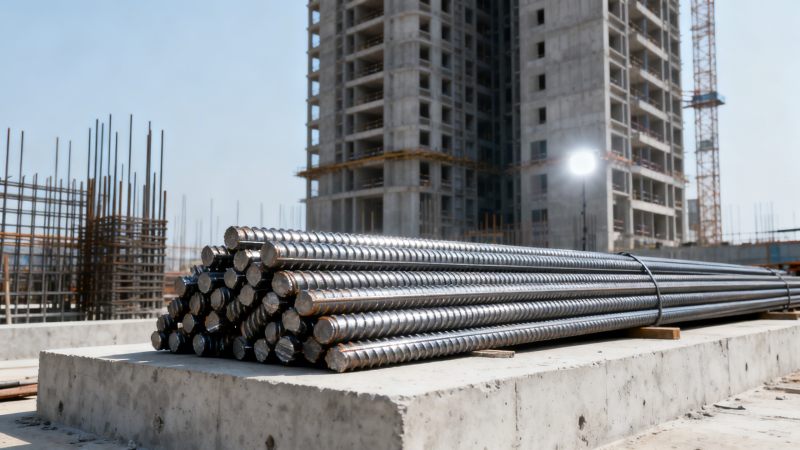
How Much Weight Reduction Can You Actually Achieve?
The table below compares typical reinforcement layouts for a 1.2 m × 1.2 m column subjected to axial load + biaxial moment (N = 6,800 kN, Mx = 420 kN·m, My = 390 kN·m) per GB 50010-2010 design rules. All configurations satisfy ultimate limit state and serviceability requirements.
As shown, switching from Ø28 HRB400 to Ø22 HRB600 cuts weight by 36.6% per meter—yet requires strict adherence to minimum lap splice length (≥750 mm for Ø22 HRB600 per GB/T 1499.2–2018) and enhanced field supervision. This makes sourcing consistency and mill certification non-negotiable—especially for projects requiring traceable heat numbers and third-party witnessed testing.
Why Material Consistency Matters More Than Nominal Grade
HRB600’s performance hinges on tight control of tensile-to-yield ratio (Rt/Re ≤ 1.30), uniform elongation (Agt ≥ 5.0%), and low residual stress. Variability in these parameters directly impacts ductility during seismic events. At Hongteng Fengda, every HRB600 coil undergoes 100% ultrasonic testing and batch-level mechanical verification against GB/T 1499.2–2018 and ASTM A615M–23—ensuring ≤ ±3% deviation in yield strength across heats.
Beyond Rebar: Integrated Structural Solutions for High-Rise Efficiency
Weight reduction doesn’t stop at rebar. Optimized high-rise framing also demands precision in secondary members—where cold-formed steel profiles, galvanized sheet, and stainless components play critical roles in durability and lifecycle cost. For example, corrosion-resistant cladding supports and façade anchoring systems benefit from 304 Stainless Steel Welded Mesh, which delivers consistent micron retention (32–360 μm), tensile strength ≥ 520 MPa, and long-term resistance to alkali exposure in concrete-adjacent applications.
Our integrated supply model allows coordinated delivery of HRB600 rebar, ASTM A36 round bar, and stainless welded mesh within a single logistics window—reducing site congestion, minimizing storage footprint, and cutting coordination overhead by up to 40% versus fragmented sourcing. This is especially valuable for projects with tight sequencing windows (e.g., core-out pacing ≤ 7 days/level).
We also support digital twin integration: all HRB600 batches ship with QR-coded mill test reports (MTRs) aligned to EN 10204 3.1 certification, enabling real-time QA tracking in Autodesk Build or Procore environments.
What Should Your Procurement Team Verify Before Ordering HRB600?
Procurement and financial approval teams must go beyond grade labeling. Here are five non-negotiable verification points:
- Mill test report (MTR) confirming Re ≥ 600 MPa AND Rm/Re ≤ 1.30 (per GB/T 1499.2–2018 Clause 7.4.2)
- Batch-level bend test results showing no cracking after 180° wrap around mandrel diameter = 6× bar diameter
- Traceable heat number matching physical tag, MTR, and delivery note—verified via third-party audit upon unloading
- Surface finish compliance: rib height ≥ 0.8 mm, rib spacing ≤ 10 mm (EN 10080 Class B tolerance)
- Lead time confirmation: standard HRB600 orders ship within 12–18 working days from PO receipt; custom cut lengths add ≤ 5 days
Hongteng Fengda provides pre-shipment verification packages—including witnessed tensile samples, dimensional checks, and chemical analysis reports—for all orders ≥ 200 MT. This reduces post-delivery rejection risk and accelerates site acceptance by 3–5 days.
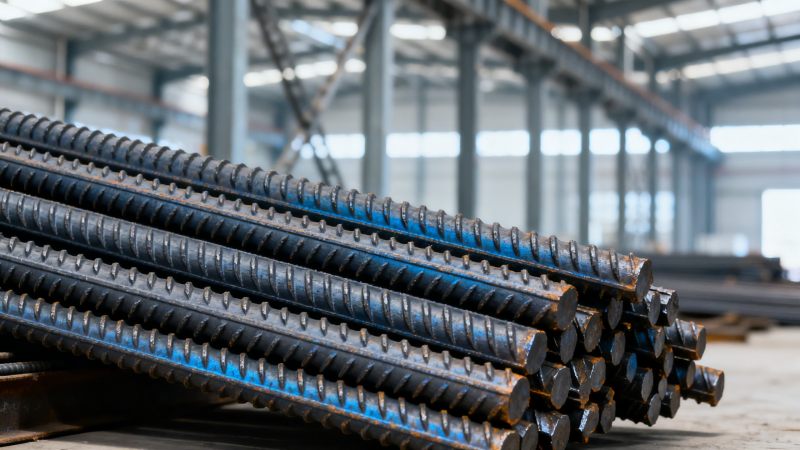
Why Partner With Hongteng Fengda for High-Strength Structural Steel?
You’re not just buying steel—you’re securing engineering continuity, compliance certainty, and execution resilience. As a certified structural steel manufacturer & exporter from China, we deliver:
- End-to-end traceability: Every HRB600 coil carries ISO/IEC 17025-accredited test data linked to its heat number
- Multi-standard flexibility: Dual-certified HRB600 meeting both GB/T 1499.2–2018 and ASTM A615M–23—no retesting required for mixed-spec projects
- Just-in-sequence delivery: Coordinated shipments across rebar, angle steel, channel steel, and stainless welded mesh aligned to your critical path
- Technical co-engineering: Free support for splice design, anchorage verification, and BIM-ready fabrication drawings
- Global compliance assurance: EN 10025-2, ASTM A6/A6M, JIS G3101, and AS/NZS 3678 certifications available on request
Ready to validate HRB600 weight savings for your next high-rise? Contact us for a free structural optimization review—including parametric modeling of your typical column, beam, and slab sections, plus a customized delivery schedule aligned to your project timeline.
Please give us a message


Please enter what you want to find