For bridge projects, material selection directly affects structural safety, lifecycle cost, and procurement risk. HRB600 steel rebar for bridge construction offers high strength and potential weight savings, but buyers must evaluate pricing, standards compliance, supply stability, and fabrication requirements before making a sourcing decision. This cost check helps business evaluators compare value beyond the unit price and assess whether HRB600 rebar fits project budgets, performance targets, and long-term construction needs.
Why HRB600 Rebar Changes the Bridge Cost Equation
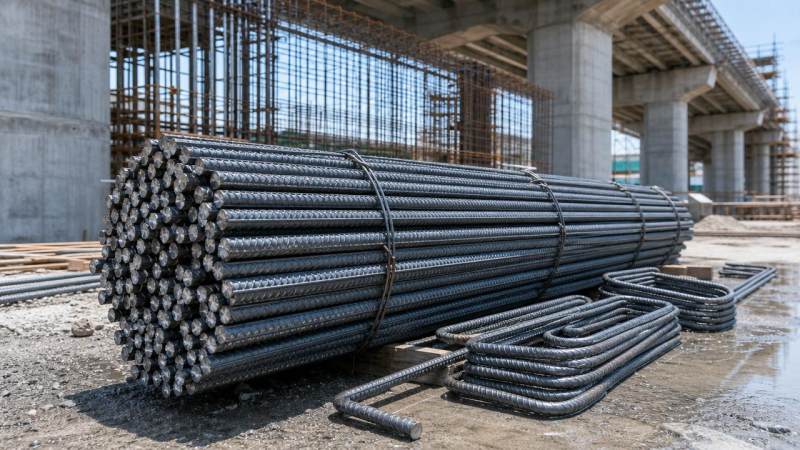
Business evaluators often start with the rebar unit price, but bridge construction rarely rewards a single-price comparison. Strength grade, detailing, wastage, testing, logistics, and approval cycles all influence the final cost.
HRB600 steel rebar for bridge construction is typically considered where design teams want higher yield strength and more efficient reinforcement layouts. In suitable structures, this may reduce tonnage compared with lower-grade bars.
The key question is not whether HRB600 is cheaper per metric ton. The better question is whether it lowers total installed cost across a 3-stage project cycle: design, procurement, and site execution.
Cost elements beyond the mill quotation
A bridge procurement team should separate material price from usable value. Two suppliers may quote similar numbers, while differences in tolerance control, documentation, and shipping reliability create different risk levels.
For imported steel, common commercial checkpoints include MOQ, bundle weight, cutting plan, export packaging, inspection timing, and lead time. A 2-week documentation delay can affect project cash flow.
The following table shows how HRB600 steel rebar for bridge construction should be checked against practical commercial and engineering factors before purchase approval.
The strongest commercial case appears when engineering approval, fabrication readiness, and supplier documentation are aligned. Without these 3 conditions, a higher-strength bar can create avoidable rework.
Where HRB600 is most relevant
HRB600 steel rebar for bridge construction is most relevant in reinforced concrete bridge decks, piers, pile caps, retaining structures, and heavy-load transition zones where congestion control matters.
When reinforcement congestion is reduced, concrete placement can become more predictable. This may lower labor pressure during pours and reduce the chance of honeycombing around dense bar cages.
Price Check: What Business Evaluators Should Compare
A practical cost check should use at least 5 comparison lines: material, processing, compliance, transport, and project risk. This prevents a low quote from hiding downstream expenses.
For HRB600 steel rebar for bridge construction, the procurement team should ask whether the quoted price includes cutting, bending, bundling, export documentation, inspection support, and destination port terms.
Unit price versus installed cost
A higher-grade rebar may carry a premium per ton. However, if the design reduces steel quantity by a meaningful percentage, the installed cost can remain competitive.
Evaluators should build a spreadsheet that compares tonnage, bar diameter mix, wastage allowance, fabrication fee, inland freight, ocean freight, and inspection charges under the same Incoterms.
Recommended 6-step cost review
- Confirm the bridge design code and whether HRB600 grade is accepted by the project authority.
- Compare bar schedules using at least 2 reinforcement grade options.
- Request mill test certificates, chemical composition, and mechanical performance data.
- Check cutting, bending, and labeling requirements before production starts.
- Estimate wastage, commonly reviewed within a 2%–5% planning range.
- Verify lead time, shipment schedule, and inspection window before contract signing.
The following comparison framework helps commercial teams separate visible purchasing costs from hidden execution costs in bridge reinforcement sourcing.
This table shows why HRB600 evaluation should include schedule and compliance. A quote that looks 1%–2% lower can become expensive if it weakens delivery certainty.
How related steel products affect total procurement planning
Bridge projects rarely purchase rebar alone. Access platforms, equipment floors, temporary walkways, drainage covers, and maintenance zones may require other structural steel materials.
For example, SM400A Patterned steel plate can support anti-skid surfaces in construction, transportation, machinery, shipbuilding, and equipment-floor applications.
Typical plate parameters include 2–8mm thickness, 600mm–1800mm width, 2m–12m length, and thickness tolerance around ±0.02mm, depending on order requirements.
When a supplier can coordinate rebar, beams, channel steel, angle steel, and patterned plate, buyers may reduce communication steps and improve shipment consolidation.
Compliance, Standards, and Supplier Risk Control
Bridge steel procurement demands more than commercial negotiation. HRB600 steel rebar for bridge construction must be evaluated against project standards, local approval processes, and inspection evidence.
International buyers commonly reference standards such as GB, ASTM, EN, JIS, or project-specific specifications. The accepted standard should be written clearly in the contract.
Documentation that should be requested
A reliable supplier should provide traceable documents before shipment. For bridge work, a missing heat number or unclear certificate can delay material release at site.
- Mill test certificate showing mechanical properties and chemical composition.
- Heat number traceability connected with bundles and shipping marks.
- Dimensional inspection records for diameter, rib geometry, and tolerance control.
- Optional third-party inspection reports, such as SGS or BV, when required.
- Packing list, commercial invoice, certificate of origin, and shipping documents.
Supplier capability signals
Business evaluators should look for 4 capability signals: stable production capacity, consistent quality control, export experience, and practical communication during technical clarification.
Hongteng Fengda is a structural steel manufacturer and exporter from China, supplying angle steel, channel steel, steel beams, cold formed profiles, and customized components.
Its production and quality approach supports international standards including ASTM, EN, JIS, and GB. This matters when bridge buyers need predictable supply and documented conformity.
Common sourcing risks in bridge rebar purchasing
Risk control should begin before the purchase order. Many disputes start from unclear specifications, unconfirmed tolerances, or late changes to bar cutting and bending schedules.
For HRB600 steel rebar for bridge construction, technical approval should be completed before mass production. A practical review window is often 3–7 working days for document confirmation.
Buyers should also confirm whether the supplier can support multiple shipments. Large bridge projects may require phased delivery to match foundation, pier, deck, and approach-road schedules.
Procurement Strategy for Better Lifecycle Value
The best purchasing strategy is not always the lowest initial cost. For bridges, lifecycle value includes durability, constructability, schedule reliability, maintenance access, and supply continuity.
HRB600 steel rebar for bridge construction can be a strong option when the project rewards high-strength reinforcement and when the supplier can meet documentation and delivery requirements.
When HRB600 may be a good fit
It is often worth evaluating HRB600 when reinforcement density is high, concrete placement is difficult, or design optimization can reduce total bar quantity without compromising code compliance.
It may also support projects where storage space is limited. Lower tonnage can reduce yard handling, especially when materials arrive in 2–4 planned delivery batches.
When caution is needed
Caution is needed when the project authority has not approved HRB600, when the bending shop lacks experience, or when the design is fixed around lower-grade reinforcement.
In these cases, changing material grade late can create redesign cost. A pre-bid technical check is usually less expensive than a post-order correction.
Practical questions to ask before ordering
- Which standard and grade requirements are written in the bridge specification?
- Can the supplier quote by diameter, length, bundle, and delivery batch?
- Are cutting and bending requirements confirmed before production?
- What inspection documents will be available before shipment?
- Can related structural steel items be consolidated with the same export schedule?
These questions help evaluators compare suppliers on execution ability, not only quotation format. They also reduce the chance of scope gaps during bridge construction.
Working with a Structural Steel Export Partner
Global bridge buyers need suppliers who understand both production and export coordination. Material quality, lead time, packaging, documents, and after-sales response must work together.
Hongteng Fengda serves buyers across North America, Europe, the Middle East, and Southeast Asia with structural steel products and customized sourcing support for construction projects.
How Hongteng Fengda supports cost control
The company helps buyers review specifications, match steel products to application needs, and plan reliable delivery schedules. This is valuable for multi-stage bridge and infrastructure procurement.
Its product scope includes standard profiles and OEM structural steel components. Buyers can discuss angle steel, channel steel, beams, cold formed profiles, and project-specific fabricated parts.
For HRB600 steel rebar for bridge construction, the right evaluation should include technical compliance, commercial transparency, logistics planning, and a realistic view of fabrication requirements.
Final purchasing perspective
HRB600 can offer meaningful value when high strength, reduced congestion, and stable supply align with the bridge design. The decision should be made through total cost analysis.
Business evaluators should compare at least 4 supplier dimensions: standards compliance, processing support, delivery reliability, and documentation completeness. These factors protect both budget and schedule.
If your team is assessing HRB600 steel rebar for bridge construction or related structural steel products, contact Hongteng Fengda to discuss specifications, sourcing plans, and customized solutions.
Get a tailored cost check, confirm product details, or learn more about dependable structural steel solutions for bridge, industrial, and construction projects.
Please give us a message


Please enter what you want to find