For projects balancing strength, compliance, and budget control, rebar grade selection directly affects material cost and structural performance.
HRB600 steel rebar cost-effective solution is a practical question for construction, infrastructure, and industrial applications.
With higher yield strength than conventional grades, HRB600 may reduce steel consumption and improve design efficiency.
However, its value depends on pricing, engineering design, standards, availability, processing requirements, and supplier reliability.
When HRB600 Steel Rebar Cost-Effective Solution Becomes a Real Project Advantage
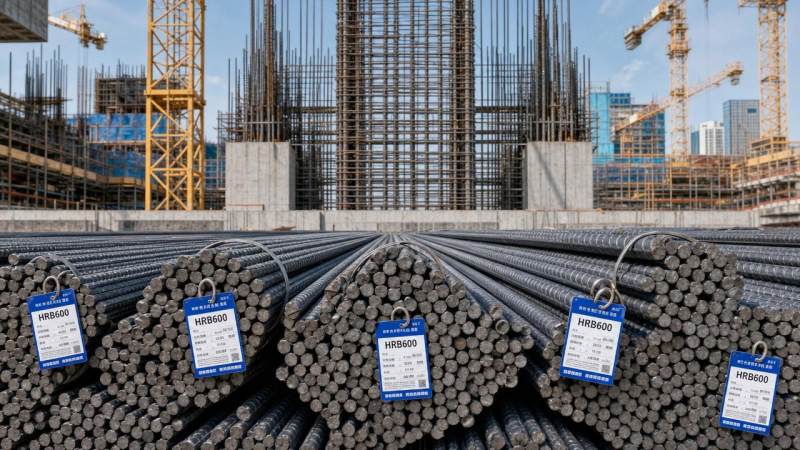
HRB600 rebar is a high-strength hot-rolled ribbed steel bar commonly used where load capacity matters.
Its higher yield strength can support lighter reinforcement designs under suitable engineering conditions.
That is why the HRB600 steel rebar cost-effective solution discussion cannot focus only on unit price.
A cheaper rebar grade may require more tonnage, more labor, and denser placement.
A stronger grade may reduce congestion, shorten installation time, and improve concrete placement quality.
The best choice appears when structural design, local codes, and material supply conditions align.
Scenario Background: Why Rebar Value Changes by Application
Different projects measure value in different ways.
A high-rise tower may care about reinforcement congestion and column size.
A bridge may focus on fatigue performance, durability, and inspection requirements.
An industrial foundation may prioritize predictable lead time, weldability, bending performance, and cost stability.
Therefore, HRB600 steel rebar cost-effective solution depends on the full construction scenario.
It also depends on whether designers are allowed to optimize reinforcement ratios based on HRB600 strength.
If design rules do not permit reduction, the premium may not convert into savings.
Typical Scenario 1: High-Rise Buildings and Dense Reinforcement Zones
High-rise buildings often contain columns, shear walls, transfer beams, and core structures with heavy reinforcement.
In these areas, bar congestion can create placement problems and increase labor time.
HRB600 steel rebar cost-effective solution becomes attractive when fewer bars can meet structural requirements.
Reduced reinforcement density may improve concrete flow and lower the risk of voids.
It may also simplify bar fixing around openings, lap zones, and congested joints.
The key judgment is not only price per ton.
It is total installed cost, including tonnage, detailing, labor, cutting loss, and site efficiency.
Typical Scenario 2: Bridges, Transport Infrastructure, and Long-Service Structures
Infrastructure projects usually require stricter documentation, stable mechanical properties, and reliable traceability.
For bridges and transport structures, HRB600 steel rebar cost-effective solution depends heavily on approved standards.
Yield strength is important, but ductility, bend performance, fatigue behavior, and corrosion environment also matter.
Where design codes accept HRB600, the grade may reduce reinforcement weight in specific members.
Where approval is uncertain, conventional grades may remain safer for schedule control.
Mill certificates, third-party testing, and batch consistency become essential in this scenario.
Stable supply also reduces the risk of mixed grades entering the same structural section.
Typical Scenario 3: Industrial Plants, Warehouses, and Heavy Foundations
Industrial facilities often include equipment foundations, crane-supported structures, retaining walls, and heavy floor slabs.
Loads can be concentrated, repeated, or linked to production equipment vibration.
In these projects, HRB600 steel rebar cost-effective solution may help where strength demand is high.
However, installation details must be checked carefully.
Bending radius, anchorage length, splice method, and site fabrication capability affect real savings.
A stronger rebar grade should not create detailing complexity that delays construction.
If the project uses multiple steel materials, coordinated supply can improve cost control.
For example, structural packages may also include plates, beams, channels, angles, and corrosion-resistant components.
In equipment areas, 430 Stainless Steel Plate may support applications requiring formability and corrosion resistance.
This material is used in automotive trim, electrical components, kitchen supplies, conveyor belts, bolts, nuts, springs, and screens.
Available thickness ranges from 0.3mm to 200mm, with surface finishes such as BA, 2B, NO.1, NO.4, HL, and 8K.
Different Scenario Requirements for HRB600 Rebar Selection
This comparison shows why HRB600 steel rebar cost-effective solution is scenario dependent.
A premium grade creates value only when its strength is converted into measurable project advantages.
Cost Factors That Decide Whether HRB600 Is Worth It
The first factor is material price difference compared with HRB400 or similar grades.
If the premium is small, HRB600 becomes easier to justify.
The second factor is tonnage reduction allowed by structural design.
Without design optimization, high strength may not reduce total cost.
The third factor is installation efficiency.
Fewer bars can reduce tying time, congestion, and handling effort.
The fourth factor is waste control.
Accurate cutting plans and stable bar lengths help preserve savings.
The fifth factor is supply reliability.
Delayed delivery can eliminate any benefit from a lower total steel quantity.
Scenario Fit Checklist Before Choosing HRB600
- Confirm whether project codes accept HRB600 for the intended structural members.
- Compare total installed cost, not only unit price per ton.
- Check whether reinforcement reduction is permitted in design calculations.
- Verify ductility, bend test results, elongation, and yield consistency.
- Review bar diameters, lengths, packaging, marking, and shipment schedule.
- Confirm whether site teams can process the selected grade efficiently.
- Request mill certificates and, when needed, third-party inspection reports.
This checklist helps determine whether HRB600 steel rebar cost-effective solution fits a specific project.
It also reduces the risk of choosing strength that cannot be fully used.
Common Misjudgments That Reduce HRB600 Value
Misjudgment 1: Treating Higher Strength as Automatic Savings
Higher yield strength does not automatically lower project cost.
Savings appear only when design, detailing, and construction methods support reduced reinforcement quantity.
Misjudgment 2: Ignoring Local Standard Acceptance
A material may be technically strong but still unsuitable if approval requirements are unclear.
Standards, test reports, and engineering documentation should be reviewed before order confirmation.
Misjudgment 3: Overlooking Fabrication and Bending Limits
Higher strength bars may need careful bending control.
Incorrect processing can create cracking risks, rework, or rejection during inspection.
Misjudgment 4: Separating Material Cost from Logistics
Ocean freight, inland delivery, port handling, storage, and delivery timing affect final cost.
A reliable supplier can make HRB600 steel rebar cost-effective solution more achievable.
Supplier Reliability and Export Support Matter in Cost Control
Material performance depends not only on grade name.
It also depends on consistent production, quality inspection, packaging, and export documentation.
Hongteng Fengda is a structural steel manufacturer and exporter from China.
The company supplies angle steel, channel steel, steel beams, cold formed profiles, and customized steel components.
Production follows strict quality control and major standards, including ASTM, EN, JIS, and GB.
Stable capacity and dependable lead times support construction, industrial, and manufacturing projects worldwide.
For HRB600 steel rebar cost-effective solution evaluation, supplier capability should be part of the calculation.
Consistent batches, accurate specifications, and responsive service reduce sourcing risks.
Practical Recommendation: Is HRB600 a Cost-Effective Choice?
HRB600 can be cost-effective when projects benefit from reinforcement reduction and easier placement.
It is especially suitable for high-load areas, dense reinforcement zones, and selected infrastructure components.
It may be less suitable where codes restrict use or designs cannot reduce steel quantity.
A realistic decision should compare total installed cost, not only factory quotation.
The most reliable approach is to request grade data, test documents, shipment terms, and design-based tonnage comparison.
When these conditions align, HRB600 steel rebar cost-effective solution can support stronger, leaner, and more efficient projects.
Next Step for Project-Based Evaluation
Prepare drawings, required standards, bar diameters, estimated tonnage, delivery schedule, and inspection requirements.
Then compare HRB600 with conventional rebar grades under the same structural assumptions.
Hongteng Fengda can support material matching, specification review, and export supply planning for structural steel projects.
For a reliable HRB600 steel rebar cost-effective solution, start with a scenario-based quotation and technical review.
Please give us a message


Please enter what you want to find