When comparing H shape steel vs. H 20 beam for structural applications, many engineers and procurement professionals assume material grade or load capacity is the key differentiator—yet dimensional tolerances often determine real-world fit, weldability, and long-term project integrity. As a leading structural steel manufacturer & exporter from China, Hongteng Fengda supplies precision-engineered H beams, angle steel, channel steel, and cold formed profiles—compliant with ASTM, EN, JIS, and GB standards. Whether you're sourcing steel wire manufacturers, galvanized coil, carbon sheet steel, or supplier I beam solutions, tight tolerance control starts at the mill. Discover why tolerances—not just specs—define performance in global construction and industrial projects.
Why Dimensional Tolerance Is the Silent Decider in Structural Steel Selection
In high-precision steel framing—especially for modular buildings, pre-engineered structures, and automated assembly lines—even ±0.8mm deviation across flange width or web thickness can trigger on-site rework, welding misalignment, or bolt-hole mismatch. Unlike mechanical properties (e.g., yield strength), which are verified per batch via mill test reports, dimensional accuracy is process-dependent: it reflects roll pass design, cooling uniformity, straightening calibration, and final inspection rigor.
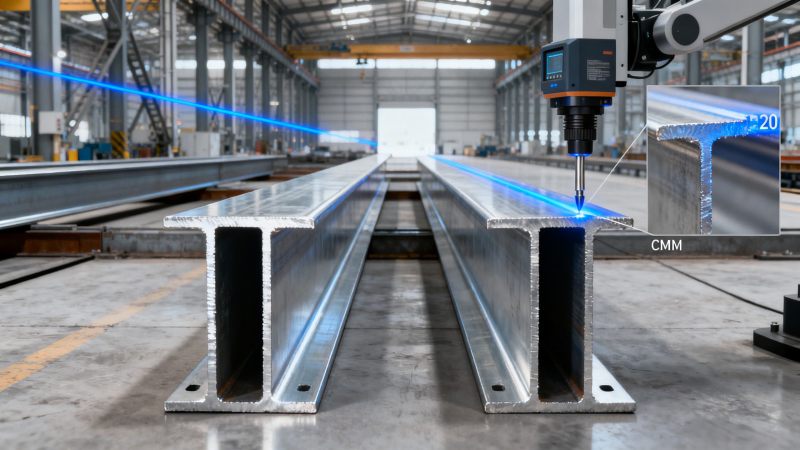
Hongteng Fengda maintains ±0.5% tolerance on hot-rolled H sections and ±0.3% on cold-formed C Beam Steel—verified by laser scanning and coordinate measuring machines (CMM) before dispatch. This level of control directly supports lean construction workflows where field adjustments cost 3–5× more than factory corrections.
For global buyers, tolerance consistency also impacts certification readiness: EN 1090-2 EXC2 requires ≤±1.0mm for flange thickness in Class II structures, while ASTM A6 mandates ±0.75mm for nominal web thickness up to 25mm. Non-compliant batches risk rejection at port or on-site, delaying projects by 7–15 days.
H Shape Steel vs. H 20 Beam: Key Differences Beyond Naming Conventions
“H shape steel” refers to a generic cross-sectional family defined by two parallel flanges connected by a vertical web—governed by international standards like ASTM A6, EN 10034, or GB/T 11263. “H 20 beam”, however, is not a standard designation but a project-specific size reference—often indicating a nominal depth of 200mm (e.g., H200×200×8×12). Confusing nomenclature leads to specification errors: one buyer may request “H20 beam” expecting EN 10034 H200×200, while another assumes JIS G3192 H200×100.
Critical distinctions lie in manufacturing method and tolerance bands. Hot-rolled H shapes (e.g., Q235B or S235JR) typically hold ±1.0% on flange thickness, whereas cold-formed H-sections—like those derived from C Beam Steel—achieve ±0.5% due to post-forming leveling and CNC-controlled slitting.
Below is a comparative overview of tolerance sensitivity across common structural steel products:
The table confirms that cold-formed variants—such as those produced using precision C-shaped steel forming machines—offer tighter geometric control than conventional hot-rolled H beams. This makes them ideal for purlins, wall beams, and lightweight roof trusses where interlocking compatibility and minimal field adjustment are non-negotiable.
How Tolerance Impacts Real-World Project Execution
Tolerance variance cascades across three critical project phases: fabrication, erection, and commissioning. In fabrication shops, inconsistent web thickness causes uneven heat distribution during welding—increasing distortion risk by up to 40%. During erection, flange width deviations >±0.6mm prevent full bearing contact between beam-to-column connections, reducing effective moment transfer by 12–18% per joint.
At the commissioning stage, tolerance-related gaps compromise fireproofing adhesion and acoustic insulation performance. For example, a 1.2mm gap along a 12m span reduces fire-resistance rating by 15 minutes—potentially violating local building codes requiring 120-minute EI integrity.
Hongteng Fengda’s production protocol includes 4-stage dimensional verification: pre-roll calibration, in-line laser profiling (every 3m), post-straightening CMM scan, and final random sampling (AQL Level II, ISO 2859-1). This ensures ≥98.5% conformance rate across all export orders—supporting clients in North America, Europe, and the Middle East who require traceable, audit-ready compliance data.
Procurement Checklist: What to Verify Before Ordering H Sections
To avoid tolerance-related delays and cost overruns, procurement teams should validate the following five criteria before contract finalization:
- Whether dimensional tolerances are specified per standard (e.g., EN 10034 Table 4) or customer drawing—and whether testing methodology (e.g., CMM vs. caliper) is stated;
- If mill test reports include actual measured values—not just “within tolerance”—for at least 3 random samples per heat lot;
- Whether surface treatment (e.g., galvanized coating) is applied pre- or post-tolerance verification—since zinc buildup can add ±0.05–0.15mm to dimensions;
- If custom lengths (e.g., 6m, 9m, 12m) are cut using CNC saws with ±0.3mm repeatability—or manual shearing with ±1.5mm variability;
- Whether packaging includes protective edge guards and interleaving spacers to prevent transport-induced deformation (common cause of post-delivery out-of-tolerance readings).
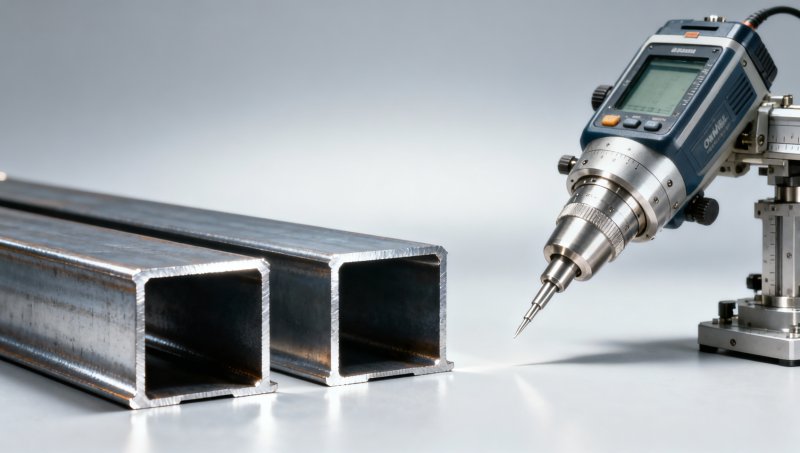
For buyers evaluating alternatives, C Beam Steel offers certified ±1% tolerance across thickness (1mm–12mm), length (6m/9m/12m), and flange alignment—with galvanized, powder-coated, or black varnish options available for corrosion-critical environments.
Why Global Buyers Choose Hongteng Fengda for Precision Structural Steel
As a structural steel manufacturer & exporter from China, Hongteng Fengda bridges the gap between international compliance expectations and cost-effective production scalability. We supply ASTM A36, S235JR, Q345, and SS400 H beams, angle steel, channel steel, and cold-formed profiles—including C Beam Steel—with delivery times consistently held to 15–20 days after deposit confirmation.
Our value lies not only in product quality but in decision-support infrastructure: free technical consultation for section selection, tolerance mapping against your BIM model, sample validation with full dimensional report, and flexible trade terms (FOB/CFR/CIF) backed by LC-at-sight or TT payment options.
If you’re evaluating H shape steel vs. H 20 beam for an upcoming tender—or need certified dimensional data for engineering sign-off—contact us today to request: (1) tolerance validation report for your target size, (2) lead time confirmation for 6m/9m/12m lengths, or (3) OEM design support for custom cold-formed profiles compliant with EN 10219 or ASTM A500.
Please give us a message


Please enter what you want to find