Choosing the right H-beam supplier isn’t just about price or delivery—it’s about traceability, compliance, and risk mitigation. Mill certification documents verify metallurgical composition and mechanical properties (e.g., ASTM A6/A6M, EN 10025), while distributor warranties cover logistics, substitution, and after-sales support. For projects using prefabricated structural steel, high tensile steel rod, or galvanized pipe specifications, both documents are critical to pass technical assessments, satisfy procurement audits, and ensure safety-critical applications meet structural steel grades requirements—especially when sourcing from China-based manufacturers like Hongteng Fengda.
What Are Mill Certifications—and Why Do They Matter for Structural Integrity?
Mill certifications—often called Mill Test Reports (MTRs) or Material Test Reports—are official documents issued directly by the steel production mill. They provide verifiable, batch-specific data on chemical composition, tensile strength, yield strength, elongation, and impact toughness. For H-beams used in load-bearing frameworks, bridges, or seismic-resistant buildings, these values must align precisely with international standards such as ASTM A992 (U.S.), EN 10025-2 S355JR (EU), or GB/T 11263-2017 (China).
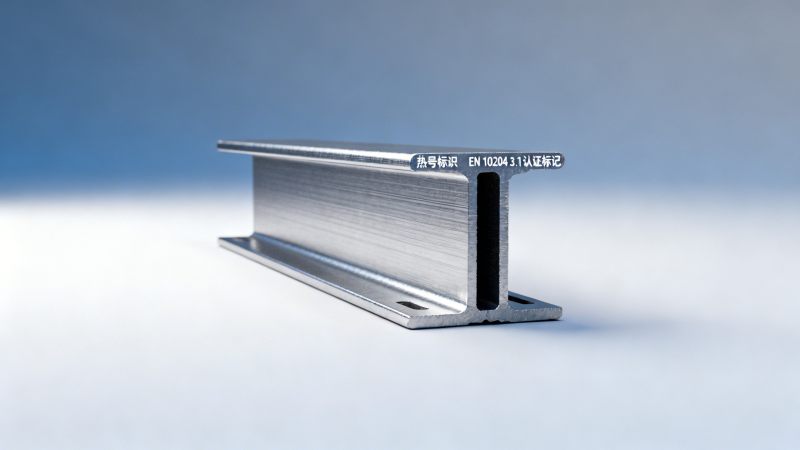
A certified mill report is non-transferable and tied to a unique heat number—a traceable identifier linking each ton of steel back to its furnace batch. This enables full chain-of-custody verification during third-party inspections or regulatory audits. Without it, engineers cannot validate design assumptions, and contractors may face rejection at site handover.
At Hongteng Fengda, every H-beam shipment includes ISO/IEC 17025-accredited MTRs compliant with ASTM A6/A6M and EN 10204 Type 3.1. Our reports disclose minimum yield strength ≥345 MPa, tensile strength ≥470–630 MPa, and Charpy V-notch impact energy ≥27 J at –20°C—meeting stringent requirements for cold-climate infrastructure projects across Canada and Scandinavia.
This table clarifies functional boundaries: mill certs validate *what the material is*, distributor warranties define *how it’s delivered and supported*, and third-party reports confirm *as-received condition*. Confusing them leads to project delays—especially when discrepancies arise between reported chemistry and on-site test results.
Distributor Warranties: Beyond Logistics—Your Risk Mitigation Framework
While mill certifications assure metallurgical fitness, distributor warranties govern operational reliability. For global buyers, this includes guaranteed lead times (typically 25–35 days for standard H-beams from China), dimensional tolerance allowances (±0.5 mm on flange width per EN 10034), and clear substitution protocols—if raw material shortages occur, Hongteng Fengda commits to pre-approval of equivalent-grade alternatives (e.g., swapping ASTM A992 for A572 Gr. 50 only with engineer sign-off).
Our warranty also covers documentation integrity: if an MTR is lost or damaged in transit, we reissue authenticated copies within 24 hours—not via email alone, but with wet-ink signatures and QR-coded verification links traceable to our ISO 9001:2015 quality management system.
Crucially, warranties extend to downstream compatibility. When H-beams integrate with Galvanized Steel Coil Manufacturers for cladding or bracing systems, our warranty confirms zinc-coating adhesion (per ASTM A90/A90M) and interlayer compatibility—preventing galvanic corrosion at connection points.
How Hongteng Fengda Bridges the Gap Between Mill Authority and Project Reality
As a vertically integrated structural steel manufacturer, Hongteng Fengda operates certified rolling mills and in-house metallurgical labs—eliminating reliance on third-party mills for core H-beam production. This allows us to issue dual-certified documentation: mill-origin MTRs (traceable to our own heat numbers) plus distributor warranties backed by 12+ years of export experience across 47 countries.
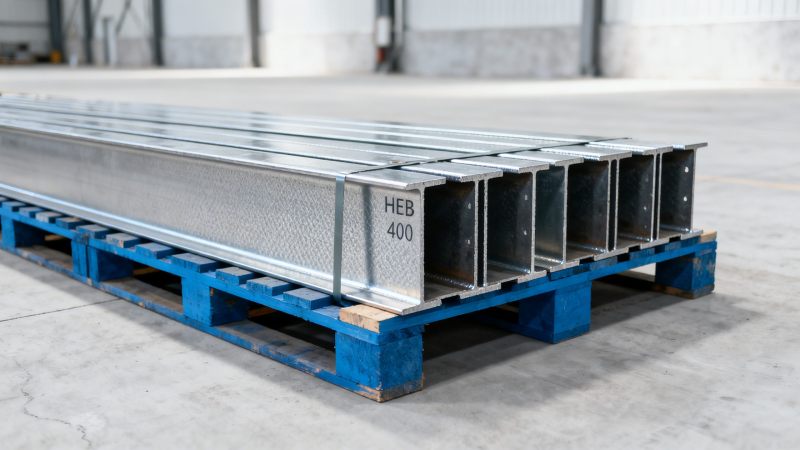
We maintain stock of 12 most common H-beam sizes (e.g., HEA 200–600, HEB 200–500) with ready-to-ship inventory covering 85% of standard construction demand. Lead time for custom sections (e.g., tapered beams or welded assemblies) is fixed at 45 ± 5 days—validated through real-time ERP tracking shared with clients.
For corrosion-critical applications, our H-beams are often paired with hot-dip galvanized components meeting ASTM A123 and ISO 1461. Zinc layer thickness ranges from 60–275 g/m²—adjustable per environmental exposure class (C3–C5 per ISO 12944). This synergy ensures full-system durability, especially when coordinated with Galvanized Steel Coil Manufacturers supplying matching coating performance.
These differentiators reflect deliberate investment in traceability infrastructure—not just compliance theater. Each H-beam order includes a digital twin dossier: heat number, MTR PDF, 3D dimensional scan report, and warranty terms—all accessible via client portal with role-based permissions.
Actionable Procurement Checklist for Global Buyers
Before finalizing any H-beam supplier, verify these six non-negotiable items:
- Request a sample MTR with full heat number linkage—confirm it matches the mill’s published certificate template.
- Require warranty language specifying maximum dimensional deviation (e.g., “flange width tolerance ≤ ±0.4 mm” not “within acceptable limits”).
- Validate third-party inspection scope: UT testing depth (minimum 100% web + 100% flange edges), not just visual checks.
- Confirm galvanizing process alignment—hot-dip vs. pre-galvanized—especially if integrating with other coated components like galvanized pipe or Galvanized Steel Coil Manufacturers products.
- Check warranty validity period: Hongteng Fengda offers 12-month post-delivery coverage for latent defects, exceeding typical 30-day industry norms.
- Ensure documentation is bilingual (English + native language of destination country) with notarized translations where required (e.g., GCC Standardization Organization).
This checklist prevents costly rejections—like the 2023 case where a Dubai tower project halted installation after discovering MTRs lacked EN 10204 3.1 classification, triggering 11-week retesting delays.
Why Dual Documentation Is Non-Negotiable for Your Next Project
Mill certifications and distributor warranties serve distinct, irreplaceable functions in the structural steel value chain. One validates intrinsic material capability; the other guarantees extrinsic delivery integrity. Neither substitutes for the other—and omitting either exposes your project to cascading risks: engineering liability, procurement audit failure, insurance invalidation, or safety non-compliance.
Hongteng Fengda delivers both—not as separate add-ons, but as synchronized, auditable layers of assurance. From our ISO 9001-certified production floor to our EN 10204-compliant documentation suite, we embed accountability at every stage.
Whether you’re specifying H-beams for a wind turbine foundation in Texas, a metro station in Riyadh, or a factory expansion in Vietnam—we provide the full documentation stack required to move from RFQ to ribbon-cutting without compromise.
Ready to align your next structural steel order with verified traceability and enforceable warranties? Contact Hongteng Fengda today for a customized documentation package—including sample MTRs, warranty templates, and third-party inspection coordination.
Please give us a message


Please enter what you want to find