Before placing a bulk order, reviewing an H-beam weight chart is essential for accurate costing, load planning, and specification matching. For procurement and evaluation teams, even small deviations in beam size, standard, or theoretical weight can affect project budgets and delivery decisions. This guide explains what to check before ordering H-beams to reduce sourcing risks and ensure the right structural steel selection.
What Is the Real Search Intent Behind an H-Beam Weight Chart?
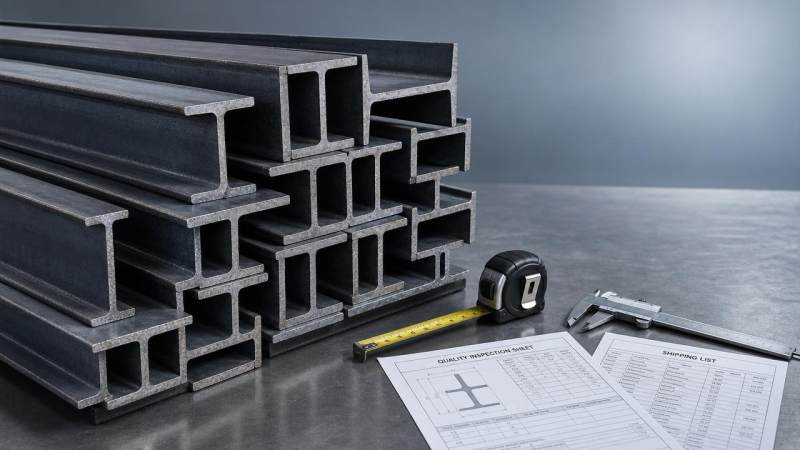
When business evaluators search for an H-beam weight chart, they are usually not looking for a simple list of sizes alone. Their real goal is to verify whether a supplier’s quoted beam specification, unit weight, and total tonnage are commercially and technically reliable before approving a purchase.
In practical terms, the chart becomes a decision tool. It helps buyers estimate total steel consumption, compare quotations from different mills, check freight assumptions, and confirm whether the selected section matches the project’s structural requirements and applicable standards.
For procurement teams, the most important question is not merely “How much does this H-beam weigh?” but “Can I trust this weight figure enough to base pricing, budgeting, shipping, and contract terms on it?” That is why a weight chart should always be reviewed alongside standards, tolerances, steel grade, and manufacturing method.
Why Weight Verification Matters Before You Approve an Order
An H-beam weight chart directly affects several cost centers. The first is material pricing. Many international steel transactions are calculated by theoretical weight, while some are settled by actual weight. If the purchasing team does not clarify which method applies, the final invoice may differ from the original budget expectation.
The second issue is logistics planning. In export business, even a small variance in unit weight can change container loading plans, truck limits, port handling requirements, and freight costs. A project ordering hundreds of tons may face a meaningful budget gap if the assumed weight per meter is inaccurate.
The third concern is technical compliance. H-beams with similar nominal dimensions may differ under ASTM, EN, JIS, or GB standards. A chart copied from the wrong standard can lead to section mismatch, design approval delays, or rejection by engineers and third-party inspectors.
For business evaluation personnel, weight verification is therefore a cross-functional checkpoint. It protects purchasing, finance, logistics, and project execution at the same time.
What Procurement and Evaluation Teams Care About Most
For this audience, the priority is risk control rather than engineering theory. They want to know whether the quoted H-beam is the correct product, whether the supplier’s numbers are consistent, and whether there are any hidden factors that could affect cost or delivery.
The first concern is quote transparency. Buyers need to see the beam size, steel grade, execution standard, unit weight, total length, total quantity, and tolerance basis clearly stated. If any of these are vague, the quote is harder to compare and easier to dispute later.
The second concern is standard alignment. A beam described only as “200 x 200 H-beam” is not precise enough for an international order. The flange thickness, web thickness, cross-sectional area, and weight per meter must correspond to a specific standard table.
The third concern is supply capability. Even if the chart values are technically correct, the supplier must be able to produce or source that exact section in the required grade, quantity, and lead time. This is especially important for non-standard sizes, higher-strength grades, or mixed-dimension orders.
The fourth concern is commercial predictability. Buyers want to reduce the chance of weight disputes, over-shipment, under-shipment, packing inefficiency, and payment adjustment after goods are dispatched.
What to Check on an H-Beam Weight Chart Before Ordering
The first item to verify is the section designation. Ensure the size shown on the chart matches the exact beam required by the design documents. Similar labels can hide important dimensional differences, especially across regions and standards.
The second item is the theoretical weight per meter. This value is often used to calculate total order tonnage. Ask the supplier to confirm the source standard and provide a mill or catalog reference if needed. Serious suppliers should be able to explain how the figure was derived.
The third item is dimensional tolerance. Weight charts show nominal values, but actual products are manufactured within allowable tolerance ranges. If your project has strict load, fit-up, or fabrication requirements, nominal weight alone is not enough. You should also review tolerance rules for depth, flange width, web thickness, flange thickness, and straightness.
The fourth item is steel grade. Weight itself does not define performance. A beam with the correct dimensions but the wrong grade may fail project requirements for yield strength, weldability, toughness, or certification compliance. Procurement teams should confirm that size and grade availability match in the supplier’s production plan.
The fifth item is ordering basis. Clarify whether the purchase contract will be settled by theoretical weight or actual weighbridge weight. This point is often underestimated, but it has direct financial impact in bulk procurement.
How Different Standards Can Change the Numbers
One common sourcing mistake is assuming that H-beam dimensions are universal. In reality, ASTM, EN, JIS, and GB systems may use different naming methods and section properties. Even where nominal dimensions look similar, the actual cross-section and weight per meter may not be identical.
For example, an H-beam used in a North American project may be specified according to ASTM-related practices, while a supplier in Asia may quote a section based on JIS or GB. If both parties do not align on the same reference, the resulting beam may differ in flange thickness or sectional area, leading to cost or approval issues.
This is why procurement teams should request the full technical description rather than rely on abbreviated names. A reliable supplier should provide dimensional data, standard designation, material grade, and if needed, section drawings or datasheets for confirmation.
How to Use the Weight Chart for Cost and Logistics Planning
An H-beam weight chart is not only a technical table; it is a procurement planning tool. Once the weight per meter is confirmed, buyers can estimate total steel tonnage from required lengths and quantities. This supports budget checking, comparison of offers, and payment planning.
It also improves freight estimation. Container loading, break bulk shipment, inland transport, and crane handling all depend on accurate total weight assumptions. If the project involves multiple beam sizes, a detailed weight breakdown can help optimize packing and avoid partial-load inefficiencies.
For evaluation teams, one useful practice is to build a simple comparison sheet. List each section size, required quantity, chart weight per meter, quoted unit price, total theoretical tonnage, and expected shipping method. This makes it easier to identify where a supplier’s offer is unusually high, unusually low, or inconsistent with standard values.
Do Not Ignore Processing and Upstream Material Considerations
Although H-beams are finished structural sections, many projects also involve fabricated components, welded assemblies, or related steel materials in the same supply chain. In these cases, procurement teams benefit from evaluating whether the supplier can support broader structural steel needs beyond one beam order.
For instance, projects that combine beam procurement with formed or fabricated steel parts may also require coil-based materials for secondary steel structure applications. Products such as Hot Rolled Coil Hrc can be relevant where buyers source raw material for steel structure processing, panels, shells, or custom-formed components.
From a sourcing perspective, it is useful to know whether the supplier works with recognized standards such as ASTM, JIS, EN, ISO, and CE-related quality systems, and whether they can support a wide grade range from common carbon steel to higher-strength structural options. This broader capability can reduce coordination costs when one project includes multiple steel product categories.
Questions You Should Ask the Supplier Before Final Confirmation
Before issuing a purchase order, ask the supplier to confirm the applicable standard, exact beam dimensions, theoretical unit weight, material grade, and delivery tolerance in writing. These should appear consistently across quotation, proforma invoice, technical sheet, and contract documents.
You should also ask whether the beam is from regular production, made-to-order rolling, or stock supply. This affects lead time, minimum order quantity, and the possibility of section substitution. If the supplier proposes an equivalent section, request a side-by-side technical comparison before accepting it.
Another important question is inspection support. For export projects, buyers often need mill test certificates, dimensional inspection records, and sometimes third-party verification. These documents help validate that the delivered H-beams correspond to the quoted chart values and specification basis.
Finally, discuss packing, marking, and shipping weight presentation. Clear bundle identification and loading lists make receiving and reconciliation much easier, especially when multiple beam sizes are shipped in one lot.
Common Red Flags in H-Beam Quotations
A quotation should raise concern if it includes only nominal beam size without standard reference, if the unit weight seems inconsistent with known section tables, or if the supplier cannot explain whether settlement is based on theoretical or actual weight.
Another red flag is vague grade naming. Terms such as “mild steel” or “equivalent material” are not sufficient for serious structural procurement. Buyers should insist on exact grade identification and standard compliance, especially for projects with engineering approval procedures.
Be cautious as well when a supplier offers a very low price but provides limited detail on tolerances, certification, or source mill. A lower headline price can quickly lose its advantage if section mismatch, documentation problems, or shipping revisions create downstream cost.
A Practical Evaluation Checklist for Business Buyers
To make approval decisions easier, procurement and evaluation teams can use a simple checklist. Confirm the exact section size, standard, and grade. Verify the H-beam weight chart source and unit weight per meter. Check tolerance rules and settlement basis. Review total tonnage against budget and freight assumptions. Confirm production capability, lead time, and inspection documents.
This structured review reduces reliance on assumptions and improves quote comparability across suppliers. It also helps internal stakeholders, including finance, engineering, and project management, align around the same commercial and technical baseline.
Conclusion: The Weight Chart Is a Buying Control Tool, Not Just a Reference Table
For business evaluators, an H-beam weight chart is far more than a technical appendix. It is a control point for cost accuracy, logistics planning, specification matching, and supplier credibility. The key is to treat the chart as part of a full verification process rather than a standalone source of numbers.
Before ordering, confirm the beam standard, section dimensions, theoretical weight, tolerance range, steel grade, and settlement method. When these items are checked carefully, procurement teams can compare offers more accurately, reduce sourcing risk, and make stronger purchasing decisions.
In international structural steel sourcing, disciplined review upfront is usually far less expensive than correcting a specification or shipment problem later. That is why careful use of an H-beam weight chart remains one of the smartest steps before any bulk order is approved.
Please give us a message


Please enter what you want to find