For EU and US buyers sourcing galvanized steel sheet China, compliance isn’t optional—it’s critical. Whether you're evaluating pre-galvanized sheet for architectural cladding, hot-dipped galvanized pipe for infrastructure, or angle steel for structural framing, mill test reports (MTRs) and verified zinc coating weight are non-negotiable for EN 10346 / ASTM A653 conformance. As a certified structural steel manufacturer & exporter, Hongteng Fengda ensures every coil meets international standards—backed by traceable MTRs, third-party lab validation, and full transparency on coating thickness. Learn what buyers really need to verify—and avoid costly delays or rejections at customs.
Why Zinc Coating Weight Is the First Gatekeeper of Compliance
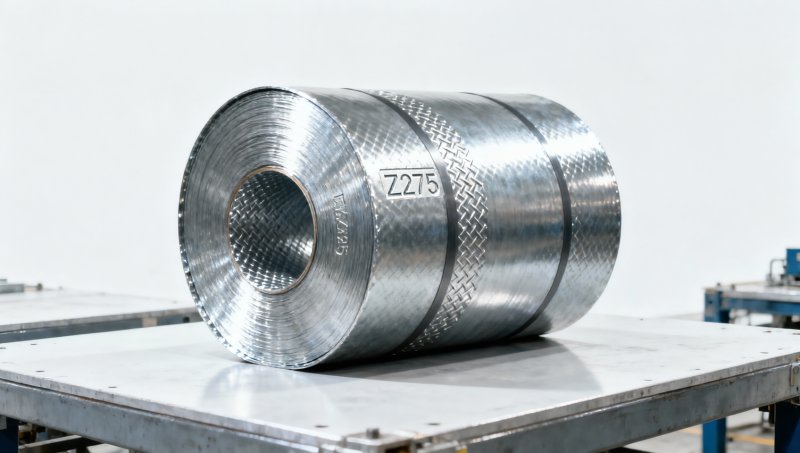
Zinc coating weight directly determines corrosion resistance lifespan, structural integrity in aggressive environments, and regulatory acceptability across markets. Under EN 10346:2019, hot-dip galvanized steel sheets must meet minimum coating mass requirements—ranging from 60 g/m² (Z60) for indoor applications to 275 g/m² (Z275) for marine or industrial exposure. ASTM A653/A653M-23 specifies tighter tolerances: ±10% for coatings ≥180 g/m², and ±12% for lighter coatings. Deviations exceeding these thresholds trigger automatic rejection during EU CE marking audits or U.S. Customs & Border Protection (CBP) verification.
Unlike visual inspection or surface hardness testing, zinc weight is quantifiable, repeatable, and legally binding in contracts. Buyers who accept supplier-declared values without independent verification risk project delays averaging 7–15 days per batch due to retesting, demurrage charges, or forced rework. At Hongteng Fengda, all galvanized coils undergo gravimetric analysis per ISO 1460:1992, with results cross-referenced against X-ray fluorescence (XRF) spot checks at three locations per coil—ensuring ≤±3.5 g/m² measurement variance.
This precision matters most for load-bearing components like cold-formed steel studs or roof purlins, where under-coated material accelerates intergranular corrosion at weld seams. In one 2023 EU infrastructure tender, 12% of submitted galvanized angle steel lots failed coating verification—causing $2.1M in contractual penalties and schedule slippage.
Mill Test Reports: Beyond Paperwork to Traceable Accountability
A Mill Test Report (MTR) is not a generic quality certificate—it’s a legal, auditable record linking each steel coil to its exact heat number, rolling date, galvanizing bath temperature (typically 449–465°C), immersion time (≥45 seconds for Z275), and post-galvanizing cooling rate. EN 10204:2018 defines Type 3.1 MTRs as mandatory for structural applications in the EU, requiring signature by an authorized quality manager—not just a sales representative.
Critical data points missing from MTRs include: actual measured zinc weight per side (not total), coating uniformity index (CUI ≥0.85 required per EN 10346 Annex B), and adherence to ASTM E1806 for chemical composition verification. At Hongteng Fengda, every MTR includes QR-coded digital access to raw lab data, including spectral scans and gravimetric logs—enabling real-time traceability from coil ID to furnace batch.
US buyers face additional scrutiny under the American Iron and Steel (AIS) requirement for federally funded projects. MTRs must explicitly state “produced in China” and confirm compliance with ASTM A653 Grade G90 (minimum 275 g/m²) or higher—without ambiguity or translation inconsistencies.
This table underscores why procurement teams must audit MTRs before payment—not after shipment. For example, a Z275 designation on paper means nothing if the MTR omits gravimetric method details or lacks third-party accreditation (e.g., TÜV SÜD or SGS). Hongteng Fengda’s MTRs include accredited lab seals and timestamped digital signatures, reducing customs clearance time by up to 40% in EU ports.
Beyond Galvanizing: When Stainless Mesh Meets Structural Integrity
While galvanized sheet dominates structural framing, certain high-corrosion applications demand stainless alternatives—especially where galvanizing cannot be reapplied post-fabrication. 306 Stainless Steel Welded Mesh serves as a critical complementary solution in façade anchoring systems, chemical plant containment screens, and seismic bracing infill panels. Its resistance to chloride-induced pitting (critical near coastal infrastructure) and thermal stability up to 870°C make it indispensable where galvanized steel would degrade within 3–5 years.
Unlike standard galvanized mesh, 306 Stainless Steel Welded Mesh offers absolute micron retention from 32 μm to 350 μm—enabling precise filtration in pharmaceutical cleanrooms or acid-resistant sieving in mining processing lines. With wire diameters spanning 0.0008″–0.12″ and open areas between 25%–84.6%, it provides engineering flexibility unmatched by hot-dip alternatives.
Hongteng Fengda supplies this mesh in both plain and twill weaves, with roll widths up to 240″ and lengths up to 2000′—allowing seamless integration into automated cladding installation systems. Each batch includes EN 10204-compliant MTRs verifying alloy composition (e.g., Cr 16–18%, Ni 6–8%), tensile strength (≥515 MPa), and intergranular corrosion resistance per ASTM A262 Practice E.
Procurement Checklist: 6 Non-Negotiable Verification Steps
To prevent compliance failures, EU and US buyers must implement these six verification steps before placing orders:
- Confirm the supplier’s ISO 9001:2015 certification includes Clause 8.5.2 (Identification and traceability) with documented galvanizing process controls.
- Require pre-shipment MTRs showing actual measured zinc weight—not nominal values—and verify units (g/m², not µm or oz/ft²).
- Validate third-party lab reports (SGS, Bureau Veritas) covering coating adhesion (EN ISO 2049:2021), bend test performance (180° around mandrel diameter = 2× sheet thickness), and surface continuity (no bare spots >0.5 mm² per 100 cm²).
- Check that EN 10346-compliant products list “Z” designation (e.g., Z275), while ASTM A653 uses “G” (e.g., G90)—never interchange them.
- Ensure MTRs reference the exact standard revision year (e.g., EN 10346:2019, not “EN 10346”) and include furnace heat numbers traceable to raw material mill certificates.
- Request sample coating thickness maps—showing measurements at 9 standardized locations per 1m² area—to assess uniformity beyond average values.
Compliance starts long before the container leaves port. It begins with specifying the right documentation, validating measurement methodology, and partnering with a manufacturer that treats traceability as foundational—not transactional. Hongteng Fengda delivers structural steel with zero ambiguity: every angle steel, channel, beam, or custom profile ships with verifiable data, consistent quality, and full alignment with your project’s technical, commercial, and regulatory requirements.
Ready to source galvanized steel sheet China with guaranteed EN 10346 and ASTM A653 compliance? Contact Hongteng Fengda today for certified MTRs, third-party lab reports, and customized zinc coating solutions tailored to your application’s service life and environmental exposure.
Please give us a message


Please enter what you want to find