Choosing between galvanized steel pipe and black pipe for outdoor runs can affect durability, maintenance, and overall project cost. For homeowners and end users, understanding how each material performs in weather exposure is essential before making a purchase. This guide compares their strengths, corrosion resistance, and best-use scenarios to help you select the right pipe for long-term outdoor performance.
If you are planning an exterior gas line cover, fence framework, water transfer line, handrail support, or exposed utility route, the pipe material matters from day 1. Outdoor conditions such as rain, UV exposure, soil moisture, temperature swings, and salt in coastal air can shorten service life if the wrong steel pipe is selected.
For most end users, the real question is simple: should you pay more upfront for galvanized steel pipe, or choose black pipe and accept more maintenance later? The answer depends on the environment, the fluid or gas being carried, the installation method, and how long you expect the run to last without major repair.
Understanding the Difference Between Galvanized Steel Pipe and Black Pipe
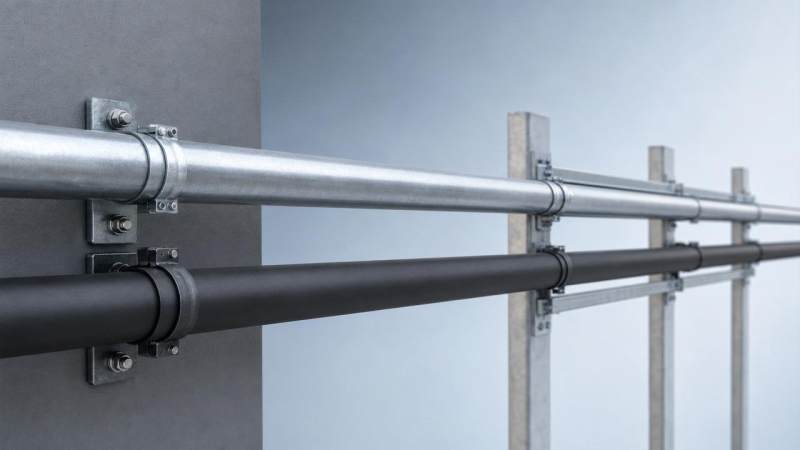
Both products are made from steel, but their surface condition and corrosion behavior are not the same. A galvanized steel pipe has a zinc coating applied to protect the base metal. Black pipe is uncoated steel with a dark iron oxide scale formed during manufacturing.
That zinc layer is the key difference for outdoor runs. In many common environments, zinc acts as a sacrificial barrier. Even if the surface is scratched, it can still slow rust development better than bare carbon steel. Black pipe, by comparison, typically begins surface corrosion much faster when used outdoors without paint or wrap protection.
How each pipe is commonly used
Galvanized steel pipe is often selected for exposed exterior structures, outdoor water-related support applications, protective frameworks, and general steel runs where weather resistance is important. Black pipe is commonly used indoors for gas distribution, fire sprinkler systems in controlled environments, and fabrication where the pipe will later be coated or enclosed.
Surface protection and weather exposure
In open-air installations, even 6 to 12 months of rain exposure can create visible rust on untreated black pipe. Galvanized steel pipe usually performs better over multi-year outdoor service because the zinc coating delays oxidation. In inland, non-industrial environments, that difference can significantly reduce repainting cycles and replacement frequency.
The table below gives a practical comparison for homeowners and buyers evaluating an outdoor run.
For most exposed residential or light industrial outdoor routes, galvanized steel pipe offers a more practical balance between service life and maintenance workload. Black pipe remains useful, but usually when the environment is controlled or additional coating steps are already part of the project plan.
Which Pipe Performs Better Outdoors?
When outdoor performance is the top concern, galvanized steel pipe usually has the advantage. The reason is not only the zinc coating itself, but also the way that coating slows red rust from reaching the steel substrate. In dry inland climates, this can mean several extra years of reliable appearance and function before visible deterioration becomes serious.
Outdoor environments are not all the same
A pipe installed 2 meters above ground on a covered patio does not face the same risk as one buried near wet soil or mounted within 5 kilometers of a marine shoreline. Salt, standing water, fertilizer, and industrial pollutants accelerate corrosion. In these higher-risk settings, black pipe generally needs immediate protective treatment after installation.
Typical risk levels by location
- Low risk: covered exterior areas, dry inland climate, limited splash exposure
- Medium risk: open outdoor runs, seasonal rainfall, moderate humidity, garden irrigation proximity
- High risk: coastal air, frequent condensation, contact with wet soil, chemical or salt exposure
In low-risk conditions, galvanized steel pipe may remain serviceable for a long period with only periodic inspection every 6 to 12 months. In medium- or high-risk areas, inspection should be more frequent, often every 3 to 6 months during the first year, especially at joints, threads, cut ends, and brackets.
Strength is not the deciding factor
Many buyers assume black pipe is stronger than galvanized steel pipe. In most practical outdoor runs, the deciding factor is not basic steel strength but corrosion exposure. If both pipes meet the same dimensional and standard requirements, structural integrity often depends more on wall thickness, installation quality, support spacing, and surface protection than on color or finish alone.
For example, a poorly supported run with spans that exceed recommended distances can fail early whether it is galvanized or black. As a rule of thumb, support intervals should be planned according to diameter, load, and use condition rather than appearance alone.
Cost, Maintenance, and Long-Term Value
Upfront price matters, but outdoor steel selection should be based on total ownership cost over 3 to 10 years. A lower purchase cost can become more expensive if the pipe requires repeated sanding, priming, repainting, or early replacement. For many end users, labor and downtime cost more than the pipe itself.
Where black pipe can lose value
Black pipe may appear budget-friendly at purchase, but outdoor use often adds 3 extra steps: surface cleaning, anti-rust primer, and topcoat application. If coating is skipped, surface rust can appear quickly. If coating is done poorly, water can enter damaged spots and corrosion will spread under the paint film.
Simple lifecycle comparison
The table below shows how homeowners often evaluate long-term value when comparing galvanized steel pipe with black pipe for exposed use.
The key takeaway is that galvanized steel pipe often reduces the risk of surprise maintenance costs. That matters for homeowners, facility users, and small contractors who want predictable service life and fewer repair cycles.
Related galvanized steel products for outdoor fabrication
In some outdoor projects, the pipe is only one part of the steel package. Buyers may also need galvanized sheet material for covers, guards, brackets, flashing, or formed components. In that case, Gi Sheet Coil can be used in building processing and construction where corrosion protection and forming performance are both important.
Available grades include DX52D and SGCD1, with thickness from 0.12mm to 3.5mm and width from 600mm to 1500mm. Common zinc coating ranges are 60–275g/m² for hot galvanizing and 80–275g/m² for pre-galvanized material. Yield strength typically falls within 140–300 MPa, while tensile strength is about 270–420 MPa, giving buyers practical flexibility for bending, welding, and outdoor steel part fabrication.
For projects that combine galvanized steel pipe with formed sheet accessories, using galvanized steel across multiple components can improve corrosion consistency and reduce finish mismatch during installation.
How to Choose the Right Pipe for Your Outdoor Run
The best buying decision usually comes from a 4-point check: environment, application, maintenance tolerance, and project budget. This method works well for homeowners, maintenance teams, and buyers sourcing from structural steel manufacturers for custom outdoor use.
1. Check the environment first
If the pipe will be fully exposed to rain, condensation, or lawn irrigation spray, galvanized steel pipe is generally the safer choice. If the route is shielded, indoors-to-outdoors only briefly, or part of a system that will be fully painted and maintained, black pipe may still be acceptable.
2. Match the pipe to the application
Not every outdoor run is the same. A decorative frame, a support rail, and a utility line may follow different local requirements. For gas service, water transport, or structural use, buyers should confirm the relevant code, coating suitability, joining method, and safety standard before ordering.
Practical questions to ask before purchase
- Will the pipe be exposed 12 months a year or only seasonally?
- Is the location inland, humid, coastal, or near chemicals?
- Will the pipe be threaded, welded, or cut on site?
- Can you inspect and maintain it every 6 to 12 months?
- Do you want lower upfront cost or lower long-term maintenance?
3. Think about joints, cuts, and repairs
Even galvanized steel pipe has vulnerable points. Threaded ends, field cuts, and welded areas can lose part of their protective layer. Those spots should be treated correctly after installation. Ignoring them can reduce the corrosion advantage of the original coated pipe.
Black pipe has the same risk points, but without the zinc barrier. That means the need for post-installation protection is more urgent and often more extensive.
4. Buy from a supplier that understands steel standards
A reliable manufacturer or exporter should help you evaluate standard compliance, processing options, and finish suitability. Hongteng Fengda, as a structural steel manufacturer and exporter from China, supports global projects with products aligned to ASTM, EN, JIS, and GB standards, along with customized steel solutions for construction and industrial use.
For end users, this matters because correct steel sourcing reduces the risk of receiving material that looks acceptable but does not fit the environment, fabrication process, or service expectation. Stable production, clear specifications, and dependable lead times are often just as important as price.
Common Mistakes When Selecting Outdoor Pipe
Many outdoor pipe problems come from selection mistakes rather than manufacturing defects. A few avoidable errors can shorten service life by years.
Mistake 1: judging by appearance only
Some buyers choose black pipe because it looks clean and industrial at the time of purchase. But outdoor steel should be judged by corrosion resistance, coating needs, and maintenance burden, not just by initial appearance.
Mistake 2: ignoring local climate
A pipe that performs adequately in a dry region may fail much faster in a humid or coastal area. The same diameter and wall thickness can show very different results after 1 to 3 years depending on environment.
Mistake 3: forgetting maintenance access
If the run is installed behind panels, under stairs, or along difficult roof edges, future repainting and inspection may be inconvenient. In those cases, galvanized steel pipe often makes more sense because it lowers the maintenance burden over time.
Final Recommendation for Homeowners and End Users
For most exposed outdoor runs, galvanized steel pipe is the more dependable choice. It offers better corrosion resistance, typically lower maintenance demand, and stronger long-term value in weather-exposed conditions. Black pipe can still be used, but it is usually better suited to protected areas or projects where coating and regular upkeep are already planned.
The right decision should consider 4 essentials: exposure level, application type, maintenance schedule, and total cost over several years. If you are sourcing steel for construction, fabrication, or outdoor structural components, working with an experienced supplier helps reduce errors before installation begins.
Hongteng Fengda provides structural steel products and customized solutions for global construction and manufacturing needs, with reliable quality control and support for standard or OEM requirements. To discuss the right galvanized steel pipe option, related galvanized materials, or a tailored steel solution for your project, contact us today to get product details and a customized recommendation.
Please give us a message


Please enter what you want to find