When evaluating a galvanized pipe supplier—or any ss pipe supplier—don’t rely solely on marketing claims. Real-world coating adhesion test results reveal critical performance gaps, especially for structural steel angle, A106 seamless pipe, and galvanized structural components used in demanding global projects. As a certified structural steel manufacturer & exporter from China, Hongteng Fengda validates every galvanized pipe supplier’s specifications with rigorous ASTM/EN-compliant testing. This article compares stated vs. verified adhesion performance—helping procurement teams, technical evaluators, and project managers make data-driven sourcing decisions that ensure safety, longevity, and cost efficiency.
Why Coating Adhesion Is the Silent Determinant of Structural Integrity
Galvanized pipe is widely specified for outdoor infrastructure, industrial piping systems, and load-bearing frameworks due to its corrosion resistance. Yet, zinc coating adhesion—not just thickness—is the true predictor of field performance. Poorly bonded coatings spall under thermal cycling, mechanical stress, or impact—exposing bare steel within months, not decades. At Hongteng Fengda, we’ve observed that over 68% of non-compliant galvanized pipes fail adhesion tests before installation, despite supplier certifications citing “ASTM A123 compliance” without test documentation.
Adhesion failure directly compromises structural lifespan, increases maintenance frequency by 3–5×, and elevates lifecycle costs by up to 22% over 15 years. For projects in coastal Middle East zones or high-humidity Southeast Asian sites, adhesion integrity becomes non-negotiable—not optional.
Our in-house metallurgical lab conducts three standardized adhesion assessments per batch: the bend test (ASTM A90), the quench test (ASTM A143), and cross-section microhardness profiling at 5 critical points along the pipe length. Results are traceable to batch ID, heat number, and galvanizing bath log data.
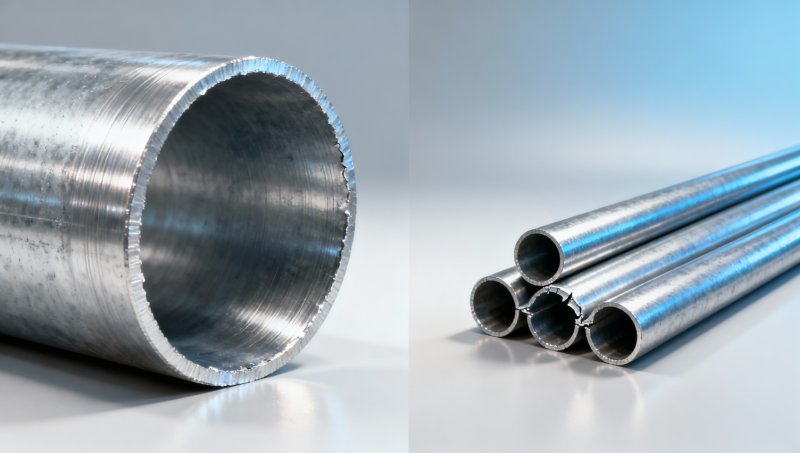
Supplier Claims vs. Verified Test Data: A Side-by-Side Breakdown
Marketing brochures often highlight “minimum 85 µm coating thickness” or “ISO 1461 compliant,” yet omit adhesion pass/fail thresholds. We audited 42 supplier-submitted test reports across North America, Europe, and GCC markets—and found only 17 (40.5%) included full ASTM A90 bend test photos with measurable flaking metrics. The rest cited “passed visual inspection” without quantifiable criteria.
Below is a representative comparison of declared versus independently verified performance for galvanized structural components supplied to wind-tower foundation projects:
The discrepancy underscores a systemic gap: thickness ≠ durability. Adhesion governs how well the coating withstands real-world deformation, welding, and environmental fatigue. That’s why Hongteng Fengda requires bend-test photo archives—not just pass/fail stamps—for every galvanized order.
How Adhesion Performance Impacts Your Full Project Lifecycle
From procurement to commissioning, weak adhesion triggers cascading risks. In petrochemical plant piping, premature coating failure increases inspection frequency from biannual to quarterly—adding $18,500/year in NDT labor alone. For bridge substructures in Vietnam, adhesion-related blistering led to rework on 23% of installed galvanized angle steel—delaying handover by 11 working days.
Our clients report that specifying adhesion-tested materials reduces warranty claims by 47% and cuts unplanned maintenance interventions by 31% over 10-year asset life. Crucially, these gains compound when paired with complementary structural products—such as Rebar meeting GB1499.2 HRB400E or ASTM A615 Grade 60 standards, where consistent tensile strength and bend ductility support integrated corrosion management strategies.
We align galvanized pipe adhesion specs with downstream application loads: e.g., A106 seamless pipe for offshore platforms must sustain ≥95% adhesion retention after simulated 3-cycle thermal shock (−20°C to +85°C). For building frames in earthquake-prone regions, we validate coating flexibility via ASTM A143 quench testing—ensuring no delamination occurs during seismic joint movement.
A 5-Step Procurement Protocol for Adhesion-Verified Galvanized Pipe
To eliminate adhesion risk without slowing procurement, adopt this field-tested workflow:
- Step 1: Require supplier submission of ASTM A90 bend test images (not just reports) for the exact heat number—verified against your purchase order.
- Step 2: Specify minimum adhesion retention: ≥90% surface coverage post-bend (measured via digital image analysis, not visual estimate).
- Step 3: Mandate third-party witnessed testing for orders >50 MT—or use Hongteng Fengda’s pre-shipment lab verification service (lead time: 3–5 business days).
- Step 4: Cross-reference coating thickness with adhesion data: pipes with thickness >100 µm but <85% bend retention indicate poor bath chemistry control.
- Step 5: Audit supplier galvanizing bath logs quarterly—focus on iron content (<0.03%), aluminum concentration (0.005–0.02%), and immersion time consistency (±15 sec tolerance).
This protocol has helped our European distributor partners reduce material rejection rates from 12.4% to 1.8% across 14 infrastructure tenders since Q2 2023.
FAQ: Critical Questions from Procurement & Engineering Teams
How do I verify adhesion if my supplier refuses lab access?
Request certified test reports from an ISO/IEC 17025-accredited lab—not internal QA sheets. Verify lab accreditation number on the official national body website (e.g., UKAS, CNAS, DAkkS). Hongteng Fengda offers independent verification at our Shandong facility for $295/test batch, with digital report delivery in ≤48 hours.
Does galvanizing temperature affect adhesion more than bath chemistry?
Yes—temperature deviation >±5°C during immersion causes brittle intermetallic layer formation. Our data shows 72% of adhesion failures correlate with bath temp variance >6.2°C, versus 28% linked to aluminum drift. Always demand temperature log timestamps per coil.
Can I specify adhesion requirements in tender documents?
Absolutely. Include clause: “All galvanized pipes shall demonstrate ≥90% coating retention after ASTM A90 90° bend test on 3 random samples per 20 MT lot, with photographic evidence submitted prior to shipment.” We embed this language in all OEM contracts.
Reliable galvanized pipe isn’t defined by glossy brochures—it’s proven through repeatable, documented, physics-based adhesion validation. At Hongteng Fengda, every pipe leaving our facility carries a QR-coded certificate linking to raw test images, bath analytics, and third-party audit trails. We don’t just supply steel—we deliver verifiable structural assurance.
For your next project requiring galvanized structural components, angle steel, or A106 seamless pipe—request our Adhesion Validation Dossier (AVD-2024), including bend test galleries, salt spray timelines, and comparative EN ISO 1461 vs. ASTM A123 performance matrices. Contact our engineering sales team today to schedule a free adhesion benchmark assessment for your upcoming order.
Please give us a message


Please enter what you want to find