Galvanized Steel vs Stainless Steel: Which Is Better for Outdoor Use?
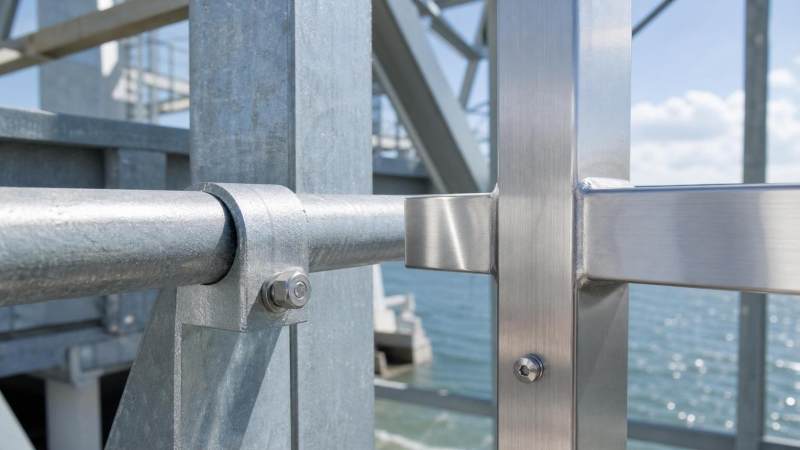
For outdoor projects, material choice affects budget, service life, and maintenance from day one.
That is why the comparison between Galvanized steel and stainless steel matters in real purchasing decisions.
Both materials resist corrosion, but they do it in different ways and at different cost levels.
In practice, the better option depends on environment, expected lifespan, fabrication needs, and supply strategy.
For global projects, this also means checking standards, production consistency, and lead time reliability.
This guide breaks down Galvanized steel and stainless steel in practical terms, with a focus on outdoor use.
How Galvanized Steel and Stainless Steel Resist Corrosion
Galvanized steel is carbon steel coated with zinc, usually through hot-dip galvanizing.
The zinc layer acts as a barrier and also provides sacrificial protection when the surface gets scratched.
This makes Galvanized steel a practical option for many outdoor structures and exposed support parts.
Stainless steel works differently.
Its corrosion resistance comes from chromium in the alloy, which forms a passive oxide film on the surface.
When that film stays stable, stainless steel performs very well in wet and contaminated environments.
The difference is important.
Galvanized protection depends on coating thickness and exposure conditions, while stainless performance depends on alloy grade and environment severity.
Outdoor Performance by Environment
For inland construction and general infrastructure, Galvanized steel often delivers the best value.
It performs well in rural, urban, and moderate industrial settings when the coating is properly specified.
Typical applications include highway protection, street light poles, power towers, and building steel structure components.
In coastal or marine areas, the decision becomes more sensitive.
Salt exposure can reduce the life of Galvanized steel faster than in dry inland conditions.
More aggressive industrial atmospheres can also shorten coating performance.
In these environments, stainless steel often becomes the safer long-term option, especially with higher-grade selections.
Still, not every outdoor project needs stainless steel.
Over-specifying material can inflate project cost without creating proportional value.
A quick environment check
- Dry inland exposure: Galvanized steel is often sufficient.
- Urban pollution: Galvanized steel remains competitive with correct coating thickness.
- Heavy industrial exposure: compare life-cycle cost carefully.
- Coastal or marine splash zones: stainless steel usually gains an advantage.
- Decorative outdoor parts: appearance retention may favor stainless steel.
Cost, Service Life, and Maintenance Trade-Offs
Initial price is usually where Galvanized steel stands out.
For large outdoor structures, it often offers a much lower upfront cost than stainless steel.
That matters when projects involve towers, rails, supports, brackets, and other high-volume steel components.
Maintenance changes the picture over time.
If the site is mild, Galvanized steel can provide a long anti-corrosion life with limited upkeep.
If the site is harsh, recoating, inspection, or replacement may appear earlier than expected.
Stainless steel typically costs more at the start, but can lower maintenance pressure in aggressive environments.
This is why the right comparison is not just material price per ton.
It should include expected lifespan, repair access, shutdown risk, and replacement difficulty.
What usually drives the decision
- Project budget and steel volume.
- Corrosion category of the installation site.
- Target service life.
- Maintenance access after installation.
- Risk of cosmetic staining or structural corrosion.
Where Galvanized Steel Makes More Sense
For many outdoor steel projects, Galvanized steel is the more balanced option.
It is widely used because it combines corrosion resistance, mechanical strength, and cost efficiency.
This is especially true for infrastructure and utility applications.
A relevant example is Galvanized Round Steel.
It is produced from iron-based material and supports hot dip galvanized anti-corrosion performance.
Available diameter ranges include 16-250mm or customized lengths, depending on project needs.
Its tensile strength reaches 570-820 MPa, making it suitable for structural and industrial uses.
It can fit electric power towers, communication towers, railway projects, highway protection, and street light poles.
It also appears in marine components, substation ancillary facilities, and building steel structure components.
For buyers needing tolerance control, cold drawn options and tighter tolerances are available on request.
Standards coverage includes AiSi, ASTM, BS, GB, JIS, EN, and AS-related requirements.
That flexibility is useful when sourcing for mixed export markets and specification-driven tenders.
When Stainless Steel Is the Better Choice
Stainless steel becomes more attractive when corrosion exposure is severe and long service life is critical.
Examples include marine structures, chemical facilities, food-related outdoor systems, and premium architectural features.
It is also useful where surface appearance must remain clean for years.
However, stainless steel is not automatically maintenance-free.
Wrong grade selection can still lead to pitting, staining, or premature corrosion.
That is why alloy grade, fabrication process, and site contamination all need review before ordering.
In short, stainless steel is often the premium answer, not always the most economical one.
A Practical Comparison Table for Selection
How to Make the Right Buying Decision
A good decision starts with environment classification, not just a material preference.
Then review required lifespan, acceptable maintenance intervals, and total installed cost.
From there, confirm specification details.
These include standards, dimensional tolerances, coating process, strength targets, and fabrication method.
Supply capability should also be part of the evaluation.
For export projects, stable production and consistent quality reduce sourcing risk as much as material selection does.
Hongteng Fengda, as a structural steel manufacturer and exporter from China, supports this process with standard and customized solutions.
Its product scope includes angle steel, channel steel, steel beams, cold formed steel profiles, and customized structural steel components.
Compliance with ASTM, EN, JIS, and GB helps align purchasing with international project requirements.
For buyers balancing performance and cost, that kind of supply support can be decisive.
Final Verdict: Galvanized or Stainless for Outdoor Use?
If the outdoor environment is mild to moderate, Galvanized steel is often the better overall choice.
It offers strong corrosion protection, lower upfront cost, and broad suitability for structural applications.
If the site is coastal, chemical, or highly corrosive, stainless steel may justify its higher price.
The better material is the one that matches the real service environment and project economics.
For most outdoor infrastructure decisions, Galvanized steel remains a highly competitive and practical answer.
The next step is simple: compare exposure conditions, life-cycle cost, and supply reliability before finalizing the specification.
Please give us a message


Please enter what you want to find