Choosing a Galvanized Steel Wire Rope is rarely just a matter of picking a size from a catalog. Diameter, load rating, rope construction, and zinc coating all influence safety, wear life, and maintenance cost.
In construction, lifting, transport, and industrial handling, the wrong rope can fail early even when the steel itself looks strong. A practical selection process helps avoid overload, corrosion loss, and unnecessary replacement.
For projects tied to structural steel systems, this matters even more. Reliable material supply, standard compliance, and application fit all affect how steel components perform in the field.
What matters most in a Galvanized Steel Wire Rope
A close look at rope structure helps explain why two ropes of similar diameter may behave very differently.
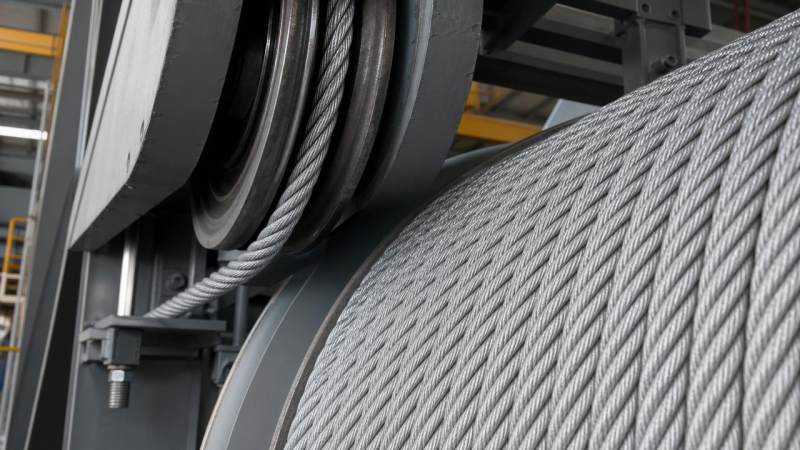
Galvanized Steel Wire Rope is made from multiple steel wires twisted into strands, then laid around a core. That design gives flexibility, strength, and resistance to repeated bending.
The galvanized layer protects the steel surface from moisture, salt, and air exposure. It is not only a cosmetic finish. It delays rust formation and slows section loss.
Still, galvanizing does not make a rope suitable for every job. Load pattern, bending radius, shock force, abrasion, and drum condition must also be checked.
Key elements behind rope performance
- Diameter affects strength, bending behavior, and sheave compatibility.
- Construction affects flexibility and surface wear resistance.
- Core type influences stability under compression.
- Zinc coating level affects corrosion resistance.
- Manufacturing quality affects consistency across the full rope length.
Why diameter should never be chosen in isolation
Many selection mistakes start with diameter alone. A thicker rope usually carries more load, but that does not automatically mean it is the right option.
If the rope is too large for the sheave groove, contact becomes uneven. If it is too small, bending stress rises and fatigue life drops. Both conditions shorten service life.
Galvanized Steel Wire Rope should match the drum, pulley, and terminal hardware dimensions. A good fit keeps pressure distribution more uniform and reduces local wire breakage.
Diameter selection checkpoints
When in doubt, compare the rope’s nominal diameter with equipment recommendations and the expected bending cycle count, not just the lifting weight.
Understanding load rating and real working conditions
Load rating is another area where catalog data can be misunderstood. Breaking force is not the same as safe working load.
A Galvanized Steel Wire Rope may show a high minimum breaking load, yet still be unsuitable if the job includes shock loading, uneven pulls, or severe bending.
The more practical question is how much load the rope can carry repeatedly, with a proper safety factor, under the actual site conditions.
What changes the effective load on site
- Dynamic starts and stops
- Angular loading or side pulling
- Wear from rough contact points
- Reduced strength at terminations
- Heat, moisture, or chemical exposure
This is why application context matters as much as the stated rating. A rope used for hoisting steel sections behaves differently from one used as a guide line or a restraint line.
Coating basics and where galvanizing adds value
Galvanizing protects wire rope by placing zinc between the environment and the base steel. That barrier slows red rust and gives useful sacrificial protection.
For outdoor lifting, marine-adjacent work, temporary site storage, and humid industrial spaces, Galvanized Steel Wire Rope often delivers better value than uncoated rope.
Even so, coating thickness should be considered alongside abrasion. In heavy scraping conditions, zinc can wear away quickly, so inspection intervals remain important.
When galvanizing is especially useful
- Outdoor construction lifting
- Bridge and infrastructure maintenance
- Port, storage yard, and exposed handling systems
- Applications with periodic wetting and drying
Across steel supply chains, corrosion control is rarely limited to ropes. It also affects rails, profiles, beams, and fabricated components used in transport and support systems.
In related applications, materials such as Rail are selected with the same practical mindset: load path, environment, dimensional fit, and coating condition all need to align.
For example, railway and railing projects may require carbon steel or medium manganese steel sections in models such as U74, U71Mn, PD2, PD3, or Q235, with lengths from 12m to 30m.
Typical surface options include oil, black, galvanized, or painted finishes, while tolerances and standards support stable installation and predictable field performance.
Common application differences that change rope choice
Not every Galvanized Steel Wire Rope serves the same purpose. Selection should reflect whether the rope lifts, secures, guides, supports, or tensions a structure.
Lifting applications usually prioritize strength, fatigue resistance, and controlled bending. Static restraint applications often focus more on corrosion resistance and long-term stability.
Construction sites may need ropes for hoists, slings, temporary supports, or equipment movement. Industrial facilities may use them on winches, cranes, conveyors, or access systems.
In each case, the same nominal rope can perform differently because duty cycle and contact conditions are different.
A simple way to narrow the choice
- Define the actual load, not the estimated load.
- Check whether the rope moves frequently or stays mostly static.
- Review exposure to rain, salt, dust, and chemicals.
- Confirm hardware compatibility before ordering.
- Match standards and certificates to project requirements.
Inspection, sourcing, and long-term reliability
A good Galvanized Steel Wire Rope can still underperform if quality consistency is poor. Wire uniformity, lay accuracy, zinc coverage, and test traceability all affect reliability.
This is where supplier capability becomes part of technical selection. Stable production, clear specifications, and standards compliance reduce uncertainty before the rope reaches the site.
Companies serving global steel projects often build that reliability through process control. Hongteng Fengda, as a structural steel manufacturer and exporter from China, works within ASTM, EN, JIS, and GB related requirements across multiple product lines.
That background matters because many projects combine lifting hardware with structural steel sections, cold formed profiles, beams, and custom fabricated parts. Consistent sourcing simplifies coordination.
After installation, regular checks remain essential. Broken wires, diameter reduction, corrosion staining, birdcaging, crushed sections, and termination damage are all warning signs.
Practical inspection points
- Measure diameter loss against the nominal size.
- Look for uneven wear near sheaves and drums.
- Check zinc condition in exposed outdoor sections.
- Inspect end fittings and clamps for slippage or cracking.
- Replace on condition, not only on elapsed time.
A practical next step before final selection
The best choice usually comes from comparing three things together: required load, equipment geometry, and exposure conditions. Leaving out any one of them increases risk.
For a Galvanized Steel Wire Rope, start with the real duty cycle, then confirm diameter fit, safe working load, and coating suitability. After that, review standards, inspection access, and expected replacement intervals.
That approach gives a clearer basis for selecting rope and related steel components with fewer surprises during operation. It also makes supplier comparison more meaningful and more technical.
If the application includes lifting systems, structural supports, or transport-related steelwork, gathering those details early will make the final decision more accurate and easier to verify.
Please give us a message


Please enter what you want to find