Choosing the right galvanized steel roofing sheets is critical for controlling project costs, ensuring long-term corrosion resistance, and reducing procurement risks.
For international sourcing, zinc coating, base steel quality, thickness tolerance, standards compliance, packaging, and lead time directly affect roof performance.
This buying checklist helps evaluate galvanized steel roofing sheets more confidently and compare suppliers for construction, industrial, and manufacturing projects.
What Are Galvanized Steel Roofing Sheets?
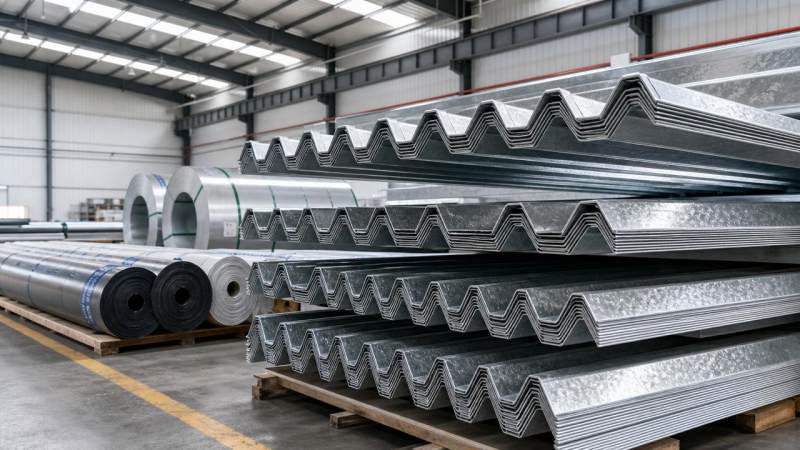
Galvanized steel roofing sheets are steel panels protected by a zinc coating that slows corrosion and extends service life.
The zinc layer works as a barrier and also provides sacrificial protection when small scratches expose the base steel.
These roofing sheets are widely used for factories, warehouses, agricultural buildings, workshops, garages, and temporary structures.
Common profiles include corrugated sheets, trapezoidal sheets, ribbed panels, and custom roll-formed roofing profiles.
The right product depends on local climate, roof slope, span design, wind load, installation method, and budget.
When comparing galvanized steel roofing sheets, avoid judging by price alone. Low-cost sheets may hide thin coating or unstable thickness.
How Should Zinc Coating Be Checked?
Zinc coating is one of the most important buying factors for galvanized steel roofing sheets.
It is usually expressed as coating mass, such as Z80, Z120, Z180, Z275, or similar regional designations.
Higher zinc coating generally improves corrosion resistance, especially in humid, coastal, industrial, or high-rainfall environments.
However, coating selection should match the real exposure condition, not only the highest number available.
- For dry inland roofs, moderate zinc coating may be enough.
- For coastal roofs, higher coating or extra paint protection is recommended.
- For chemical plants, check corrosion categories before ordering.
- For long service life, request coating test reports from the supplier.
A reliable quotation for galvanized steel roofing sheets should clearly state coating grade, test method, and applicable standard.
If coating data is missing, the offer is incomplete and should not be treated as technically comparable.
Which Base Steel And Thickness Tolerance Matter Most?
Base steel quality determines strength, forming stability, and load-bearing performance of galvanized steel roofing sheets.
Typical grades vary by market, including ASTM, EN, JIS, or GB materials with specified yield strength.
For roofing, thickness must be checked carefully because small deviations can affect rigidity, fastening, and project cost.
A sheet sold as 0.50 mm should include tolerance information, not only nominal thickness.
Thickness before coating and after coating should also be clarified when specifications are strict.
For long-span roofing, insufficient thickness can cause deflection, noise, water leakage, and early deformation.
For secondary sheds or temporary buildings, a lighter gauge may be acceptable if design loads are modest.
Do not mix different thicknesses in one roof area unless the installer and designer approve the change.
Structural compatibility also matters around the roofing system. Supporting members, purlins, beams, and fasteners must work together.
Hongteng Fengda supplies structural steel products for global projects, including angle steel, channel steel, beams, and customized components.
For infrastructure-related projects, its Rail products include carbon steel and medium manganese steel options.
Available models include U74, U71Mn, PD2, PD3, BNbRE, Q235, 55Q, 50Q, U71, and 45Mn.
The product can be supplied in oil, black, galvanized, or painted appearances, with lengths from 12m to 30m.
This reflects the same purchasing principle: check grade, dimensions, finish, certification, and delivery conditions before signing orders.
How Do Standards And Test Documents Reduce Risk?
Standards help define what galvanized steel roofing sheets must meet before shipment and installation.
Relevant standards may include ASTM, EN, JIS, GB, or project-specific specifications approved by the design team.
The purchase order should mention grade, coating, profile, thickness, width, length, tolerance, surface, and packaging.
A mill test certificate should match the batch number, coil number, order quantity, and actual shipment information.
Useful inspection items include tensile strength, yield strength, elongation, coating mass, thickness, width, and visual surface quality.
For critical roofing projects, third-party inspection can confirm compliance before loading.
Photos, packing lists, weight certificates, and loading records also help reduce disputes after delivery.
When suppliers refuse documentation, it becomes harder to verify the actual quality of galvanized steel roofing sheets.
What Packaging And Logistics Details Should Be Confirmed?
Good packaging protects galvanized steel roofing sheets from moisture, abrasion, bending, and edge damage during transport.
Export packaging should consider sea freight, container loading, inland handling, and possible storage at the destination.
Sheets are often packed with waterproof paper, steel straps, corner protection, and wooden or steel supports.
If sheets are long, lifting points and bundle weight must be planned carefully to avoid deformation.
For color-coated or pre-painted sheets, surface film and stacking method require more attention.
Moisture trapped between sheets can cause white rust, especially when goods remain wrapped for a long time.
After arrival, store galvanized steel roofing sheets under dry ventilation and avoid direct contact with standing water.
Lead time should include production, profiling, inspection, packing, inland transport, customs clearance, and vessel schedule.
A realistic delivery plan is better than an optimistic promise that later disrupts installation scheduling.
How Can Buyers Compare Prices Correctly?
Price comparison for galvanized steel roofing sheets must be based on the same technical and commercial assumptions.
A lower price may simply mean thinner steel, lower zinc coating, shorter sheet length, or weaker packaging.
Always compare by total delivered cost, not only ex-works or FOB unit price.
Total cost includes material, coating, profiling, wastage, freight, import duty, local handling, installation loss, and maintenance risk.
A roofing sheet that lasts longer can be cheaper over the full project life.
Supplier stability is also a cost factor. Delayed delivery can create labor idle time and contract penalties.
Hongteng Fengda supports global steel sourcing with stable production capacity, quality control, and export experience.
Its product range helps projects coordinate roofing materials with structural steel components under recognized standards.
Buying Checklist For Galvanized Steel Roofing Sheets
Common FAQ About Galvanized Steel Roofing Sheets
Are galvanized steel roofing sheets suitable for coastal buildings?
Yes, but the coating level must be selected carefully because salt accelerates corrosion.
For coastal buildings, higher zinc coating, proper fasteners, sealed overlaps, and routine maintenance are strongly recommended.
Is thicker always better for roofing sheets?
Not always. Thickness should match span, load, wind pressure, roof slope, and structural support spacing.
Over-specification increases cost, while under-specification creates deformation, leakage, and maintenance problems.
What is the difference between galvanized and painted roofing sheets?
Galvanized steel roofing sheets rely mainly on zinc protection and usually have a metallic appearance.
Painted sheets add color and extra barrier protection, but paint quality and adhesion must be checked.
What mistakes should be avoided during procurement?
Avoid vague specifications, unclear thickness tolerance, missing coating grade, weak packaging, and unverified production capacity.
Also avoid mixing offers with different standards, because prices will not represent equal product value.
How should a purchase order be written?
State material grade, coating, thickness, tolerance, profile, length, quantity, standard, packaging, inspection, and delivery terms.
Attach drawings when custom profiles or special overlaps are required.
Final Recommendation Before Ordering
Buying galvanized steel roofing sheets requires technical checking, commercial comparison, and supplier verification.
The safest decision comes from matching roof conditions with coating, thickness, profile, standard, and packaging.
Before confirming an order, request a complete specification sheet, test documents, packing plan, and realistic lead time.
For projects needing reliable steel supply from China, Hongteng Fengda can support material selection and export coordination.
Share your drawings, target standard, destination, and expected delivery date to receive a practical galvanized steel roofing sheets quotation.
Please give us a message


Please enter what you want to find