For coastal construction, choosing the right structural material can directly affect service life, maintenance costs, and project reliability. A galvanized steel h beam is often considered for its corrosion resistance and strength, but is it truly worth the investment for marine or seaside environments? This article explores the key benefits, limitations, and cost considerations to help project managers make informed decisions.
Why does a galvanized steel h beam matter more in coastal projects?
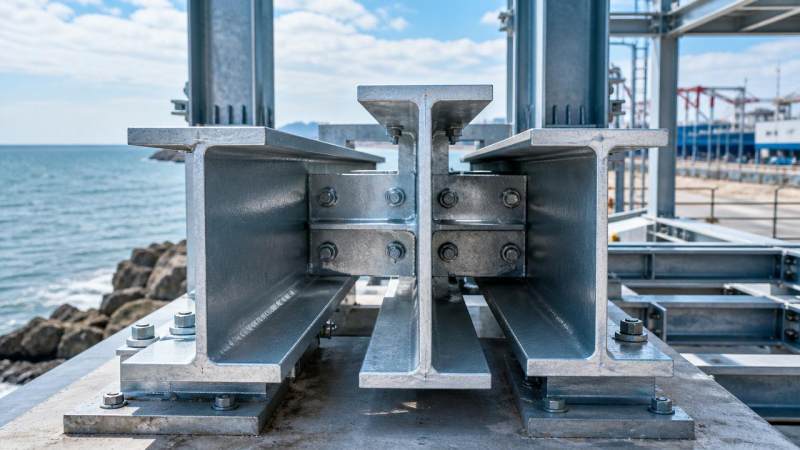
Coastal sites are harder on steel than inland environments. Salt-laden air, high humidity, wind-driven moisture, and temperature variation accelerate corrosion, especially at exposed structural points, welded zones, and drainage traps.
For project managers, the question is rarely about initial price alone. The real issue is whether the selected beam can reduce repainting cycles, avoid premature section loss, and limit shutdowns or repair work over the structure’s design life.
A galvanized steel h beam uses a zinc coating to protect the underlying carbon steel. In many coastal applications, this extra layer acts as both a physical barrier and a sacrificial shield, slowing corrosion when the surface is scratched or weathered.
- It helps preserve structural capacity in aggressive outdoor exposure.
- It reduces maintenance frequency compared with untreated steel.
- It supports more predictable lifecycle budgeting for infrastructure owners.
- It can simplify material planning when international corrosion standards must be considered.
What makes coastal corrosion so challenging for structural steel?
Key environmental stress factors
Not all seaside sites are equally severe. A warehouse several kilometers inland faces different risks from a jetty support frame, rooftop structure, or open-sided industrial building next to surf and spray.
Corrosion severity increases when chloride deposits remain on steel surfaces and moisture cannot dry quickly. Design details then become almost as important as material choice.
- Salt exposure: airborne chlorides attack coatings and exposed steel edges.
- Condensation cycles: repeated wet-dry conditions speed surface degradation.
- Crevice retention: bolted joints, lap connections, and tight corners trap moisture.
- Mechanical damage: handling, transport, and installation can scratch coating layers.
Why standard painted steel may fall short
Paint systems can perform well when correctly specified and maintained, but in many coastal projects the challenge is execution. Surface preparation, coating thickness consistency, and site touch-up quality strongly affect service life.
If the maintenance access is difficult, or the owner prefers lower intervention over time, a galvanized steel h beam often becomes a practical option rather than a premium extra.
Galvanized steel h beam vs other options: which one fits your risk profile?
The table below compares a galvanized steel h beam with common alternatives used in coastal or semi-coastal construction. The goal is not to declare one universal winner, but to match exposure level, budget, and maintenance strategy.
For many project teams, galvanized steel is the middle path. It usually costs more than plain carbon steel, but it can avoid the long-term burden of frequent coating repair, especially where access equipment, labor, or shutdown time is expensive.
Where is a galvanized steel h beam most suitable in coastal construction?
Applications where galvanizing adds clear value
Not every part of a coastal project needs the same protection level. Exposure mapping helps allocate budget where it matters most. A galvanized steel h beam is commonly favored in structures that remain open to weather and require long service intervals.
- Industrial sheds, logistics canopies, and utility structures near ports or shorelines.
- Support frames for rooftop equipment in humid marine climates.
- Walkways, platforms, and secondary framing where future repainting is inconvenient.
- Infrastructure projects with tight whole-life maintenance targets.
Applications that need extra review
In splash zones, immersion conditions, or highly abrasive marine service, galvanizing alone may not be enough. In those cases, duplex systems, heavier coating strategies, or alternative materials may deserve evaluation.
Procurement teams should also assess post-fabrication welding, site drilling, and any operation that damages the zinc layer. If those steps are unavoidable, repair methods must be planned early.
What technical points should project managers verify before buying?
A galvanized steel h beam should never be selected by coating type alone. Base steel grade, section dimensions, fabrication sequence, and compliance documents all influence actual project performance.
The following checklist helps align engineering requirements with supplier capability and delivery planning.
If you source globally, supplier coordination is equally important. A capable structural steel manufacturer should support drawing review, tolerance control, coating verification, packing, and export documentation, not just raw tonnage supply.
How do cost and lifecycle value compare?
Looking beyond purchase price
Many bids underestimate future corrosion costs because the spreadsheet stops at delivered steel weight. Coastal structures should be evaluated using a broader cost frame: material, fabrication, transport, installation, maintenance access, downtime, and coating renewal cycles.
A galvanized steel h beam can produce better value when the structure is hard to access, exposed year-round, or expected to remain operational with minimal interruption.
This lifecycle view also applies to supporting materials. For projects requiring corrosion-resistant feedstock for cladding, purlins, trims, or fabricated components, some buyers also review Steel Coil Galvanized options that offer common grades such as DX51D+Z, SGCC, and S350GD+Z, with zinc coatings typically ranging from 60-275g/m² depending on process and specification.
Typical value drivers
- Reduced repainting or coating repair over the service period.
- Less disruption where work-at-height access is costly.
- Lower risk of early corrosion claims caused by poor field coating practice.
- More stable asset condition for owners focused on long-term operation.
How should you select specifications for a coastal project?
Specification should match location severity, structural duty, and installation method. Over-specifying every beam wastes budget. Under-specifying critical zones creates future cost and risk. Project managers need a balanced selection method.
The table below provides a practical selection approach for galvanized structural steel in common coastal scenarios.
The right decision often comes from zoning the structure. Main load-bearing members, edge beams, exposed secondary steel, and maintenance-sensitive areas may each need different protection logic.
What standards, documentation, and supplier capabilities should you expect?
Documentation that reduces sourcing risk
For international projects, compliance is not just a quality issue. It affects customs clearance, consultant approval, installation confidence, and final handover. Buyers should ask for clear product documentation aligned with contract standards.
- Material grade references under ASTM, EN, JIS, or GB where applicable.
- Inspection records for dimensions, coating, and visual condition.
- Packing and marking details for site identification and export handling.
- Coordination support for OEM or project-specific structural components.
Why supply capability matters
Hongteng Fengda serves global construction, industrial, and manufacturing buyers with structural steel products including angle steel, channel steel, steel beams, cold formed profiles, and customized components. For project leaders, this matters because a broader manufacturing base reduces the need to manage multiple vendors for related steel items.
Stable production capacity, quality control, and export experience become especially valuable when schedules are tight and specification changes must be handled without disrupting delivery commitments.
Common mistakes when evaluating a galvanized steel h beam
Mistake 1: treating all coastal environments as the same
A beam in a sheltered coastal warehouse does not face the same conditions as steel next to heavy spray or industrial pollutants. Environmental classification should guide specification depth.
Mistake 2: ignoring detailing and repair strategy
Even a well-coated beam can suffer if drainage is poor or if field cuts are left unprotected. The corrosion plan must include design detailing and touch-up procedures.
Mistake 3: focusing only on ton price
Lowest purchase price can become highest ownership cost. Maintenance access, labor availability, and operating downtime should be considered before comparing quotations.
Mistake 4: separating structural and auxiliary galvanized supply decisions
In many projects, beams, purlins, trims, plates, and formed accessories must work together. Buyers that align these categories early often simplify coating consistency and procurement scheduling. This is where materials like Steel Coil Galvanized may also support downstream fabrication planning.
FAQ: what do project managers usually ask?
Is a galvanized steel h beam always worth the extra cost?
Not always. It is most justified when corrosion exposure is meaningful and future maintenance is costly or disruptive. For low-exposure indoor projects, the premium may not return the same value.
Can galvanized beams be welded or modified on site?
They can be, but every cut, weld, or drilled area should be reviewed because the zinc protection is interrupted. A repair specification is necessary, and pre-fabrication before galvanizing is usually preferable.
What should I ask a supplier before placing an order?
Ask about steel grade, galvanizing method, coating range, applicable standards, dimensional tolerances, inspection records, lead time, packing method, and whether customized fabrication is available for your drawings.
Does galvanizing replace good structural design practice?
No. Corrosion-resistant material selection improves durability, but connection design, drainage, ventilation, access planning, and maintenance strategy still determine long-term performance.
Why choose us for coastal structural steel sourcing?
If you are evaluating whether a galvanized steel h beam is right for your coastal project, the best next step is a specification-based discussion rather than a generic quotation. Hongteng Fengda supports global buyers with structural steel manufacturing, export coordination, and customized supply matching real project conditions.
You can consult with us on beam grade confirmation, corrosion protection options, section and drawing review, OEM fabrication requirements, delivery schedule planning, packaging for export, and standard alignment under ASTM, EN, JIS, or GB.
For project managers facing budget pressure, complex exposure conditions, or tight lead times, we can help compare options, clarify trade-offs, and build a practical sourcing plan that reduces risk before purchase orders are finalized.
Please give us a message


Please enter what you want to find